
Reviewed · BEIJING HUTONG TOURS
Beijing City Walk: Explore Hutongs Life and Old Beijing
Beijing’s old neighborhoods make the most sense on foot, and this 2.5-hour hutong walk gives you a useful bridge between grand landmarks and ordinary city life. You move from Qianmen and Dashilan’s old commercial streets into quieter lanes, with guides such as Yang, Kevin, Eevee, or Summer Wang adding local stories, snacks, calligraphy, and cultural details along the way.
I like the small maximum of 15 people, which makes narrow lanes easier to manage, and I like the choice of morning, afternoon, or night departures. The main drawback is that the route descriptions suggest different versions of the walk, so check your confirmed meeting details carefully. Winter evenings can also be cold, and admission to the Bell and Drum Towers is not included.
Key points to know before booking
- Qianmen and Dashilan: Start among Beijing’s best-known old shopping streets before reaching the quieter Sanlihe Hutong.
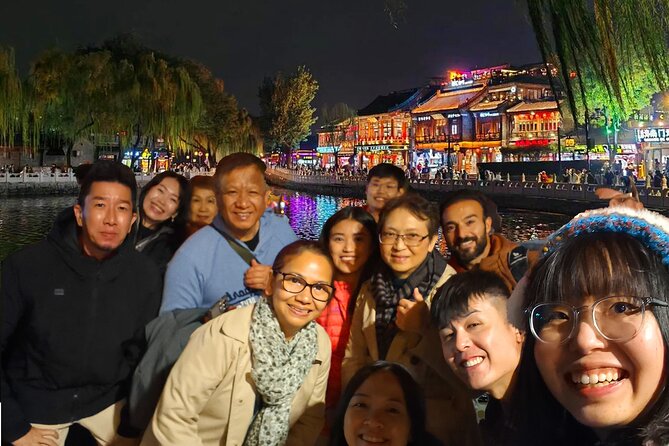
- Nanluoguxiang and Houhai: The night route follows old lanes from the Drum Tower toward the canalside area.
- Guides with personality: Yang, Kevin, Eevee, and Summer Wang are specifically praised for clear explanations, local help, and an easygoing manner.
- More than a history lesson: Depending on the route, you may try calligraphy, sample local snacks, see Peking Opera outfits, or visit a shoe museum.
- Good group size: The tour is limited to 15 people, with headsets supplied when more than 10 people join.
- Simple value: At $15 per person, this is an inexpensive way to get context and direction in areas that can be confusing on your own.
Why this short walk works so well in Beijing
Beijing can feel oversized at first. Wide avenues, huge gates, imperial compounds, and busy traffic make it easy to miss the older city hidden behind the main sights. A walking tour in the hutongs changes the scale. You notice doorway details, small food shops, local businesses, and the narrow lanes that once formed the everyday city.
This experience is built around that contrast. You begin near famous sights, then move into older residential areas where the pace is slower and the streets feel less formal. The guide supplies the background that turns a lane into more than a lane. You learn why the area matters, how it changed, and what you are looking at instead of simply passing through.
The price is modest for a guided walk. At $15, you are not paying for a major attraction package or a long excursion. You are paying for route planning, interpretation, and a local person who can point out details you might otherwise miss. That is especially useful in the hutongs, where a self-guided walk can be pleasant but often lacks context.
The tour is also short enough to fit around a larger Beijing plan. You can use it early in your visit to get oriented, or later to add a more local side of the city after seeing the Forbidden City and other headline sights.
More hutong tours in Beijing:
- Beijing Hutong Walking Food and Beer Tour at Hidden Restaurants
★ 5.0 · 1,132 reviews - Old Beijing Dinner Tour
★ 5.0 · 348 reviews - Temple Heaven, Summer Palace, Lama Temple, Hutong Bus Tour
★ 4.7 · 319 reviews
Qianmen, Dashilan, and Sanlihe Hutong
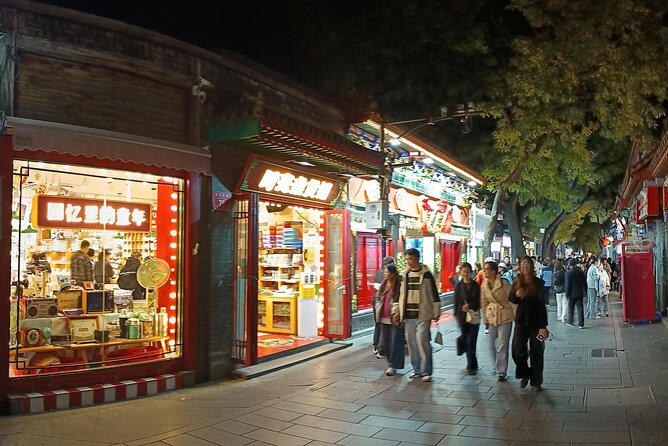
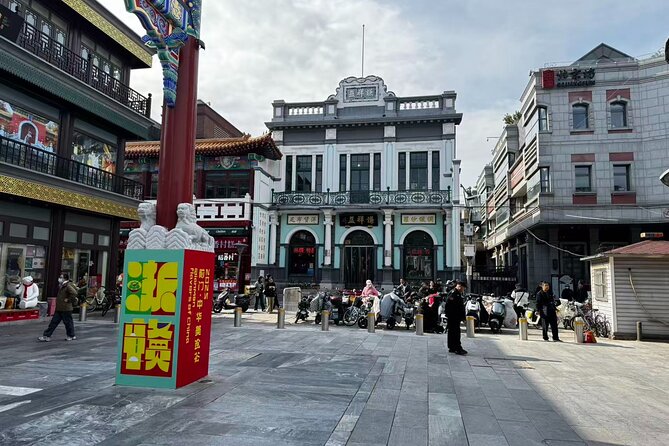
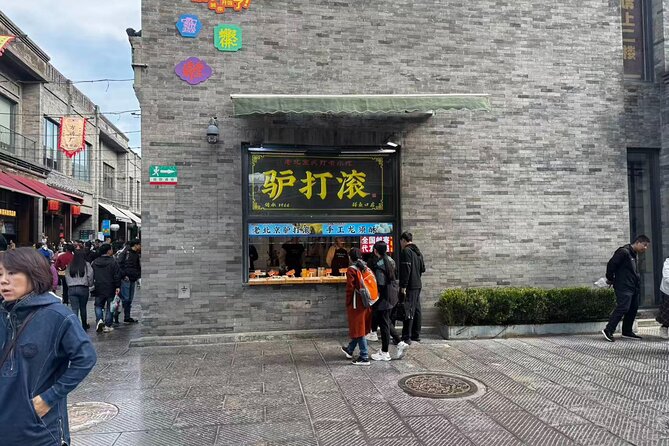
One version of the walk begins at Qianmen Walking Street, a natural meeting point for old Beijing. Qianmen is known for its historic shops, traditional-style buildings, and broad pedestrian route. It is not a quiet introduction, but it gives you a strong sense of how Beijing presents its past in a public setting.
From there, the route reaches Dashilan, a historic commercial street. This section is useful because it shows the old city as a place of trade, not only as a collection of palaces and monuments. You may see shops, food stalls, traditional pastries, drinks, souvenirs, and small local businesses. The street can feel commercial and restored, so do not expect an untouched neighborhood. Its value is in the mix of architecture, shopping traditions, and everyday activity.
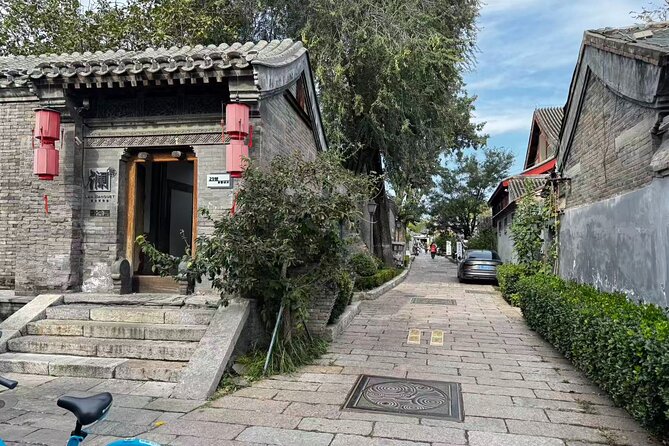
The walk then turns toward Sanlihe Hutong, where the mood becomes calmer. This change is one of the best parts of the experience. After the wide public streets, the hutong offers a closer look at the lane-based layout that shaped old Beijing life.
A guide matters here. It is easy to walk through a hutong and notice only walls, bicycles, doors, and shop signs. A good guide helps you read the setting. You may learn about how the lanes function, how residents use them, and why these areas remain important even as Beijing changes.
The daytime Qianmen route appears to include about an hour at this part of the experience. That is enough time for a focused introduction, but not enough for a slow, exhaustive exploration of every lane. If you want a full day in the old city, this tour should be treated as one piece of your sightseeing, not the entire program.
Nanluoguxiang and the old northern city
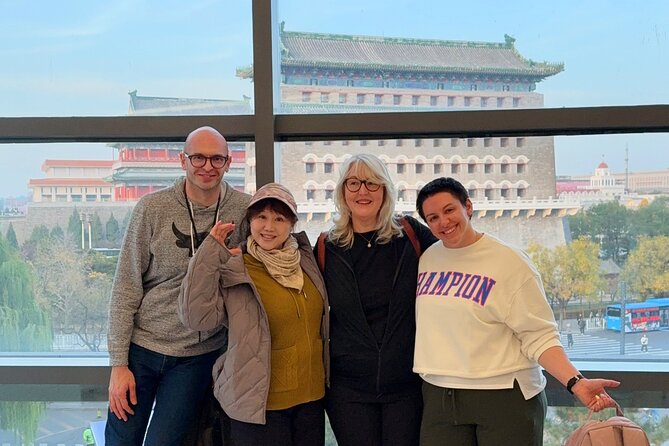
Another route centers on Nanluoguxiang, one of Beijing’s best-known hutong areas. The walk connects the Drum Tower with old lanes and the Houhai area, presenting the city through a mix of monuments, neighborhood streets, shops, and food stops.
Nanluoguxiang is attractive because it combines old street patterns with a more modern social scene. You may find cafés, snack shops, small stores, and souvenirs alongside older lanes. That makes it easy to enjoy, but it also means the area is not purely residential or frozen in the past.
This is where a guide can save you time and help you separate useful local detail from simple shopping. Kevin is specifically praised for explaining the area’s past and introducing local food and snacks. Other guides, including Yang and Summer Wang, are described as combining historical information with hands-on cultural moments and a friendly pace.
The walk continues toward the canalside Houhai area. The route description presents this as a night option, and evening changes the mood. The Bell and Drum Towers may be lit, shops remain open, and the waterfront section gives the walk a pleasant ending. The night tour is a good choice if you want sightseeing after a day spent inside museums or major monuments.
The tradeoff is weather and crowd levels. The tour requires good weather, and winter can be cold. One practical comment advises warm clothing, which is worth taking seriously. Beijing’s cold air can make a two-and-a-half-hour walk feel much longer if you dress for indoor sightseeing.
The Bell and Drum Towers at the end of the walk
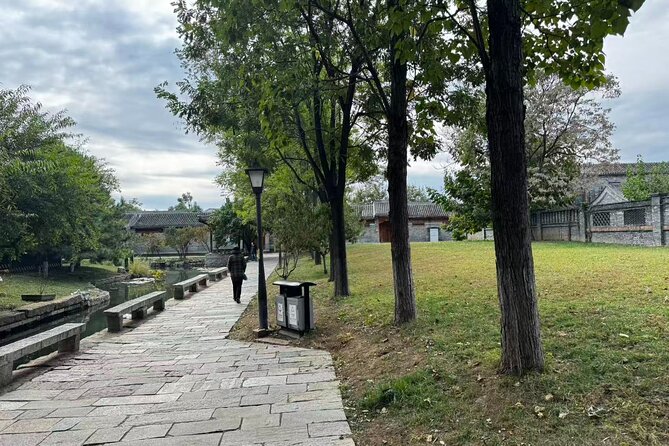
The route leads to Beijing’s Bell and Drum Towers, with around 30 minutes in the square to admire the buildings and hear how they once helped regulate time in the old city.
This is a strong closing stop because the towers are not just photogenic structures. They represent the old city’s daily rhythm, when public timekeeping mattered to everyone. Your guide can give the towers a role in the city’s story rather than leaving them as two attractive buildings at the end of a lane.
Admission to the towers is not included, so budget for that separately if you want to enter. The tour still includes time to see them from the square, and the guide’s explanation does not depend entirely on going inside. Still, check the amount before booking if entering the towers is important to you.
At night, the illuminated buildings should make a memorable final stop, though the experience still depends on the weather and the exact route selected. The supplied schedule also lists the Bell and Drum Towers as a separate 30-minute stop, so do not assume every departure follows precisely the same sequence. Your booking confirmation should settle the route and meeting point.
More Beijing highlights tours:
- Beijing 2-Day Tours: Great Wall, Forbidden City & Top Highlights
★ 5.0 · 688 reviews - Beijing: Top 6 Highlights All Inclusive 2-Day Private Tour
★ 5.0 · 472 reviews - Beijing: All Inclusive 3-Day Top Highlights Private Tour
★ 5.0 · 259 reviews - Mini Group: 2-Day Beijing Highlights and Great Wall Tour
★ 5.0 · 242 reviews
Local food, calligraphy, and small cultural stops
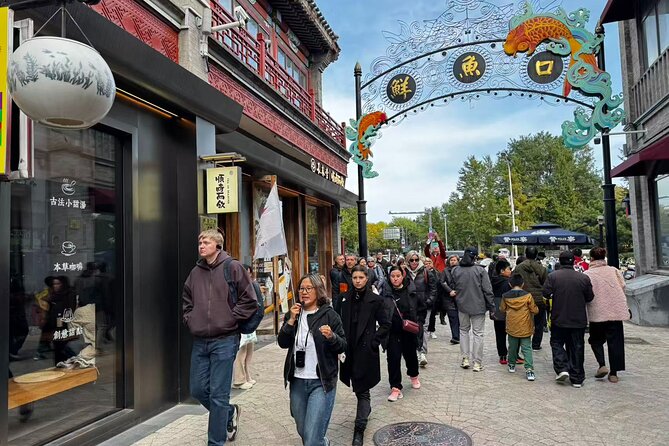
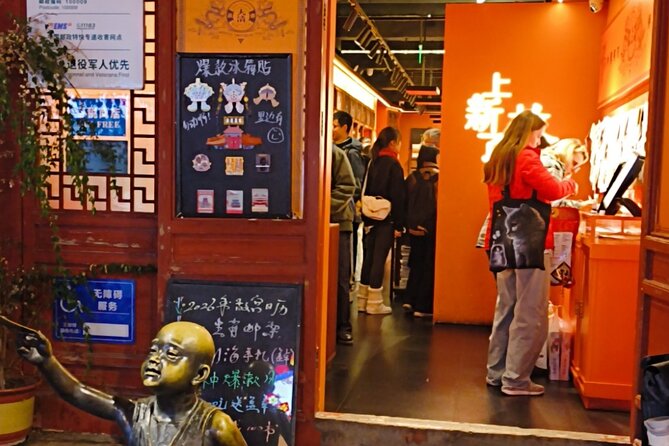
This is not only a walk from monument to monument. The experience can include local snacks, traditional pastries, drinks, and visits to small shops. One particularly full account includes trying calligraphy, sampling local food, seeing Peking Opera outfits, visiting local shops, and stopping at a shoe museum.
These extras are valuable because they give you something to do, not just something to hear about. Trying calligraphy, for example, makes Chinese writing feel less distant than seeing characters on a sign. Looking at Peking Opera clothing gives you a concrete connection to performance traditions. A small museum or specialist shop can also reveal a slice of local culture that major sights rarely cover.
The exact mix may depend on the route, time of day, and guide. Do not book expecting every activity on every departure. Instead, think of these as possible additions that make the walk more flexible and personal than a fixed sightseeing circuit.
Food is another reason to choose this tour if you want help ordering or selecting something local. The walk may introduce you to snacks you would pass by on your own. You should still remember that food choices and purchases are likely separate from the $15 tour price, since only the guide and headset for larger groups are listed as included.
What the guides add to the experience
The strongest praise is directed at the guides. Yang is described as balancing history with fun and adding activities such as calligraphy, snacks, and Peking Opera clothing. Kevin is praised for explaining the hutongs clearly, introducing local food, and helping make sense of an area that can be confusing when explored alone.
Eevee is noted for being helpful beyond the walk itself, including assisting with a taxi after the tour and giving each person a small gift. Summer Wang is credited with bringing Beijing’s culture, history, and local life to life through a well-paced route that combines major sights with less obvious stops.
These details matter because a walking tour lives or dies by its guide. The route itself is accessible to anyone with a map, but the explanation, timing, and personal attention are what justify booking. The small group limit helps. With no more than 15 people, it is easier to hear questions answered and easier for the group to stay together in narrow lanes.
For groups larger than 10, headsets are provided. That is a practical touch in areas with traffic, shop noise, and passing crowds. Smaller groups may not need them, but the limit and audio equipment suggest the operator has thought about basic communication.
Morning, afternoon, or night?
The choice of departure time should shape your decision.
A morning walk is likely best if you want cooler temperatures, a fresh start, and time to continue sightseeing afterward. It may also suit you if you prefer local streets before an evening meal.
An afternoon walk works well when you want to fit the hutongs between major sights. It gives you a chance to explore Qianmen or Nanluoguxiang without spending a full day on a single neighborhood.
A night tour is the most atmospheric choice if the route includes the Drum and Bell Towers and Houhai. The illuminated towers and evening food stops add a different mood. The cost is colder weather in winter and less daylight for seeing architectural details.
Because the published route descriptions include both Qianmen and Nanluoguxiang versions, I would pay close attention to the time and route shown when you reserve. The overall experience is clearly a guided old Beijing walk, but the exact neighborhood sequence may vary.
Price, group size, and practical value
At $15 per person, the tour offers good value if you want orientation and interpretation rather than entrance tickets. You receive an English-speaking guide, a planned walking route, and headsets for groups over 10. Tips are not included, so plan to tip separately if the guide gives you a useful and enjoyable tour.
The tour lasts approximately two and a half hours. That is long enough to cover several distinct areas, but short enough that you will not lose an entire day. Expect walking throughout, with time in public streets, hutongs, squares, and shopping areas.
The experience is near public transportation, and most people can participate. No special access restrictions are listed, but the tour takes place on foot, so comfortable shoes are a sensible choice. Keep your pace in mind if you are planning another major attraction immediately afterward.
Confirmation is provided at booking, and the operator sends a message the day before according to the information provided. Keep an eye on that message for the final meeting instructions.
Free cancellation is available up to 24 hours before the start time. Inside that window, the payment is not refunded and changes are not accepted. Since poor weather can cancel the walk, this policy matters more than it might for an indoor attraction. If the operator cancels for weather, you are offered another date or a full refund.
Who should book this hutong walk?
I would choose this experience if you want a first look at old Beijing without committing to a long excursion. It suits people who enjoy walking, local food, neighborhood stories, and a guide who can explain what appears ordinary.
It is also a good fit if you have tried exploring the hutongs alone and felt you were missing the meaning behind what you saw. Kevin’s role in helping visitors understand the area points to the main benefit: you gain a clearer route and better context.
Families and mixed-age groups may appreciate the short duration and small maximum size, though everyone should be prepared to walk for two and a half hours. Food-focused visitors should consider the night route, while architecture and city-history fans may prefer daylight.
You may want to skip it if you strongly dislike group walks, want extensive interior visits, or need a fully private itinerary. The $15 price is low partly because this is a compact shared experience, not a private custom tour with all admissions included.
Should you book it?
Yes, if you want an inexpensive and friendly introduction to Beijing beyond the imperial sights. The strongest reasons are the small group, flexible timing, local guides such as Yang, Kevin, Eevee, and Summer Wang, and the chance to combine famous landmarks with hutongs, snacks, shops, and small cultural stops.
Before booking, confirm which route you are getting and remember that Bell and Drum Tower admission is extra. Bring warm clothing for winter, allow for steady walking, and leave room in your schedule for the guide to introduce a snack or shop along the way.
For $15, this is an easy recommendation for a first or second day in Beijing. It helps you get your bearings fast, then sends you back into the city with a better sense of how the old neighborhoods fit together.
FAQ
How long does the Beijing hutong walk last?
The experience lasts approximately 2 hours and 30 minutes.
How much does the tour cost?
The listed price is $15 per person.
Which areas can the tour visit?
The routes include Qianmen Walking Street, Dashilan, Sanlihe Hutong, Nanluoguxiang, the Bell and Drum Towers, and the Houhai area. The exact route depends on the selected tour option.
Is the Bell and Drum Tower admission included?
No. The tour includes time to see the towers, but admission to the Bell and Drum Towers is not included.
Is the tour offered at different times?
Yes. Morning, afternoon, and night options are available.
What happens if bad weather cancels the tour?
If the experience is canceled because of poor weather, you are offered a different date or a full refund. You can also cancel for a full refund up to 24 hours before the start time.
More walking tours in Beijing
- Private Beijing Walking Tour of the Forbidden City with 7 Options
★ 5.0 · 675 reviews - Forbidden City Private Walking Tour with Optional Sights
★ 5.0 · 400 reviews - Beijing Private Hutong Food Walking Tour
★ 5.0 · 299 reviews - Beijing: Hutong Culinary Walking Tour with 15+ Tastings
★ 5.0 · 162 reviews
Just added around Beijing
- Xian: Must see Eternal Love or Camel Bell Legend show Ticket★ 5.0 · 3 reviews
- 2-Day Beijing Must-See Tour:4 UNESCO Sites+Tian’anmen&Hutong★ 5.0 · 4 reviews
- Beijing: 2-Day private Tour with Great wall& Forbidden city★ 5.0 · 5 reviews
- Xian: Bus Tour of Terracotta Warriors With Guide & Lunch★ 4.2 · 5 reviews
- Private Transfer to Mutianyu Great Wall with professional driver★ 5.0 · 19 reviews
- Twilight Glow at Badaling Great Wall Evening Bus Tour+Ticket★ 4.9 · 11 reviews
- Yuxiandu Chinese Royal Cuisine Museum with Show and Royal Banquet★ 5.0 · 4 reviews
- ZANBUS: Trip to the Jinshanling Great Wall Departing at 7:30 AM★ 5.0 · 5 reviews
Beijing Hutong Tours, compared.
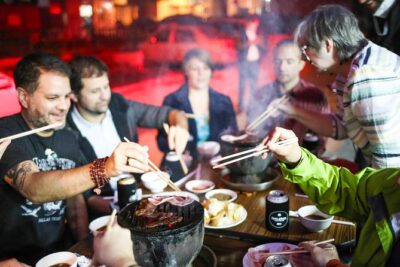
Beijing Hutong Walking Food and Beer Tour at Hidden Restaurants
Read our review →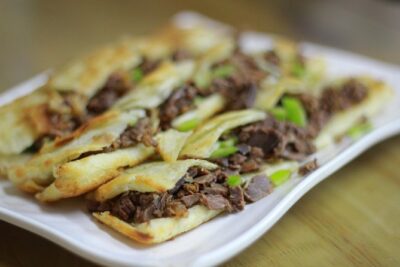
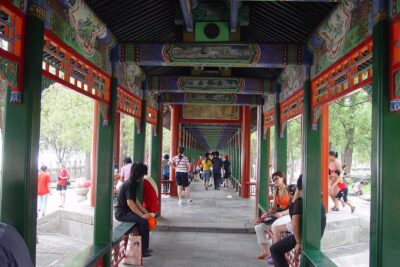
Temple of Heaven, Summer Palace, Lama Temple, Hutong Tours
Read our review →


Browse the lists this tour appears in