
Reviewed · MING TOMBS TOURS
Ming Tombs Private Tour: Sacred Road, Dingling and Changling
The most memorable part of this tour is not a grand palace but the Sacred Road, a long ceremonial approach lined with stone animals, horses, and officials. It feels calmer than Beijing’s famous central sights, and the carvings give you a clear sense of how Ming emperors wanted to be seen even after death. I like the private car pickup and the chance to set your own pace. I also like that the tour pairs Dingling’s excavated underground palace with Changling’s original wooden halls, giving you two very different views of imperial burial culture.
The main drawback is value. At $135 per person, this is not a cheap half-day outing, especially since food is not included. A second consideration is guide quality: several guides have been praised for clear, lively explanations, but one booking suffered from rushed commentary and confusion over ticket payment. Confirm the plan at the start.
Key points at a glance
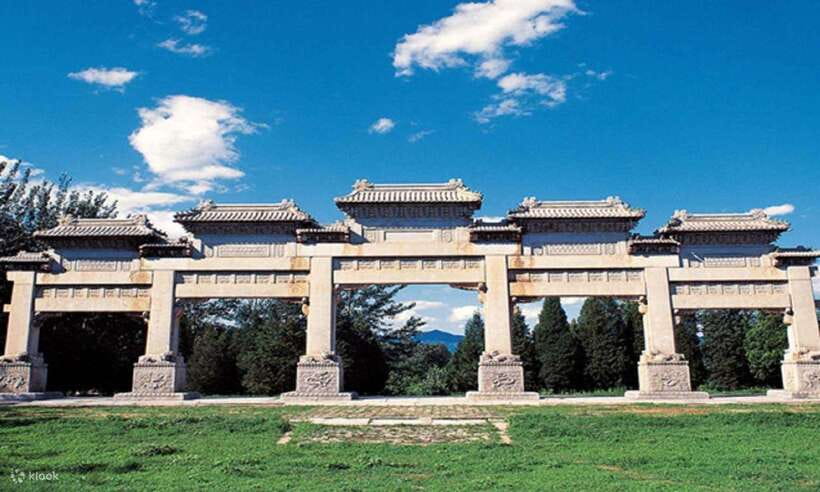
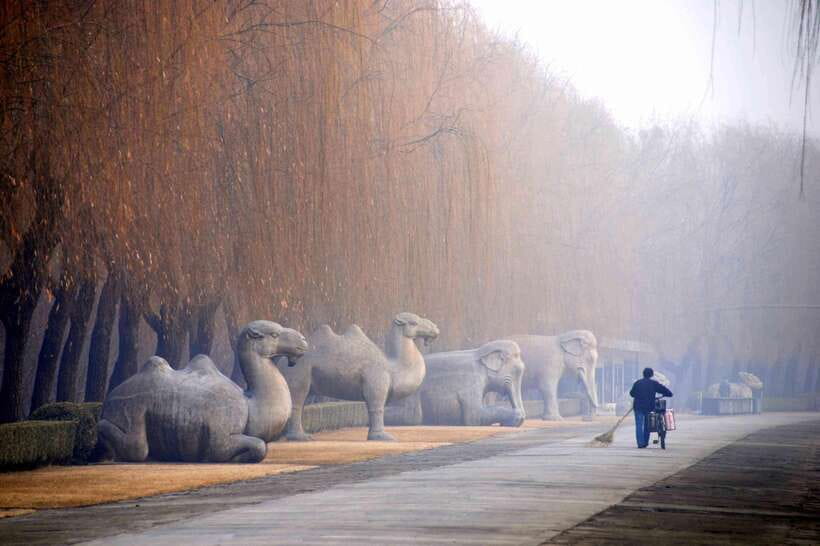
- Walk the 7.3-kilometer Sacred Road: See 32 pairs of Ming stone statues, including lions, elephants, horses, and civil and military officials.
- Enter Dingling’s 27-meter-deep underground palace: View the burial chambers of Emperor Zhu Yijun and his two empresses.
- See Changling’s enormous nanmu hall: This is the largest and best-preserved tomb in the complex.
- Travel privately from central Beijing: Hotel pickup and drop-off are included for hotels within Beijing’s 4th Ring Road.
- Learn from an English-speaking guide: Guides such as Lily, Sherry, and Mr. Zhang have been praised for explaining the excavation and Ming history clearly.
- Keep the day compact: The six-hour schedule suits you if you want the tombs without giving up a full day in Beijing.
Why the Ming Tombs deserve your time
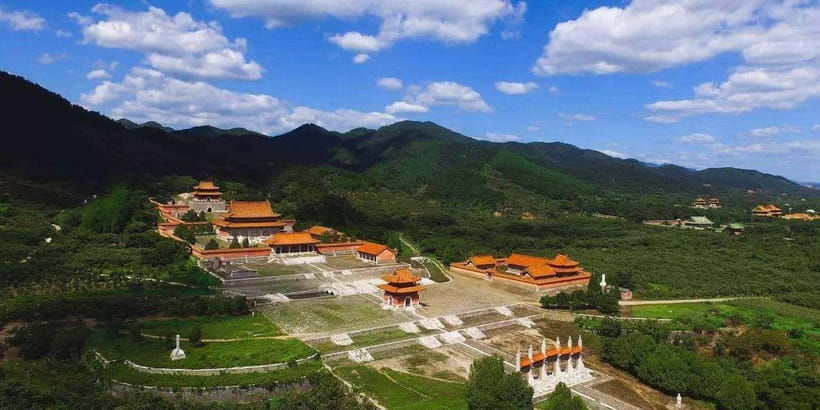
The Ming Tombs sit north of Beijing, far from the city’s palace courtyards and crowded shopping streets. This distance is part of the appeal. You trade urban noise for wooded hills, broad ceremonial spaces, and a burial complex shaped by imperial ideas of geography and feng shui.
Thirteen Ming emperors were buried in the wider area, although this tour focuses on the Sacred Road, Dingling, and Changling. The setting matters. The tombs were placed in a valley considered favorable for protection and balance, with mountains behind the burial grounds and a carefully planned approach from the south.
I like this outing because it adds context to places such as the Forbidden City. The same dynasty that built Beijing’s imperial center also built these tombs, and the architectural language is familiar: raised courtyards, tiled roofs, formal gates, carved stone, and strict symmetry. Here, though, the purpose is remembrance and ritual rather than government.
The experience also gives you a useful contrast between restoration, excavation, and survival. Dingling is famous because its underground palace was opened and excavated. Changling is prized for its grand surviving structures above ground. Seeing both keeps the visit from becoming a repetitive parade of halls.
More Ming Tombs tours in Beijing:
- Great Wall of China at Badaling and Ming Tombs Day Tour from Beijing
★ 4.5 · 731 reviews - Beijing: Mutianyu Great Wall and Ming Tombs Private Tour
★ 5.0 · 114 reviews - Private Beijing Day Trip: Mutianyu Great Wall and Ming Tombs
★ 5.0 · 114 reviews
Starting from your Beijing hotel
The day begins with a guide and driver meeting you in your hotel lobby. The pickup area covers hotels within Beijing’s 4th Ring Road, and the guide is supposed to hold a sign with your name. Private transport removes the need to work out a long public transport route to a site well outside the center.
That matters more than it may sound. The tombs are not a quick subway stop from central Beijing, and the return journey can be affected by traffic. A private car also gives you somewhere to leave extra clothing or water while walking through the grounds.
Bottled water, transport, entrance fees, and the guide are included. Food is not, so plan for the fact that this is primarily a sightseeing transfer and not a food-focused day. The total duration is about six hours, with the tomb visits taking roughly three hours of guided sightseeing before the return drive and possible Olympic Stadium photo stop.
At the beginning, I would confirm three things: the order of the stops, how much time you have at each place, and that entrance fees are covered as described. This avoids the ticket confusion reported on one poorly handled booking.
Following the Sacred Road
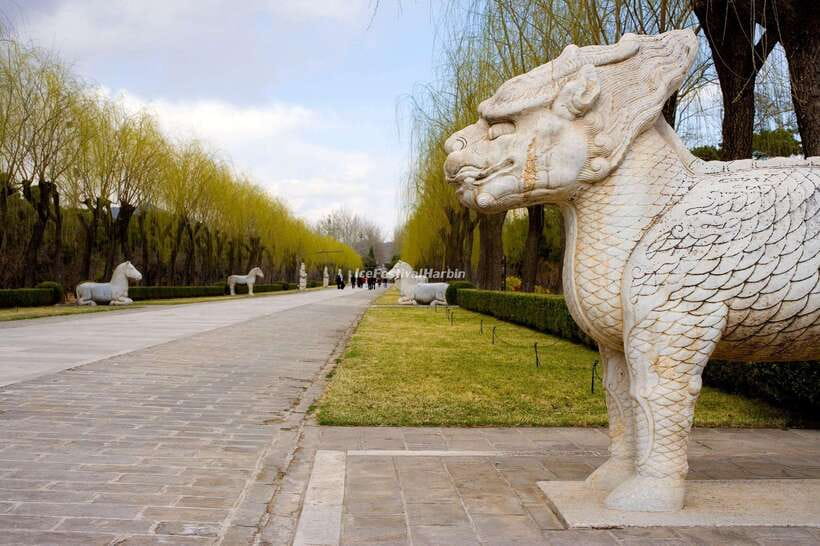
The Sacred Road was first built as the approach to Changling, the tomb of Emperor Zhu Di. Later, it served as the ceremonial route toward the larger Ming mausoleum area. The full route extends about 7.3 kilometers, though the tour presents the significant sculpted section rather than asking you to walk every meter.
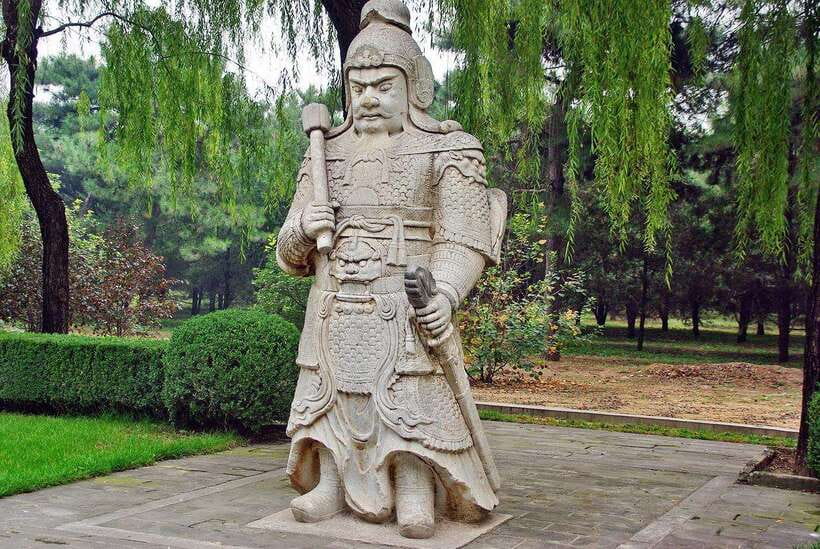
The stone figures are the reason to pay attention here. You see 32 pairs of statues representing animals and officials. Lions suggest protection. Elephants, horses, and other animals connect the imperial procession with power, transport, and order. Civil and military figures reflect the officials needed to support the emperor’s rule.
A guide adds real value at this stop. Without explanation, the statues can look like a pleasant line of old stone figures. With context, you begin to read the road as a formal court in stone. Ask your guide to point out differences in posture, clothing, and role among the civil and military officials.
This is also the best place for relaxed photographs. The road has a more open, quiet feel than Beijing’s busiest historic attractions, and the long perspective helps show the scale of the imperial plan. You will still be outdoors, so sensible walking shoes and weather-appropriate clothing matter.
The Sacred Road is not a thrilling attraction in the amusement-park sense. Its reward is slower and more visual. I would give it time rather than rushing from statue to statue. The stonework, spacing, and empty approach are the point.
Going below ground at Dingling
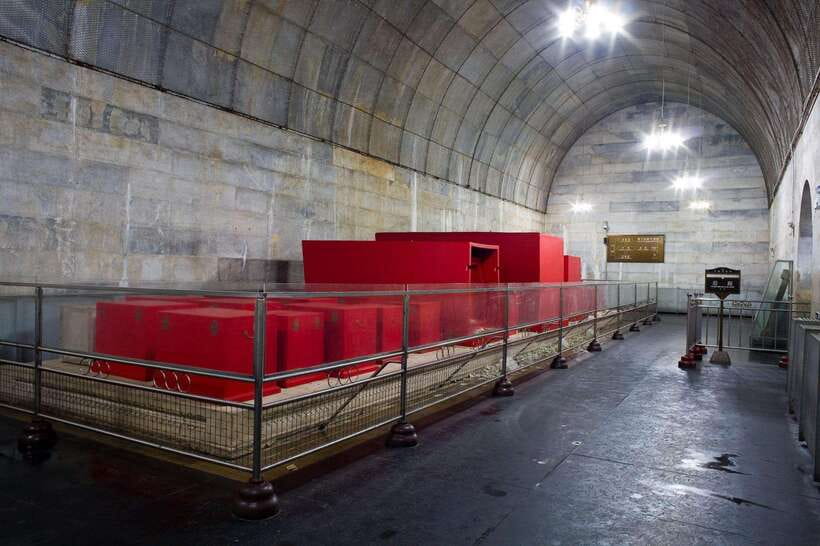
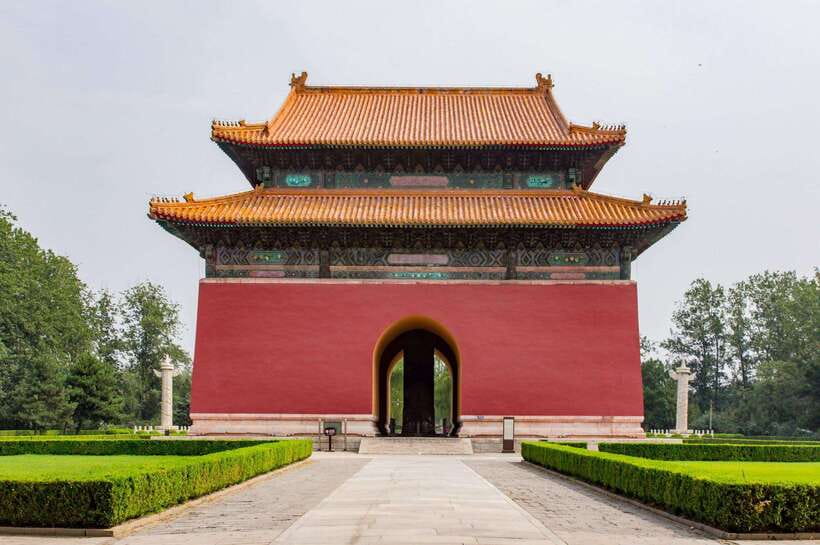
Dingling is the tomb of Emperor Zhu Yijun, along with his two empresses. It is the only one of the major Ming Tombs to have been fully excavated, which makes it the most unusual stop on this route.
You first see the above-ground courtyards and halls, then descend about 27 meters to the underground palace. The complex has three connected chambers carved from solid stone. Inside are the sarcophagi of the emperor and empresses, along with the enclosed spaces built for royal burial rites.
This is where the tour shifts from grand outdoor planning to a more enclosed, physical sense of the tomb. The underground chambers are not simply display rooms. They help you understand the effort involved in creating a hidden royal burial place and the separation between public ceremony above ground and burial below it.
Dingling also has a museum with objects found during excavation. You can see gold and silver vessels, jade carvings, silk fabrics, and imperial robes. These objects add human detail to the stone architecture. A robe tells you more about status and ceremony than another tiled roof can.
The underground section may not suit everyone. You should expect stairs and enclosed spaces, and the stop is focused on burial architecture rather than a broad collection of palace rooms. If you prefer open courtyards and timber buildings, Changling will probably be your favorite.
The guide’s explanation matters especially here. One praised guide, Mr. Zhang, is noted for explaining how the tomb was excavated and why the process changed what can be known about the site. That sort of background turns a short visit into a lesson in archaeology, not just a walk through chambers.
More private tours in Beijing:
- Beijing: Forbidden City Tour(Group/Private)-Tickets Included
★ 4.8 · 7,974 reviews - Beijing: T-Square & Forbidden City Group or Private Tour
★ 4.8 · 4,446 reviews - Beijing:Mutianyu Great Wall Private Trip with English Driver
★ 5.0 · 1,263 reviews - Private Mutianyu Great Wall Trip with English-Speaking Driver
★ 5.0 · 927 reviews
Seeing Changling’s grand timber hall
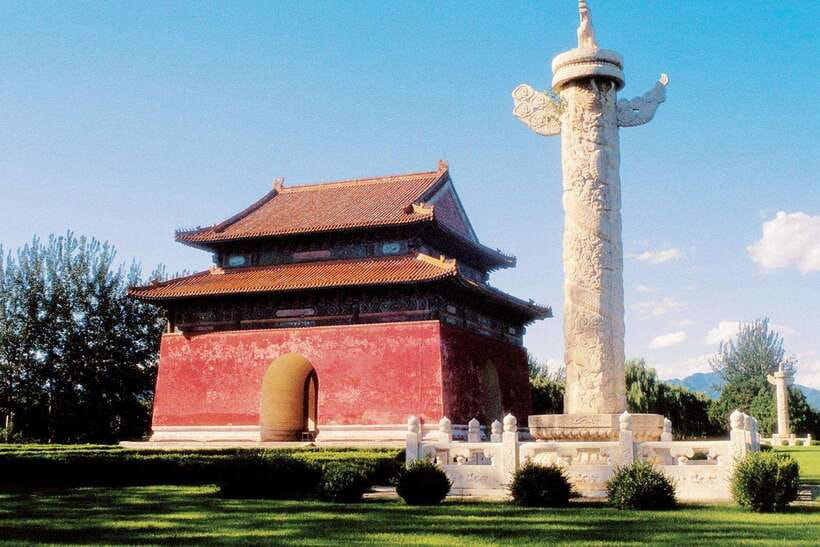
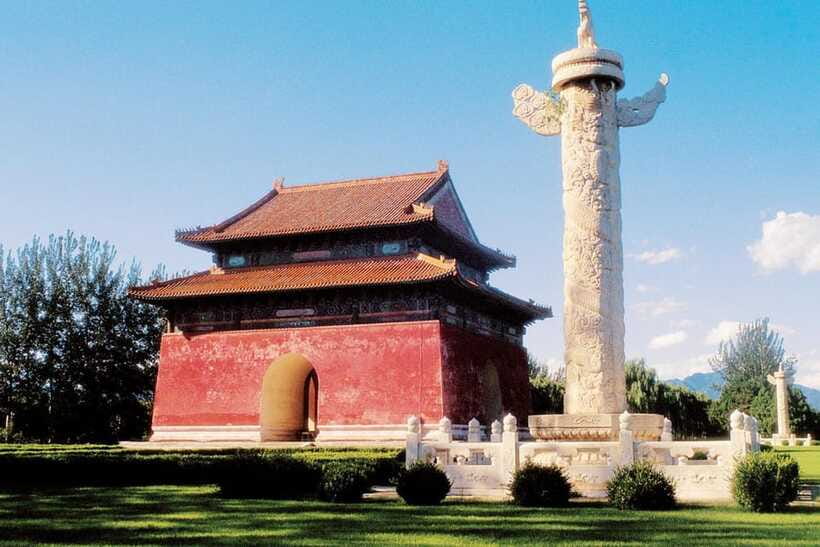
Changling is dedicated to Emperor Zhu Di, the third Ming emperor and the ruler linked with the construction of the Forbidden City and the Ming Tombs. It is the largest and best-preserved tomb in the complex, so it provides the clearest picture of imperial scale.
The main attraction is Ling’en Hall. Its huge nanmu pillars are a rare surviving example of Ming wooden architecture. The hall’s size and structure are impressive, but do not stop at the roofline. Look at the beams, the spacing between the columns, and the open interior used for imperial sacrificial ceremonies.
Changling feels more ceremonial than Dingling. Instead of descending into a burial complex, you move through broad courtyards bordered by old cypress trees. The combination of trees, stone terraces, and timber halls gives the place a quiet formality.
Your guide can connect Zhu Di’s building projects with his larger political role. He expanded the Ming Empire and supported cultural exchange, while also leaving behind one of China’s most ambitious building programs. The connection to the Forbidden City is useful because it lets you compare two expressions of the same ruler’s power.
I would not rush Changling. It is the stop where the architecture makes the most sense as a whole. Dingling shows what lies below an imperial tomb. Changling shows how the tomb presented imperial authority to the living.
A private tour with a real difference in pace
The private format is one of the strongest reasons to choose this outing. You are not trying to keep up with a large group or waiting for a dozen people to finish photographs. You can ask questions, linger over a statue, or move along when the guide has made the point.
Several guides have made a strong impression. Lily has been praised for clear explanations of Chinese history and the excavations, while Sherry has been noted for giving useful background on the tombs. Mr. Zhang is especially associated with bringing enthusiasm and extra detail to the story of Dingling.
That does not guarantee the same experience every time. One booking involved a guide who seemed rushed, unclear about the schedule, and unprepared to explain ticket costs. This is a useful warning rather than a reason to reject the whole tour. At pickup, ask the guide to walk through the day clearly and keep any ticket receipts if extra purchases arise.
A private group also works well for different walking speeds. The tour combines outdoor paths, courtyards, and an underground palace, so some people will naturally want more time at one stop than another. A private guide can adjust better than a fixed large-group schedule.
What $135 per person buys you
At $135 per person, the price makes the most sense for a small private group that values convenience and explanation. You receive hotel pickup and drop-off, a private vehicle, an English-speaking guide, bottled water, and entrance fees. You also avoid arranging a separate ride to a distant historical complex.
For one person or a couple, the cost is harder to justify if you are comfortable managing transport and reading about the tombs yourself. The tour’s strongest added value is the guide, not the admission ticket. The Sacred Road, Dingling, and Changling can look like a series of formal buildings without someone explaining why the route, statues, excavation, and halls matter.
You should also allow for food costs, since no meal is included. The six-hour schedule is compact, and the supplied plan does not promise a restaurant stop. Ask before departure if you need time to eat.
One optional wrinkle comes from the reported experience of a shopper who agreed to visit a jade workshop and tea tasting after the tombs. These are shopping stops with tourist pricing, not core parts of the advertised route. They should happen only with your agreement, so say clearly if you want the historical tour to end after the sights.
The Olympic Stadium photo stop
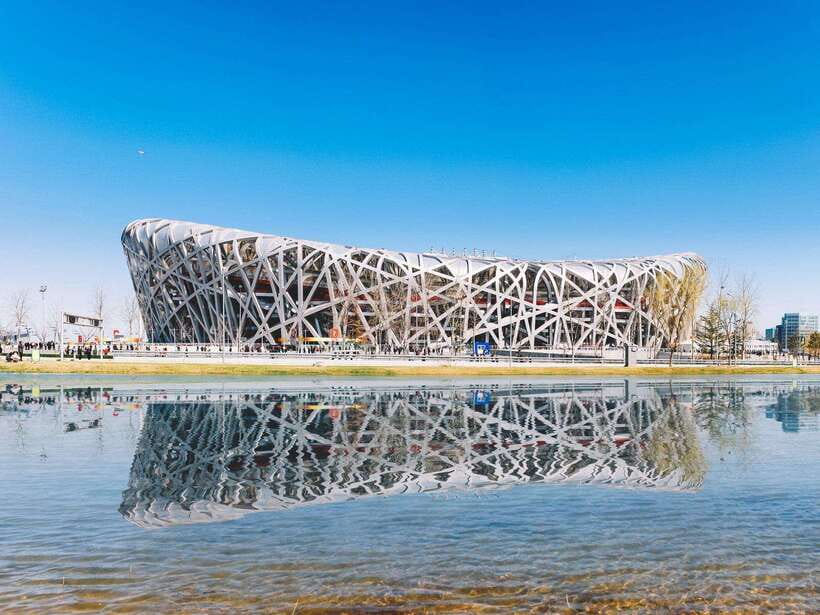
If traffic allows, the return route may pass Beijing’s 2008 Olympic venues, including the Bird’s Nest and Water Cube. The planned stop is brief, about five minutes, and functions as a photo opportunity rather than a stadium visit.
I like this as a small closing touch. After a morning of emperors, burial rites, and Ming timber, the modern Olympic buildings show another version of Beijing’s ambition. The contrast is sharp: one set of monuments claims authority through imperial tradition, the other through contemporary design and global events.
Do not book this tour mainly for the stadiums. Traffic controls whether the stop happens, and five minutes is enough for photographs but not a proper visit. Think of it as an extra if the road conditions cooperate.
Who will enjoy this tour most
I would recommend this tour to you if you want the Ming Tombs explained rather than simply photographed. It suits first-time visitors to Beijing who want a manageable half-day outside the center, families or small groups who value a private vehicle, and anyone interested in the link between the Forbidden City and imperial burial customs.
It is also a good fit if you prefer a quieter historical setting. The Sacred Road and tomb grounds offer a slower mood than Beijing’s busiest central attractions.
You may want another plan if you are counting every dollar, dislike enclosed underground spaces, or want a full day devoted to the tomb area. The tour moves efficiently through three major stops, but it is not designed for a long, leisurely archaeological study.
Bring your passport. Passport number, full name, and nationality are required for everyone at booking, and the passport itself is listed as something to bring. Comfortable walking shoes are sensible, though the information provided does not give a specific accessibility assessment.
FAQ
How long does the Ming Tombs private tour last?
The tour lasts about six hours, including hotel pickup, sightseeing, and the return to Beijing.
Which Ming Tombs are visited?
The route includes the Sacred Road, Dingling, and Changling. Dingling includes the excavated underground palace, while Changling is the largest and best-preserved tomb.
Is hotel pickup included?
Yes. Pickup and drop-off are included for hotels within Beijing’s 4th Ring Road. The guide meets you in the hotel lobby holding a sign with your name.
Is the tour conducted in English?
Yes. The tour includes a live English-speaking guide.
Are entrance fees and transport included?
Yes. Entrance fees, private vehicle transport, bottled water, and the professional guide are included. Food is not included.
What should I bring?
Bring your passport. You must provide the passport number, full name, and nationality of each person when booking.
Should you book it?
Book this tour if you want the Ming Tombs handled in a practical, private package and you care about understanding what you see. The best parts are the quiet Sacred Road, Dingling’s rare underground palace, Changling’s giant nanmu hall, and the chance to ask questions without a large group slowing you down.
At $135 per person, I would choose it for convenience and guiding, not simply for admission. Confirm the schedule and ticket arrangements at pickup, and make clear that optional shopping stops are not wanted if you prefer a straight historical visit. With a strong guide such as Lily, Sherry, or Mr. Zhang, this is a focused and worthwhile way to see a side of Beijing that many visitors skip.
Just added around Beijing
- Xian: Must see Eternal Love or Camel Bell Legend show Ticket★ 5.0 · 3 reviews
- 2-Day Beijing Must-See Tour:4 UNESCO Sites+Tian’anmen&Hutong★ 5.0 · 4 reviews
- Beijing: 2-Day private Tour with Great wall& Forbidden city★ 5.0 · 5 reviews
- Xian: Bus Tour of Terracotta Warriors With Guide & Lunch★ 4.2 · 5 reviews
- Private Transfer to Mutianyu Great Wall with professional driver★ 5.0 · 19 reviews
- Twilight Glow at Badaling Great Wall Evening Bus Tour+Ticket★ 4.9 · 11 reviews
- Yuxiandu Chinese Royal Cuisine Museum with Show and Royal Banquet★ 5.0 · 4 reviews
- ZANBUS: Trip to the Jinshanling Great Wall Departing at 7:30 AM★ 5.0 · 5 reviews
Ming Tombs Tours, compared.
Great Wall of China at Badaling and Ming Tombs Day Tour from Beijing
Read our review →
Mutianyu Great Wall and Ming Tombs Private Tour
Read our review →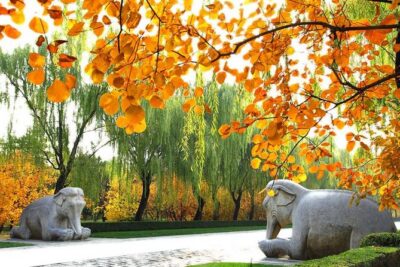
Private Beijing Day Trip: Mutianyu Great Wall and Ming Tombs
Read our review →Mutianyu Great Wall and Ming Tombs Private Tour
Read our review →
Mutianyu + Ming Tombs or Summer Palace Private Day Tour
Read our review →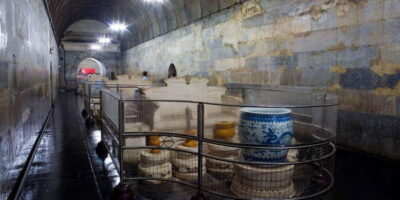
Juyongguan Great Wall, Sacred Way & Ming Tombs Trip
Read our review →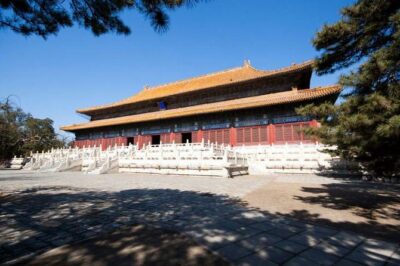
Private Tour: Ming Tombs and Great Wall at Mutianyu from Beijing
Read our review →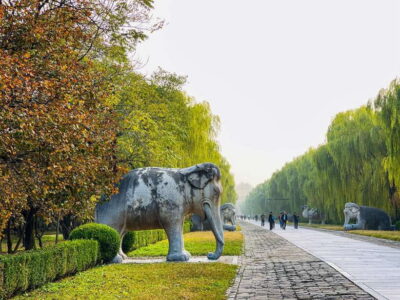
Great Wall and Ming Tomb All-inclusive Private Tour
Read our review →Browse the lists this tour appears in