
Reviewed · MUSEUMS
Beijing Half Day: National Museum of China In-depth Tour with Subway Transfer
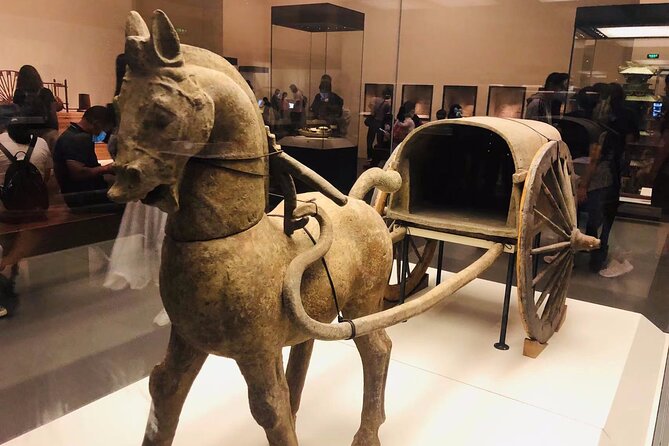
Beijing’s National Museum is so large that a first visit can feel like opening several history books at once. This private half-day tour gives you a clear path through the ancient China galleries, from painted pottery and jade dragons to the famous Simuwu Ding, while guides such as Mike and Cathy explain why each object matters.
I like the private format, since your guide can slow down for questions or move on when a display does not catch your interest. I also like the help with museum ticket booking, a useful service when entry dates are limited and the reservation system can be difficult to manage.
The main consideration is time. Four hours is enough for a focused introduction, not a full museum visit. The building holds more than 1.4 million relics, and the museum can be extremely crowded, so expect highlights rather than every gallery.
Key points at a glance
- Ancient China from prehistory to 1911: Follow a broad story of Chinese civilization through pottery, bronze, jade, Buddhist sculpture, and dynastic objects.
- A private guide in a huge museum: Your group visits alone with the guide, making it easier to ask questions and adjust the pace.
- Practical ticket help: Museum entry is arranged for you, an advantage when tickets are hard to secure independently.
- Hotel pickup and one-way transfer: Meet at your hotel at 8:30 a.m. or 1 p.m., then travel by subway or taxi to the museum.
- Famous objects with useful context: Look for the Simuwu Ding, Siyang Fangzun, jade dragon, Sanxingdui pieces, and Song Dynasty Guanyin.
- Strong guide feedback: Mike, Cathy, William, Diana, Herbie, and Michael are praised for clear English, patience, humor, and detailed explanations.
Why the National Museum needs a guide
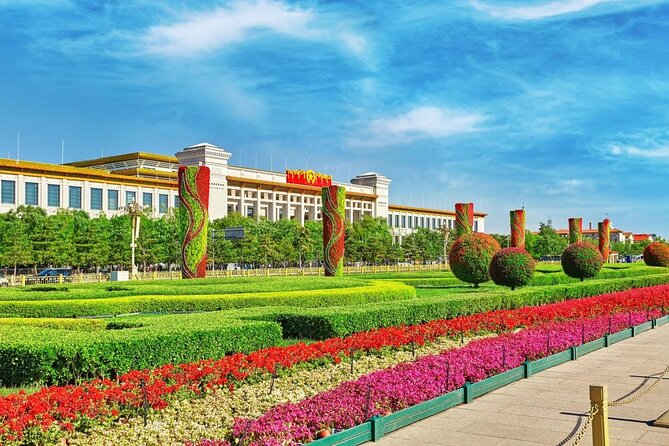
The National Museum of China is not a small stop you can simply wander through in an hour. Its collection covers prehistoric times through modern Chinese history, with more than 1.4 million relics and nearly 6,000 objects classified as first-class cultural relics.
That scale is exciting, but it can also be tiring. A display case may hold an object that looks modest until you learn that it changed how historians understand an entire period. A guide helps you make those connections instead of spending your visit reading labels at random.
This tour concentrates mainly on the Ancient China exhibition. That is the right choice for a first visit if you want a broad story rather than a narrow art lesson. You move across roughly two million years of human history, then through early states, imperial periods, religious art, and the events leading to the 1911 revolution.
I would not treat this as a complete museum tour. The National Museum has many other rooms and special displays, and the scheduled time allows only a brief look at some of them. Think of the experience as a well-directed introduction that helps you decide what deserves a longer visit later.
More museums in Beijing:
- Beijing: Tianmen Square, Forbidden City & Royal Museum Tours
★ 4.6 · 1,288 reviews - Beijing:Jingshan Park (Palace Museum Garden) Ticket
★ 4.5 · 185 reviews - Beijing’s Forbidden City with Special Viewing of Treasure Gallery and the Great Wall Ruins at Badaling
★ 4.5 · 24 reviews
Meeting your guide and reaching the museum
Your guide meets you in your hotel lobby at either 8:30 a.m. or 1 p.m. The tour includes hotel pickup and a one-way transfer to the museum by subway or taxi. The supplied details also describe the transfer as a single-way taxi service, so confirm the exact arrangement with the operator if transport is important to your plans.
The private setup matters here. You are not trying to keep up with a large group while crossing a vast building. You can ask why a ritual vessel mattered, how Buddhist images changed over time, or what a particular symbol means without holding up strangers.
The guides named in the tour feedback include Mike, Cathy, William, Diana, Herbie, and Michael. Mike is especially often praised for clear English, historical detail, and an easy manner. Cathy is described as energetic, friendly, and especially good at explaining complex Chinese history in simple terms. William is noted for combining museum knowledge with conversation about modern China, while Diana is praised for bringing the objects to life and answering questions.
Guide assignments can change, so you should not book expecting one particular person unless the operator confirms it. The useful point is that the experience is built around an English-speaking guide rather than a recorded audio route.
Ancient China, from painted pottery to bronze ritual vessels
The first major part lasts about two hours and takes you through the Ancient China exhibition. This is where the tour earns its price for many people, since the objects are important but not always self-explanatory.
The early displays include painted pottery jars filled with unanswered questions about prehistoric life. You may also see the jade dragon, often described as one of China’s earliest dragon forms. It is a small object with a large place in the story, since the dragon became one of the most enduring symbols in Chinese culture.
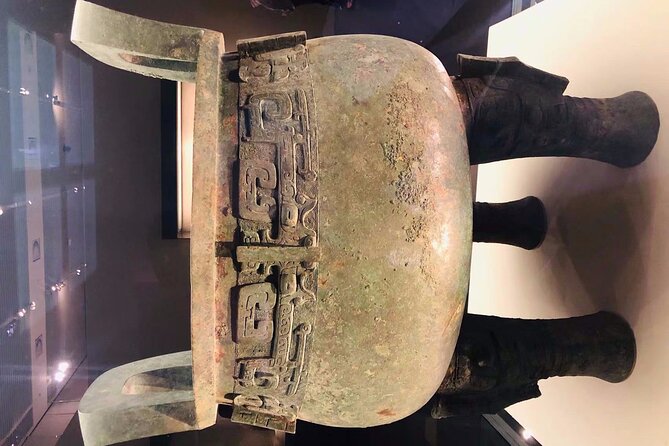
The route then moves toward the bronze age and later dynastic periods. The Simuwu Ding is one of the major sights. Unearthed in Henan in 1939, this massive bronze vessel is tied to ritual and royal power. Your guide can explain why these vessels were made, how they were used, and what their inscriptions and form reveal about early Chinese society.
Another important object is the Siyang Fangzun, a square bronze vessel decorated with sheep heads facing the four directions. It is a fine example of how craft, ceremony, and political authority came together. Without context, you might see an elaborate container. With context, it becomes evidence of a society that invested enormous skill in objects used for public and religious life.
The exhibition also includes material connected with the Sanxingdui civilization. Its masks and unusual forms often feel different from the familiar visual language of later imperial China. The guide’s role is useful here, especially if you want to understand why Sanxingdui is treated as a major archaeological discovery rather than simply an unusual collection of sculptures.
The itinerary refers to a 2,000-year-old refrigerator, a striking object that gives the ancient galleries a touch of practical ingenuity. Details like this keep the visit from becoming a march through rulers and dates. You get a glimpse of how people stored food, practiced rituals, expressed status, and understood the world around them.
What the objects reveal about Chinese civilization
A good museum visit should do more than name an object. It should help you see how one period connects to another. This tour’s strongest feature is the wide time span.
You move from prehistoric pottery to jade, then to bronze ritual pieces, archaeological finds, religious sculpture, and objects connected with later political change. The route offers a basic framework for Chinese history, which is especially useful if this is your first time studying the subject.
The guide can also help you avoid a common mistake: treating Chinese history as one long, unchanging tradition. The displays show different materials, beliefs, artistic styles, and political systems. Sanxingdui does not look like the bronze culture represented by the Simuwu Ding. Buddhist sculpture introduces another set of images and religious ideas. The objects connected with the 1911 revolution point toward a very different modern era.
The tour is not presented as an academic seminar, and it should not be. Its value lies in making a huge collection readable during a limited visit. Mike is praised for linking ancient and modern history, while Cathy is praised for making the material easy to follow. That kind of explanation is particularly helpful when you have only a few days in Beijing.
More private drivers in Beijing:
- Beijing:Mutianyu Great Wall Private Trip with English Driver
★ 5.0 · 1,263 reviews - Private Mutianyu Great Wall Trip with English-Speaking Driver
★ 5.0 · 927 reviews - Private Mutianyu Great Wall Trip With English-Speaking Driver
★ 5.0 · 899 reviews - Small Group 6km hiking Jinshanling Great Wall EN speaking driver
★ 5.0 · 347 reviews
Buddhist sculpture and the Song Dynasty Guanyin
The second main section lasts about an hour and focuses on the Ancient Buddha Statue exhibition room. This changes the mood of the visit. After the weight and ceremony of bronze vessels, you encounter images shaped by devotion, meditation, and changing artistic ideals.
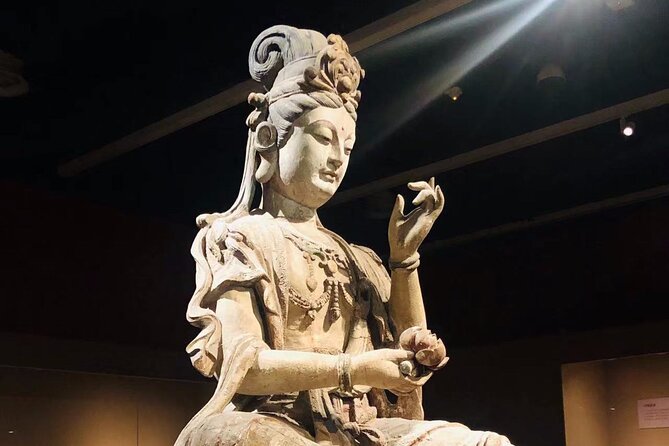
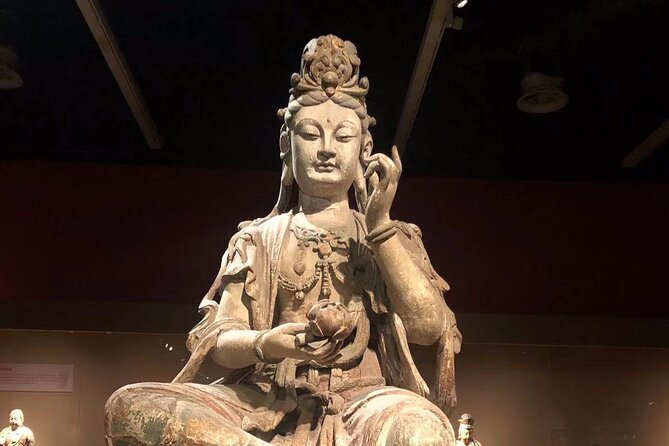
One highlight is a painted wooden statue of Guanyin from the Song Dynasty. The tour description compares the calm expression and fine workmanship with the Mona Lisa. That comparison is useful only as a shorthand for the statue’s quiet presence, but it points to what you should watch for: the face, the controlled posture, and the way painted wood can give a religious image warmth and humanity.
The Buddhist room is also a good place to ask about changing styles. You may see how facial expressions, body proportions, clothing, and gestures differ across periods. The guide can help you look past the label and notice the choices made by the artist.
After the Buddhist sculptures, the guide may also show you other displays, including a food culture exhibition and a jade collection. The exact amount of time available depends on crowd levels and your interests. Cathy, for example, is praised for adding useful context in the jade area after the main ancient China galleries.
Do not expect a detailed tour of every side exhibition. The itinerary gives the Ancient China galleries and Buddhist statues priority. If food culture or jade is your main reason for visiting, tell the guide early so the time can be managed around your interests.
Crowds, pacing, and the limits of four hours
The museum may be very crowded. That affects more than comfort. It can make a famous object difficult to approach, slow the group between rooms, and limit how long you can stand in front of a display.
This is where a private guide helps. Mike is praised for knowing where to go and how to work around crowds. That does not mean the galleries will be quiet, but it does mean you have someone who can adjust the route rather than simply follow a fixed script.
Four hours sounds generous until you consider the museum’s scale. About two hours are devoted to Ancient China, about one hour to Buddhist sculpture, and the remaining time is taken by pickup, transfer, entry, movement through the building, and any additional displays.
I would choose the morning departure if you want the rest of the day free, or if you prefer to visit at the start of your sightseeing day. The afternoon option works well if you have spent the morning at another Beijing site. The supplied schedule gives 8:30 a.m. and 1 p.m. starts, so plan around those fixed choices.
Wear comfortable shoes and keep your expectations focused. You are not going to see everything. You are going to understand the best starting point.
Is the $114 price good value?
At $114 per person, this is not the cheapest way to enter a museum. The price includes the professional English-speaking guide, hotel pickup, one-way transfer, museum ticket booking, and admission. It is also a private activity, so the cost buys personal attention for your own group rather than a seat in a large shared tour.
The ticket booking may be the most practical part of the package. Independent entry can be difficult because museum reservations open only a limited number of days ahead, and the booking system may be in Chinese. One booking attempt for four people could not be arranged on the preferred date, but an alternative date was offered. That is a reminder to keep your schedule flexible.
The value depends on how you travel. If you enjoy reading every label and already understand Chinese history, you may prefer to arrange entry yourself and spend several hours alone. If you have one day for major Beijing sights, or if the museum’s booking process feels like a problem, the guide and ticket service make the cost easier to justify.
The group discount feature may reduce the per-person cost for larger parties, though the exact discount is not stated. Ask about it before booking rather than assuming a particular rate.
Who should book this museum tour?
I would recommend it to a first-time Beijing visitor who wants the broad outline of Chinese history without taking on the museum alone. It also suits families, couples, and small private groups who prefer to ask questions freely.
History fans will appreciate the route from prehistoric objects through the 1911 revolution. Art lovers may prefer the bronze vessels, jade, Sanxingdui material, and Buddhist images. Even if you are not usually a museum person, the food culture display and the practical objects can give the visit more variety.
This is less suitable if you want a full-day museum study session. The National Museum can occupy days, and this tour only samples its holdings. It is also not ideal if you dislike scheduled departures, guided interpretation, or moving at another person’s pace.
The strongest guide qualities are clear English, patience, humor, and the ability to explain difficult material without turning the visit into a lecture. Those qualities are associated with Mike, Cathy, William, Diana, Herbie, and Michael in the supplied guide information. Assignment is not guaranteed, but the private format gives you a good chance to shape the conversation around your interests.
Final booking advice
Book this tour if you want the National Museum to make sense quickly, especially if securing tickets is a concern. The best reason to choose it is not simply admission. It is the combination of a private guide, a planned route, hotel pickup, and explanations that connect a jade dragon, a bronze ritual vessel, Sanxingdui sculpture, and Buddhist art into one story.
Skip it if you want to spend a full day exploring every collection at your own speed. For everyone else, the four-hour plan is a sensible first look. Just remember that the museum is enormous, the crowds can be heavy, and the tour is designed to show you the key chapters, not every page.
You can cancel for a full refund up to 24 hours before the start time. Changes or cancellations made less than 24 hours ahead are not accepted, and the cut-off follows Beijing local time.
FAQ
How long does the National Museum tour last?
The experience lasts approximately four hours.
What time does the tour start?
Pickup is offered at 8:30 a.m. or 1 p.m.
Is hotel pickup included?
Yes. Your guide meets you in your hotel lobby.
Is transportation included?
Yes. A one-way transfer to the museum is included, described as travel by subway or taxi. The included services also specify a single-way taxi transfer.
Is the museum admission ticket included?
Yes. National Museum admission and ticket booking are included.
Is this a private tour?
Yes. Only your group participates in the activity.
What parts of the museum does the tour visit?
The main route includes the Ancient China exhibition and the Ancient Buddha Statue exhibition room. You may also see displays such as jade or food culture, depending on time and your interests.
Can I cancel for a refund?
Yes. You can cancel at least 24 hours before the experience starts for a full refund. Cancellations or changes made less than 24 hours before the start time are not accepted.
Just added around Beijing
- Xian: Must see Eternal Love or Camel Bell Legend show Ticket★ 5.0 · 3 reviews
- 2-Day Beijing Must-See Tour:4 UNESCO Sites+Tian’anmen&Hutong★ 5.0 · 4 reviews
- Beijing: 2-Day private Tour with Great wall& Forbidden city★ 5.0 · 5 reviews
- Xian: Bus Tour of Terracotta Warriors With Guide & Lunch★ 4.2 · 5 reviews
- Private Transfer to Mutianyu Great Wall with professional driver★ 5.0 · 19 reviews
- Twilight Glow at Badaling Great Wall Evening Bus Tour+Ticket★ 4.9 · 11 reviews
- ZANBUS: Trip to the Jinshanling Great Wall Departing at 7:30 AM★ 5.0 · 5 reviews
- One day tour to downtown Tianjin from Beijing by high speed train★ 5.0 · 3 reviews
Museums, compared.
Tianmen Square, Forbidden City & Royal Museum Tours
Read our review →
Beijing’s Forbidden City with Special Viewing of Treasure Gallery and the Great Wall Ruins at Badaling
Read our review →
Lama Temple, Confucius Temple and Guozijian Museum
Read our review →
China National Museum Ticket Pre-booking and Tiananmen Square
Read our review →
4-Hour Private Tour: Lama Temple, Confucius Temple, Guozijian Museum with Dim Sum
Read our review →
JingShan park (palace museum garden) entry ticket
Read our review →
Beijing Private Tour: National Museum of China, Sacred Road and Ming Tombs
Read our review →Browse the lists this tour appears in