
Reviewed · BEIJING HUTONG TOURS
Beijing Hutongs Walking Tour
Beijing’s hutongs offer a sharp change of pace from the grand gates and broad avenues around the Forbidden City. This small-group walk leads you through gray-brick lanes, old courtyard homes, and the Nanluoguxiang area, where the city’s past still feels close at hand. The route also brings in Chinese time-keeping and the story of Puyi, China’s last emperor.
I like the relaxed pace and the chance to see places tied to real people, including Empress Wanrong’s former home. I also like the group limit of 15, which gives you a better chance to ask questions. The main caution is simple: the meeting point must be clear, and you must arrive on time. One booking ended badly after a guest and guide missed each other at the start.
Key points at a glance
- Nanluoguxiang begins the walk: Meet at Exit E of Nanluoguxiang Station on Metro Lines 6 or 8.
- Mao’er Hutong adds personal stories: The lane includes former residences and buildings connected with Chinese history.
- Empress Wanrong’s former residence is a photo stop: You see the outside of the mansion known as Empress’s Mansion.
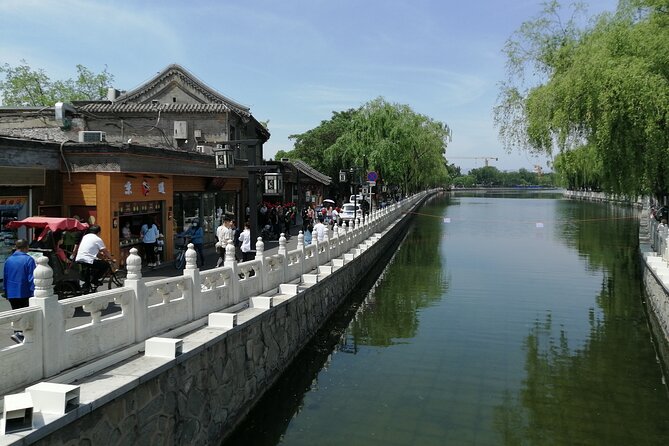
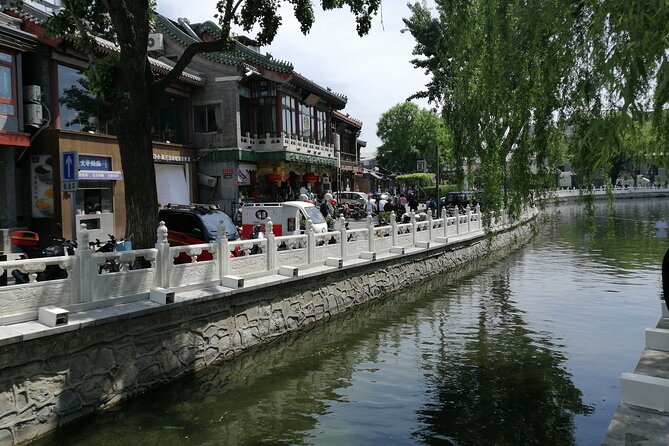
- The route reaches Qianhai and Houhai: A narrow channel links the two lakes, adding water and open space to the lane walk.
- The tour runs about 90 minutes to two hours: It suits a morning in Beijing without taking over your whole day.
- Roy is one guide named in the feedback: He is described as speaking good English and giving an engaging tour, including questions for the group.
Why Beijing’s hutongs are worth your morning

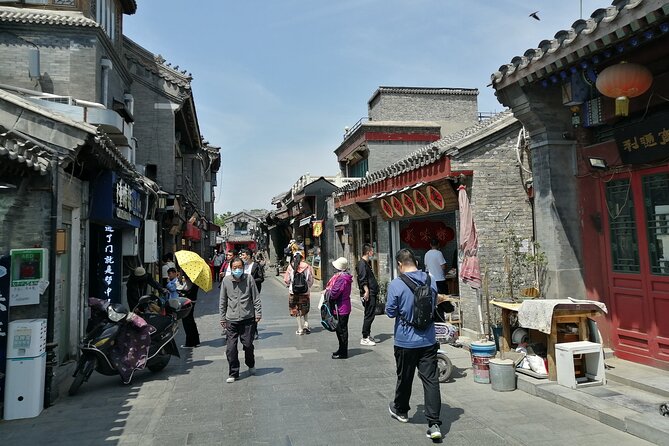
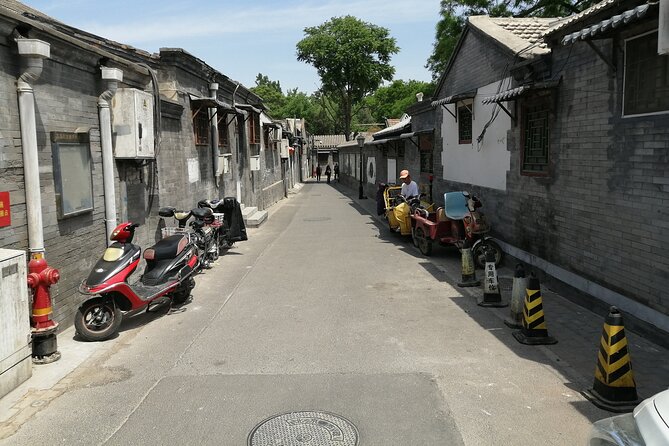
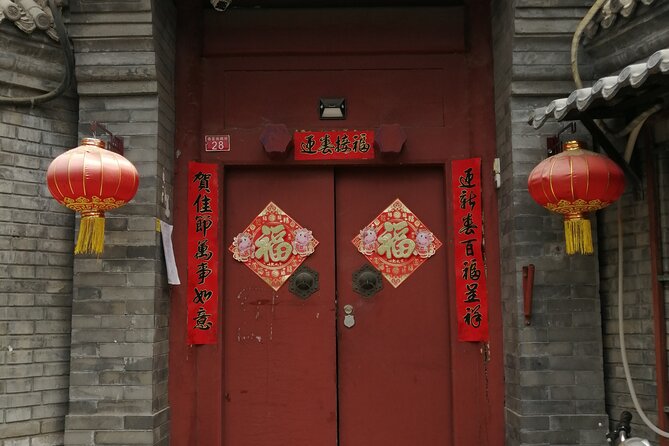
The hutongs are not a single monument you enter, admire, and leave. They are streets and lanes that show how Beijing worked at neighborhood level. Courtyard houses sit behind plain walls, trees shade sections of the route, and narrow passages create a far more local feel than the city’s imperial sights.
That difference is the point of this tour. You are not spending the whole morning at another formal palace or temple. Instead, you are walking through an older residential pattern, with your guide explaining what you are seeing and connecting the lanes to figures from China’s past.
For a first day in Beijing, this is a useful orientation. You begin at 10:00 am, when you can still use the afternoon for a major sight, a meal, or time around the lakes. The walk is short enough for most visitors who can manage an ordinary city stroll, and the small group keeps it more personal than a large bus outing.
More hutong tours in Beijing:
- Beijing Hutong Walking Food and Beer Tour at Hidden Restaurants
★ 5.0 · 1,132 reviews - Old Beijing Dinner Tour
★ 5.0 · 348 reviews - Temple Heaven, Summer Palace, Lama Temple, Hutong Bus Tour
★ 4.7 · 319 reviews
Starting at Nanluoguxiang Metro Station
The meeting point is Exit E of Nanluoguxiang Station, served by Metro Lines 6 and 8. The Chinese location is 南锣鼓巷南口 or 南锣鼓巷地铁站E出口. That detail matters because Nanluoguxiang is a busy name on maps, and simply arriving in the general area may not put you beside the guide.
I would save the meeting point in your phone before leaving your hotel. The tour begins at 10:00 am, and the only serious negative account attached to the experience concerns a missed meeting. The guide said he was waiting with four other people, while the guest reported waiting about 25 minutes and then leaving. You can avoid this kind of confusion by arriving early at Exit E and checking the exact station exit rather than relying on a nearby landmark.
A mobile ticket is provided, and confirmation comes at booking. The tour is conducted in English, so you should expect spoken explanation throughout the walk rather than a printed self-guided route.
Nanluoguxiang and the return to the Yuan Dynasty
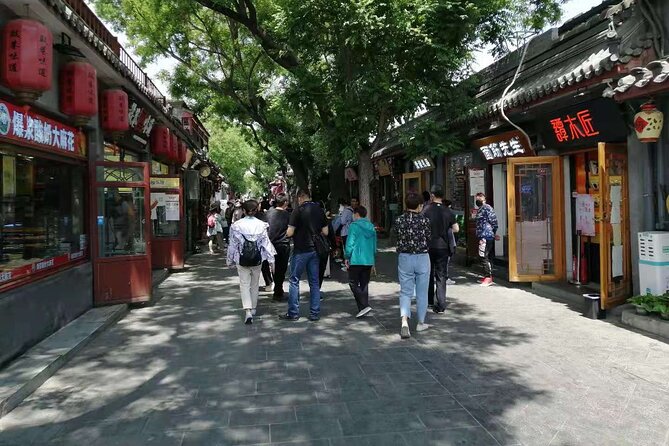
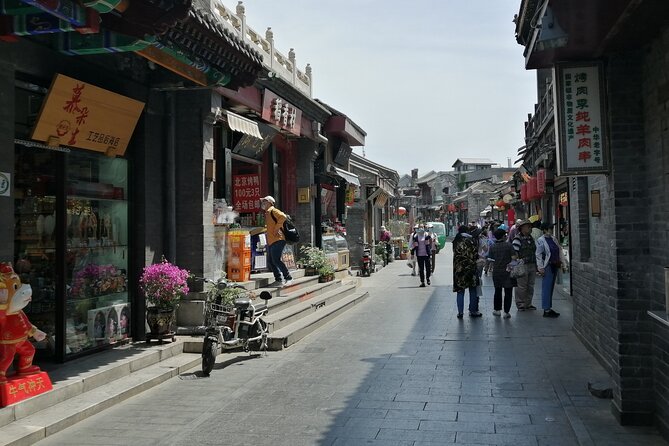
Nanluoguxiang is the first major setting. The lane reaches back to the Yuan Dynasty, and its gray courtyard houses and mature trees show the basic shape of traditional Beijing residential architecture. The appeal is not a single grand facade. It is the repeated pattern of walls, entrances, rooflines, and side lanes.
Your guide helps turn those details into a story. Without explanation, you might see only a busy old street with shops and passing bicycles. With context, the layout gives you a better idea of how families lived around shared courtyards and how the city grew through compact neighborhoods.
The tour’s wording describes a laid-back atmosphere, and that is a fair expectation. This is a walking experience, not a race between several ticketed attractions. You have time to look up at the architecture, notice the old trees, and ask about daily life.
Nanluoguxiang can also be busier and more commercial than the quieter side lanes. If you want a completely empty historic neighborhood, this may not meet that wish. Its value comes from using a well-known, easy-to-reach area as the gateway to the older hutong network.
Mao’er Hutong and Empress Wanrong’s former home
From Nanluoguxiang, the route continues along Mao’er Hutong, one of the most interesting parts of the walk. This lane is connected with several buildings and stories, giving the guide room to move from architecture into biography.
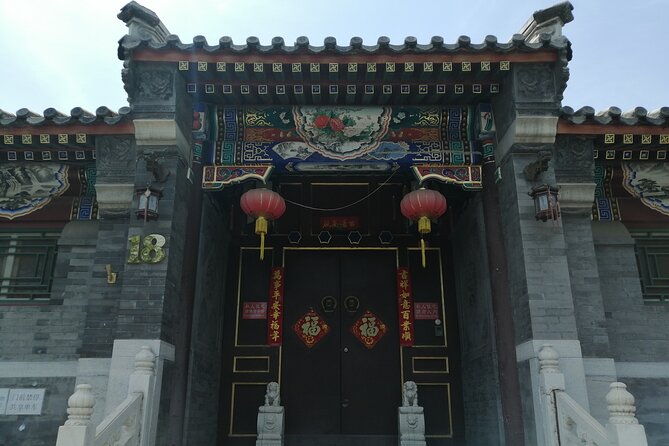
The most specific stop is Empress’s Mansion, the former residence of Wanrong, the empress of Puyi, China’s last emperor. The stop is mainly for photographs and an explanation of the people linked to the residence. You should not expect a long museum visit or a guaranteed interior tour. The supplied details describe the mansion as a photo stop, and admission tickets are not included.
That limitation is worth knowing before you book. The experience is about seeing the setting and hearing its story, not entering a series of restored houses. For many people, that is enough. A guide can explain why a plain courtyard residence matters, while you get a sense of its place within the hutong.
The connection to Puyi also gives this walk a useful historical thread. You are not only looking at old buildings in the abstract. You are seeing a neighborhood associated with the last imperial household and learning how political history touches ordinary city streets.
More walking tours in Beijing:
- Private Beijing Walking Tour of the Forbidden City with 7 Options
★ 5.0 · 675 reviews - Forbidden City Private Walking Tour with Optional Sights
★ 5.0 · 400 reviews - Beijing Private Hutong Food Walking Tour
★ 5.0 · 299 reviews - Beijing: Hutong Culinary Walking Tour with 15+ Tastings
★ 5.0 · 162 reviews
The channel between Qianhai and Houhai
The route then reaches a narrow channel joining Qianhai Lake and Houhai Lake. This changes the feel of the walk. After the enclosed gray lanes, water and open views give you a chance to pause and reset.
The lake area also helps explain why this part of central Beijing has long been popular. Hutongs, courtyards, waterways, and public gathering places sit close together here. The route is not limited to architecture, and the shift from narrow lane to lakeside setting gives the tour a more varied rhythm.
The information provided describes Houhai as the end area, while the meeting details state that the tour finishes at the Drum Tower. Treat the Drum Tower as the final practical landmark, with the route passing through the Qianhai and Houhai area. If you have a later appointment, allow a little extra time to orient yourself after the walk.
Reaching the Bell and Drum Towers
The route is associated with the Bell and Drum Towers, and the tour finishes at the Drum Tower. These structures connect neatly with the guide’s explanation of Chinese time-keeping. That subject is more useful here than it may sound at first, because the towers were not simply decorative landmarks. They relate to the old system of marking time in the city.
Admission to attractions is not included, so do not assume the tour price covers entry into the tower. The walk gives you the surrounding context and a convenient stopping point. You can decide separately if you want to visit inside, depending on your schedule and the ticket arrangements available that day.
Ending near the Drum Tower is practical. From there, you are positioned near a cluster of historic lanes and the Houhai area. You can continue exploring on your own, stop for a meal, or use public transport for the next part of your day.
What the guide adds to the experience
The guide is the main reason to choose this walk instead of wandering through the hutongs alone. The route itself can be found on a map, but the meaning of a courtyard entrance, a former residence, or an old timekeeping system is harder to recover without local explanation.
Roy is specifically named in the available feedback. He is described as speaking good English and explaining the hutongs well. Another positive account describes a guide who prepared carefully, kept the group involved, and used questions to make people think about Beijing’s past and present.
That interactive approach can make a short walk feel fuller. Instead of listening to a nonstop speech, you may be asked to consider how people lived, what changed, or why a place mattered. The exact guide can vary, so Roy cannot be guaranteed, but the experience is run by Roy Li Tours Beijing and is designed for English-speaking groups.
The group maximum is 15 people. That is not a private tour, but it is small enough for the guide to hear questions and keep the group together in narrow lanes. If you prefer total flexibility or long pauses for photography, a private guide would give you more control. For a $30 walk, however, the small-group format offers a reasonable balance.
Is the $30 price fair?
At $30 per person, the tour is priced as a short guided introduction rather than a full-day cultural program. You are paying for an English-speaking guide, route planning, local context, and the convenience of moving through a complicated hutong area without constantly checking a map.
I think the value is strongest if this is your first time in Beijing or your first visit to the hutongs. The guide connects architecture, imperial history, neighborhood life, and old timekeeping in one compact morning. That saves you from seeing the lanes as attractive but unexplained backdrops.
The price is less compelling if you only want a quick walk and already understand Beijing’s history. It also does not include admission tickets, so budget separately if you want to enter the Drum Tower or another paid attraction. Still, the short duration keeps the total commitment low.
The 90-minute to two-hour range is useful. You get enough time for several distinct areas without giving up half a day. A slower pace, questions, or small delays may push the walk toward two hours, so avoid scheduling something immediately afterward.
Who should book this hutong walk?
I would choose this tour for a first morning or early afternoon in Beijing, especially if you want a gentle introduction before tackling the city’s larger sights. It suits people who prefer streets and local neighborhoods to a packed list of formal attractions.
It is also a good match for anyone interested in the human side of history. The stories of Wanrong and Puyi give the walk a clear thread, while the courtyard homes and lanes show how that history sits within a living urban setting.
Families and older adults may appreciate the manageable length, provided everyone in the group can handle a normal city walk. Most people can participate, and service animals are allowed. The available information does not give a detailed surface or step count, so anyone with specific mobility needs should confirm those conditions before booking.
You may want another option if your priority is entering historic homes, receiving hotel pickup, or spending a full day with one guide. Those services are not listed here. This experience is a focused walking tour with a central meeting point and a fixed route.
Timing, group size, and practical planning
The 10:00 am start gives you a clear plan for the morning. Arrive at Exit E early, keep your phone charged for the mobile ticket, and check the station name in both English and Chinese. The Chinese characters can help if you need to ask for directions.
The tour is near public transportation, which is a strong advantage in Beijing. You do not need to arrange a private vehicle to reach the start. Since the walk finishes near the Drum Tower and Houhai area, plan your next stop from there rather than assuming you will return to Nanluoguxiang.
The experience requires a minimum number of bookings to operate. If that minimum is not reached and the tour is canceled, you are offered another date or experience, or a full refund. You can cancel for a full refund up to 24 hours before the start time. After that cutoff, refunds are not provided and changes are not accepted.
Should you book the Beijing Hutongs Walking Tour?
Book it if you want a short, guided introduction to old Beijing that balances courtyard architecture with personal stories and a walk near the lakes. The $30 price is reasonable for an English-speaking guide, a small group, and a route that would be harder to understand on your own.
Go in with the right expectations. You are not buying entry to a collection of museums or a private tour with unlimited time. You are buying a well-focused walk through Nanluoguxiang and Mao’er Hutong, with Empress Wanrong’s former residence, the Qianhai and Houhai channel, and the Drum Tower area along the way.
Arrive early at the exact metro exit. If you do that, this tour offers a useful, relaxed way to see a side of Beijing that is easy to miss when you focus only on imperial monuments.
FAQ
How long does the Beijing Hutongs Walking Tour last?
The walk lasts about 1 hour 30 minutes to 2 hours.
Where does the tour begin?
Meet at Exit E of Nanluoguxiang Metro Station, served by Beijing Metro Lines 6 and 8. The Chinese location is 南锣鼓巷南口 or 南锣鼓巷地铁站E出口.
What time does the tour start?
The scheduled start time is 10:00 am.
Where does the tour finish?
The tour information says the route reaches Houhai and that the walk finishes at the Drum Tower. Use the Drum Tower as the final meeting and planning landmark.
Is admission included for the Drum Tower or other attractions?
No. Admission tickets are not included. The tour price covers the English-speaking guide.
How large can the group be?
The tour has a maximum of 15 people.
What is the cancellation policy?
You can cancel at least 24 hours before the start time for a full refund. Cancellations or changes made less than 24 hours before the start time are not refunded or accepted.
Just added around Beijing
- Xian: Must see Eternal Love or Camel Bell Legend show Ticket★ 5.0 · 3 reviews
- Xian: Bus Tour of Terracotta Warriors With Guide & Lunch★ 4.2 · 5 reviews
- 2-Day Beijing Must-See Tour:4 UNESCO Sites+Tian’anmen&Hutong★ 5.0 · 4 reviews
- Beijing: 2-Day private Tour with Great wall& Forbidden city★ 5.0 · 5 reviews
- Private Transfer to Mutianyu Great Wall with professional driver★ 5.0 · 19 reviews
- Twilight Glow at Badaling Great Wall Evening Bus Tour+Ticket★ 4.9 · 11 reviews
- Yuxiandu Chinese Royal Cuisine Museum with Show and Royal Banquet★ 5.0 · 4 reviews
- ZANBUS: Trip to the Jinshanling Great Wall Departing at 7:30 AM★ 5.0 · 5 reviews
Beijing Hutong Tours, compared.
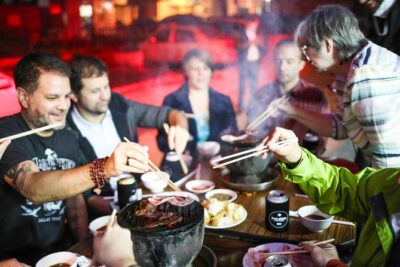
Beijing Hutong Walking Food and Beer Tour at Hidden Restaurants
Read our review →
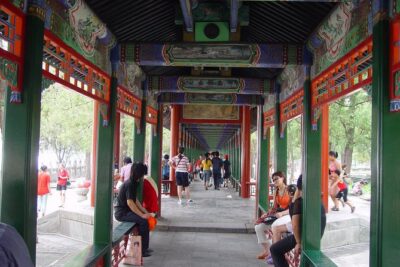
Temple of Heaven, Summer Palace, Lama Temple, Hutong Tours
Read our review →


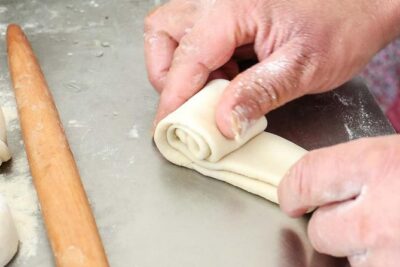
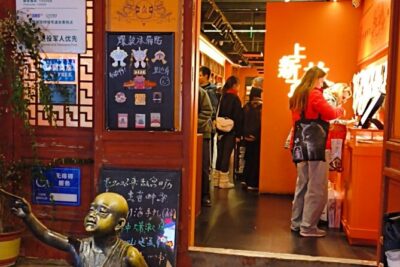
Beijing City Walk: Explore Hutongs Life and Old Beijing
Read our review →Browse the lists this tour appears in