

Reviewed · BEIJING ATTRACTION TICKETS
Beijing:Drum and Bell Towers Entry Ticket- Cultural Treasure
Beijing’s Drum and Bell Towers are not just old buildings to photograph. They were the city’s official clock for centuries, using a dusk drum and a morning bell to mark time. The 63-ton Ming Dynasty bell is the star attraction, while the Drum Tower gives you a close look at the machinery of imperial timekeeping and the steep climb that comes with it.
I like the direct e-ticket entry, especially if you are visiting during a busy holiday period. I also like the English textual and visual guide, which adds useful context and points you toward the hutongs and restaurants around the towers. The main drawback is price: at $13 per person, you may pay a sizeable convenience premium compared with buying a ticket locally, and the towers are not suitable for anyone who has trouble with long, steep stairs.
Key points to know before you book

- The 63-ton Yongle bell: The Bell Tower houses one of China’s largest and most famous ancient bells, cast during the Ming Dynasty.
- Two towers, one old time system: Your ticket covers both the Bell Tower and Drum Tower, which once regulated Beijing’s daily life.
- A steep physical visit: Long, sharply angled stairs make the experience difficult for people with limited mobility.
- English help without a live guide: You receive a textual and visual guide, but there is no tour leader or audio commentary.
- A good hutong stop: The towers sit beside Beijing’s historic hutong area, so you can pair your visit with a walk and a meal nearby.
- Useful during crowded periods: Advance reservation and direct entry can save time when Beijing is busy.
Why Beijing’s old clock towers matter
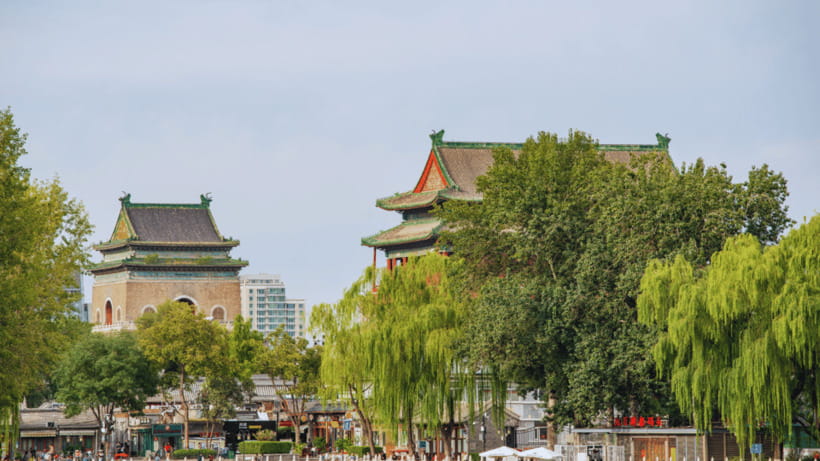
The Bell and Drum Towers sit at the northern end of Beijing’s central axis. They were first built during the Yuan Dynasty, from 1206 to 1368, and continued to serve the city during the Ming and Qing dynasties.
Before electric clocks, phones, and public announcements, these towers helped organize the day. The drum marked dusk, and the bell marked morning. Their sounds carried across the capital, giving residents a shared sense of time.
That idea makes the visit more interesting than a standard architectural stop. You are not only looking at timber, stone, and tiled roofs. You are seeing the buildings that once told an entire capital when the day began and ended.
The two structures also have a distinctive layout. The Bell Tower sits slightly north of the Drum Tower rather than forming a perfectly balanced pair. Together, they cover about 12,597 square meters and form a protected historic complex at the heart of old Beijing.
I find this setting especially useful for understanding the city’s traditional planning. Beijing’s central axis was designed around order and ceremony, and these towers helped anchor that system. The visit is short, but it gives you a clear piece of the city’s old structure.
More Beijing attraction tickets:
- 4-Hour Small Group Tour to Forbidden City with Entry Tickets
★ 5.0 · 1,863 reviews - Beijing: Tiananmen Square Registration Service(Ticket)
★ 4.5 · 1,704 reviews - Beijing: The Temple of Heaven or Summer Palace Entry Ticket
★ 4.6 · 1,286 reviews
Entering the Drum Tower
Your ticket includes entry to the Drum Tower, where the climb is likely to be the first thing you notice. The stairs are steep, long, and not especially forgiving. Take your time, use the handrails, and wear shoes with a secure grip.
At the top, you can see the building’s traditional structure and the old drums. There were once 25 drums in the Drum Tower. The scale of that collection helps explain why this was more than a decorative pavilion. It was a working public time station.
The Drum Tower is also the more physical part of the visit. If you dislike stairs, this stop may feel harder than expected. The booking information specifically warns that the towers are not suitable for people with reduced mobility, and that advice deserves attention.
You should also allow a little extra time for moving through the upper levels. The listed duration is two hours for both towers, but your pace will depend on how comfortably you handle the climb and how long you spend reading the material.
The included English guide helps here. It is a printed or digital textual and visual resource rather than a person leading you from room to room. You can use it to connect the drums with the wider story of Beijing’s old city rather than simply checking off another attraction.
Seeing the Bell Tower and its famous bell

The Bell Tower sits slightly north of the Drum Tower and contains the major object of the visit: a bell cast during the Yongle era of the Ming Dynasty, from 1403 to 1424.
The bell weighs 63 tons and is known as the King of Ancient Bells of China. That figure is hard to picture until you are standing near the structure that houses it. Even without a performance or audio presentation, the object gives the building a strong sense of purpose and scale.
The Bell Tower is also an architectural counterpoint to the Drum Tower. The pair was designed as part of one timekeeping system, yet each building has its own character. Seeing both makes the layout easier to understand than visiting only one.
You should not expect a guided lecture or an audio track at the Bell Tower. No live guide and no audio guide are included. The English guide must do the explanatory work, so this experience suits independent visitors who prefer to read at their own pace.
That arrangement has advantages. You can pause over details that interest you, move on when you are ready, and avoid being tied to a group schedule. The tradeoff is that you will not have someone on site to answer questions or explain small features in person.
How the two-hour visit works
The experience is best treated as a self-guided cultural stop rather than a full tour. After your reservation is confirmed, you receive e-tickets by email or WhatsApp, along with the English textual and visual guide.
You use the supplied tickets to enter both towers directly. The advance booking is particularly useful during crowded dates, including major Chinese holiday periods. One booking made during Golden Week included the tickets, QR codes, and guide well in advance, which allowed the visitor to plan confidently during one of Beijing’s busiest travel periods.
Once inside, give yourself time to understand the buildings rather than rushing straight to the highest point. Start by reading the guide’s basic explanation of the Yuan, Ming, and Qing periods. Then look closely at the drums, the bell, the structural details, and the relationship between the two towers.
A sensible visit might look like this:
- Begin at the Drum Tower and allow time for the climb.
- Read about the 25 drums and the dusk time signal.
- Continue to the Bell Tower for the 63-ton Yongle bell.
- Use the guide to understand how the two buildings worked together.
- Finish with a walk through the surrounding hutongs.
The exact order may depend on how you enter and how busy the site is. The important point is that your ticket includes both buildings, not just the more famous bell.
More entry tickets in Beijing:
- Beijing: Forbidden City Tour(Group/Private)-Tickets Included
★ 4.8 · 7,974 reviews - Beijing Forbidden City Ticket Booking (Optional: guide service)
★ 5.0 · 1,263 reviews - Beijing: Mutianyu Gt Wall Trip, Depart 8-10am Bus w/ Tickets
★ 4.9 · 1,256 reviews - Forbidden City&T-Square Small GroupTours w/ ticket(Eng/Esp Guide)
★ 5.0 · 995 reviews
The hutongs make the visit better

The towers are next to Beijing’s hutong neighborhoods, and this is where the experience becomes more than a quick look at two historic structures. The hutongs give you a chance to see the low-rise streets and traditional urban setting around the towers.
The English guide includes information about the nearby hutongs and recommendations for local restaurants. That is a useful addition because the towers themselves may take less than two hours for a fast visitor. You can extend the outing by walking through the surrounding streets and stopping for a meal.
I would plan the towers and hutongs as one outing. The towers explain how the old city was organized from above and through sound. The hutongs let you see the human scale of that city at street level.
Keep your expectations in check. The towers are important, but they are not Beijing’s largest attraction, and one booking assessment noted that there are bigger sights in the city. If you have only one day in Beijing, you may need to weigh this stop against the Forbidden City, the Great Wall, or other major sites.
If you have several days, though, the towers offer a useful change of pace. They are compact, specific, and connected to the everyday workings of the old capital. Add the hutong walk and you have a more complete local-area visit.
Is $13 good value?
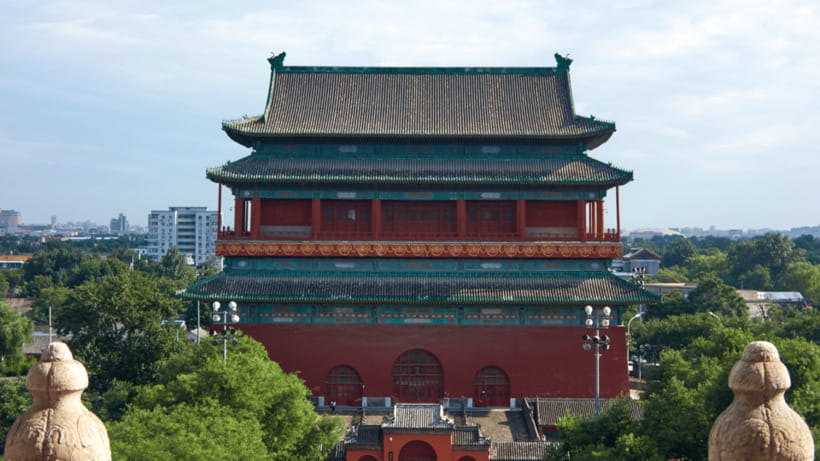
The listed price is $13 per person. That includes entry to both the Bell Tower and Drum Tower, the English textual and visual guide, advance reservation, and direct use of the supplied e-tickets.
The important question is not simply the ticket price. It is what the booking service saves you. You provide your passport name, passport number, and date of birth after ordering. The reservation is made three days before your visit, and the e-tickets are sent once the booking succeeds.
That process can be valuable if you are unfamiliar with Beijing’s ticketing systems or visiting during a crowded period. It also gives you the convenience of receiving the QR codes before you arrive.
However, you should know that one visitor felt the online price was much higher than the amount payable on site. The exact local price is not provided here, so I cannot calculate the difference. Treat the $13 as a convenience price, not necessarily the cheapest possible entry.
I would pay it if you value advance planning, need English support, or are visiting during a busy holiday. If your priority is the lowest cost and you are comfortable buying locally, compare the on-site price before booking.
The free cancellation policy also reduces the risk. You can cancel up to 24 hours in advance for a full refund, and the reserve now, pay later option lets you hold the place without paying immediately. Those terms are useful if your Beijing schedule is still changing.
Stairs, timing, and mobility concerns

The stairs are the biggest practical issue. They are steep and fairly long, especially for anyone unused to climbing historic tower interiors. This is not a flat museum visit.
If you have limited mobility, the Drum and Bell Towers may not be a suitable choice. The available information directly warns that the experience is not appropriate for reduced mobility, so do not rely on the attraction being easy simply because the visit lasts about two hours.
For most able-bodied visitors, the climb is manageable if taken slowly. I would avoid rushing, particularly if you are visiting in warm weather or after a full day of sightseeing.
Bring your passport or another accepted ID card. The booking process requires passport details, and identification may be needed when using the reservation.
The two-hour duration is a useful guide rather than a strict schedule. You might finish faster if you focus on the main objects, or use the full time by reading the guide and adding a hutong walk. Check the available starting times before booking because the exact entry schedule can affect how you fit the visit into your day.
Who will enjoy this experience most?
I would recommend this visit to you if you like architecture, old city planning, or the practical side of history. The towers show how a capital functioned before modern communication, and the bell and drums give the subject a physical presence.
It also suits independent visitors. You do not need to follow a guide, and the English material lets you set your own pace. Families with older children may find the drums and huge bell more memorable than a long museum display, though younger children may tire on the stairs.
The experience is less suitable if you want a live historical performance, a guided lecture, or a broad tour of Beijing. There is no live guide and no audio guide. The included material provides context, but you must do the reading yourself.
It is also not the best choice for visitors who cannot manage steep stairs. In that case, the booking price would not be good value because the main experience takes place inside the towers and on their upper levels.
Practical booking advice
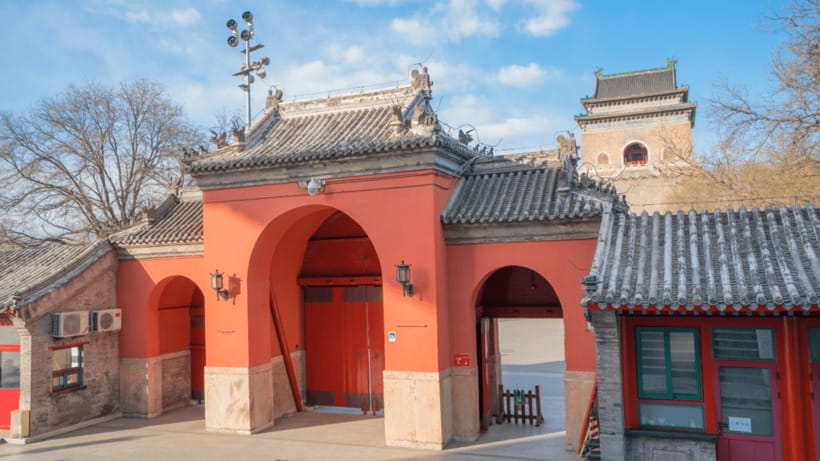
Provide your passport name, passport number, and date of birth carefully after placing the order. The tickets are reserved three days before the visit, so do not treat the booking as an instant entry confirmation.
Watch your email and WhatsApp for the e-tickets and QR codes. Save them where you can open them easily at the entrance. Keep your passport or ID card with you.
Download or open the English guide before entering if possible. The guide includes visual material, information about the towers, and helpful suggestions for the nearby hutongs and restaurants.
Plan enough time for the surrounding area. The towers are close to the hutongs, and that neighborhood walk may become the most personal part of your visit. You can see the formal old city at the towers, then follow the smaller streets nearby for a different view of Beijing.
The provider is Hua Hua Explore China. The booking includes entry and written support, not transportation, a live guide, or an audio guide.
Should you book the Beijing Drum and Bell Towers?
Book this experience if you want a compact historical stop with direct entry, English reading material, and a chance to connect the towers with Beijing’s hutongs. The 63-ton bell, the collection of 25 drums, and the old dusk-and-morning time system give the visit a clear focus.
Skip it if you are seeking Beijing’s biggest headline attraction, need step-free access, or want a guide to explain everything in person. The $13 price may also feel high if you can buy a cheaper local ticket and do not need advance arrangements.
For most visitors with several days in Beijing, I think it is a worthwhile two-hour addition, especially when paired with a hutong walk and nearby meal. Just go in knowing that you are paying partly for convenience, and bring steady legs for the climb.
FAQ
What does the $13 ticket include?
The price includes entry to both the Bell Tower and Drum Tower, plus an English textual and visual guide.
Is a live guide included?
No. The experience does not include a live tour guide or an audio guide.
How long does the visit take?
The listed duration is two hours. Your actual time may vary depending on how long you spend in each tower and whether you explore the nearby hutongs.
What identification should I bring?
Bring your passport or ID card. The reservation process requires your passport name, passport number, and date of birth.
How do I receive the tickets?
After a successful reservation, the e-tickets are sent by email or WhatsApp. You can use the supplied e-tickets to enter both towers directly.
Can I cancel the booking?
Yes. You can cancel up to 24 hours in advance for a full refund. The reserve now, pay later option also lets you hold your place without paying immediately.
Just added around Beijing
- Xian: Must see Eternal Love or Camel Bell Legend show Ticket★ 5.0 · 3 reviews
- Beijing: 2-Day private Tour with Great wall& Forbidden city★ 5.0 · 5 reviews
- Xian: Bus Tour of Terracotta Warriors With Guide & Lunch★ 4.2 · 5 reviews
- 2-Day Beijing Must-See Tour:4 UNESCO Sites+Tian’anmen&Hutong★ 5.0 · 4 reviews
- Private Transfer to Mutianyu Great Wall with professional driver★ 5.0 · 19 reviews
- Twilight Glow at Badaling Great Wall Evening Bus Tour+Ticket★ 4.9 · 11 reviews
- Yuxiandu Chinese Royal Cuisine Museum with Show and Royal Banquet★ 5.0 · 4 reviews
- ZANBUS: Trip to the Jinshanling Great Wall Departing at 7:30 AM★ 5.0 · 5 reviews
Beijing Attraction Tickets, compared.

4-Hour Small Group Tour to Forbidden City with Entry Tickets
Read our review →

The Temple of Heaven or Summer Palace Entry Ticket
Read our review →
Beijing Forbidden City Ticket Booking (Optional: guide service)
Read our review →
The Forbidden City or Tiananmen Square Entry Ticket
Read our review →
Summer Palace Entry Ticket and Optional Guided Tour
Read our review →
Tiananmen Square and Forbidden City Entry Tickets
Read our review →
Browse the lists this tour appears in