
Reviewed · ACROBATICS, KUNG FU AND OPERA SHOWS
Chinese Kungfu class in old temple beside Forbidden Ci
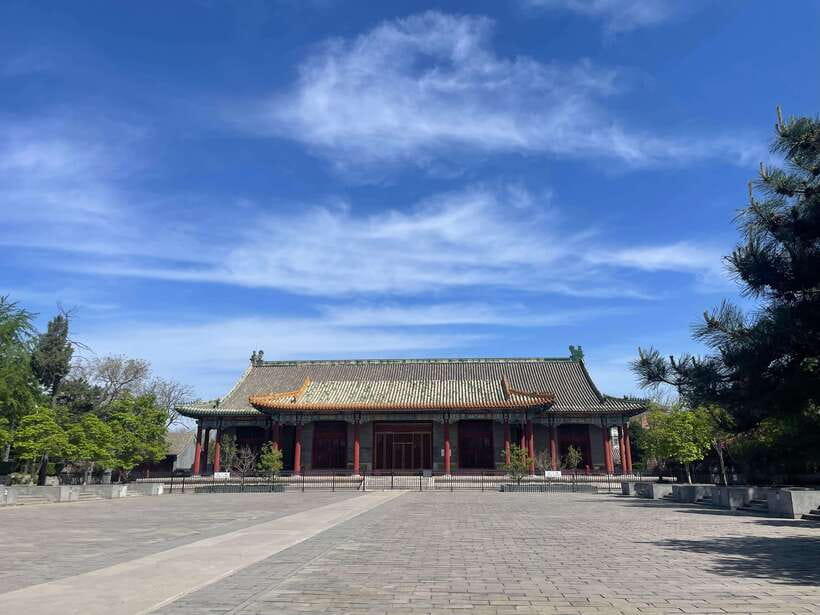
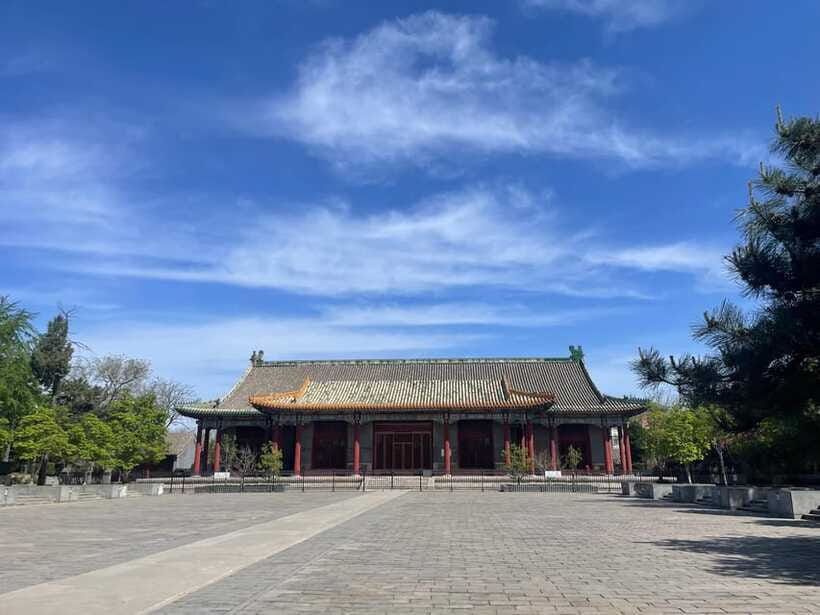
The unusual part comes first: you practice traditional Chinese kungfu inside a nearly 700-year-old royal temple site, in the hutong beside the Forbidden City. This is not a stage show or a quick photo stop. You spend an hour learning movements, receiving corrections, and seeing how selected techniques can work in everyday self-defense.
I like the setting, which gives the class a strong sense of place, and I like the teaching format, with a kungfu master and English translation from Limeng or another host. The $45 price is fair for a private-feeling cultural activity, though you should know the class itself lasts about one hour, not three days. The three-day detail refers to booking validity.
Key points to know
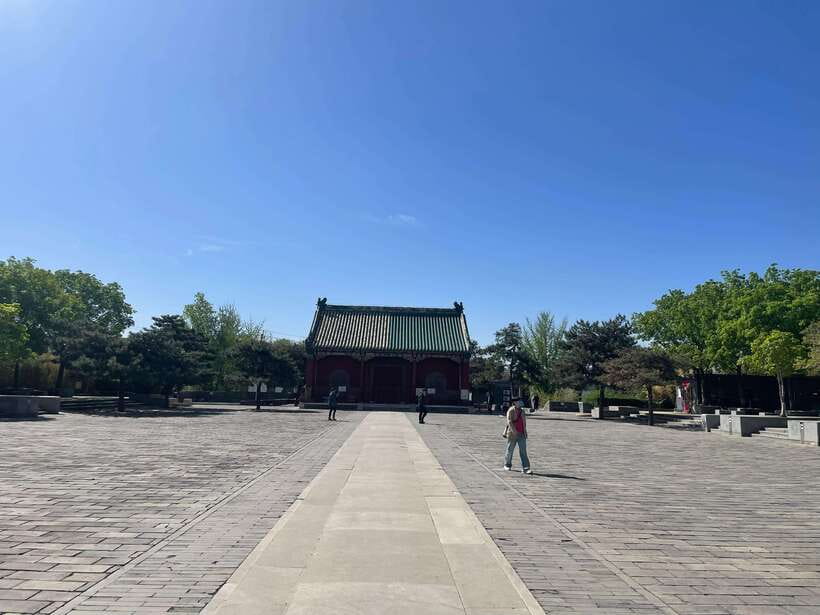
- Train beside the Forbidden City: The class takes place at Pudusi, a former royal temple in a hutong residential area near the Forbidden City’s east gate.
- Learn more than a routine: The lesson covers basic training, traditional forms, and practical attack and defense movements.
- Expect English help: Limeng has translated lessons and explained cultural details for English-speaking participants.
- A master teaches the class: The instructor trained in Shaolin from the age of five and also practices several traditional Chinese styles.
- Tea can extend the visit: Some bookings pair the kungfu class with a one-hour tea ceremony in a small hutong house.
- Bring a spare shirt: The class is active, and changing afterward is a sensible idea.
Why this hutong kungfu class feels different
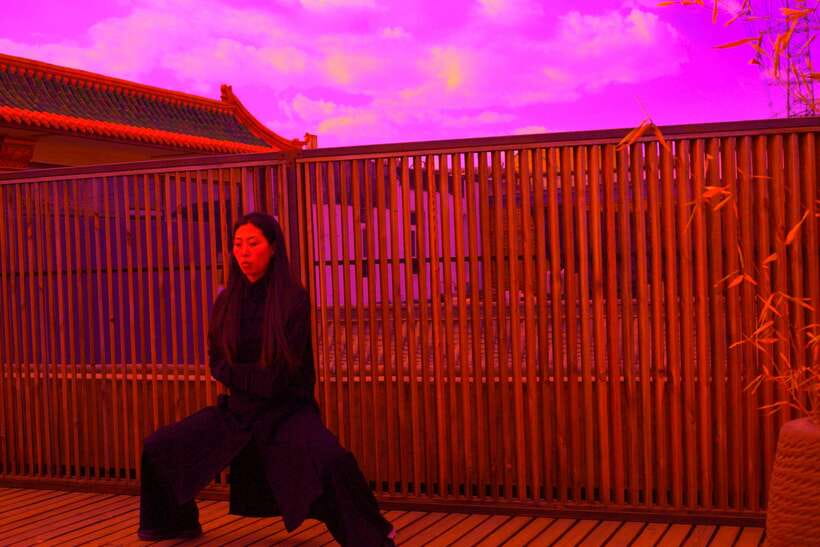
Beijing offers plenty of cultural activities, but many are built around watching. Here, you work with your own body. You learn a stance, try a movement, repeat it, and receive corrections from someone who has trained for most of his life.
The location changes the mood. Pudusi is described as a royal temple with almost 700 years of history, now set among ordinary hutong homes. That contrast is part of the appeal. You are not being taken to a modern fitness studio or a performance hall. You are practicing beside an old religious and imperial site, with Beijing life continuing around it.
The class also gives you a more useful introduction to kungfu than simply watching a polished demonstration. The master shows how traditional movements can relate to self-defense. You may work on ways to protect yourself, respond to an attack, or use body position and balance in a practical situation.
Keep your expectations sensible. This is an introduction, not a full martial arts course. You will not become proficient in Shaolin kungfu in one hour, but you can leave with a feel for the discipline, a few basic movements, and a better sense of how technique differs from movie-style fighting.
More acrobatics, kung fu and opera shows in Beijing:
- Red Theatre Beijing Acrobatic Show Tickets
★ 4.9 · 461 reviews - Red Theatre Beijing Acrobatic Show Tickets Official Booking
★ 5.0 · 218 reviews - Red Theatre Beijing Acrobatics Show Ticket
★ 5.0 · 141 reviews
Finding the royal temple beside the Forbidden City
The experience takes place in a hutong area beside the Forbidden City’s east gate. The setting is one of the strongest reasons to choose this class. You get old Beijing lanes, a residential neighborhood, and a historic temple site in the same short outing.
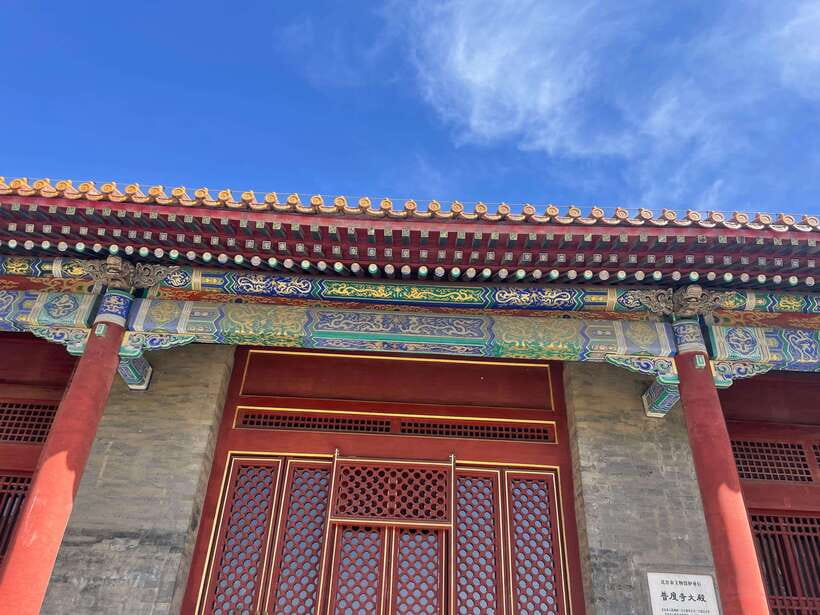
Pudusi’s former royal connection gives the lesson extra cultural weight. You are not just exercising in an old neighborhood. You are learning in a place connected with the imperial past, even though the surrounding area now functions as part of daily city life.
The available information does not give a detailed meeting-point map or a precise walking route. For that reason, check the meeting instructions carefully before leaving your hotel. Staying near the Forbidden City does not automatically mean every hutong entrance will be obvious.
The area also makes this activity easy to combine with sightseeing. You can place it near a visit to the Forbidden City, though you should allow enough time to reach the exact meeting point. The class does not include a Forbidden City tour or admission, so treat the two activities as separate parts of your day.
What happens during the one-hour lesson
The lesson begins with an introduction to traditional Chinese kungfu and its guiding ideas. The instructor then leads you through basic training. Expect to copy movements, adjust your posture, and repeat exercises rather than simply watch a demonstration.
The master is trained in Shaolin kungfu and several other traditional forms. That matters because the lesson is not limited to one visual routine. You may be shown elements of Shaolin practice alongside movements drawn from other Chinese styles.
The practical side is central. The instructor demonstrates how certain movements can apply to self-defense and then lets you work through them. This can include defensive responses and attack movements, with the exact focus adjusted to the group and your interests.
The English-speaking guide helps translate the master’s instruction and answer questions. This is especially valuable in a physical class, where a small misunderstanding about hand position or foot placement can make the movement hard to follow.
The class can feel personal. One-person sessions have taken place, and small groups of three friends have also enjoyed the lesson. Group size is not fixed in the information provided, so do not assume you will automatically receive a private class. Still, the format allows for individual correction when the schedule and group permit.
The master, the translator, and the teaching style
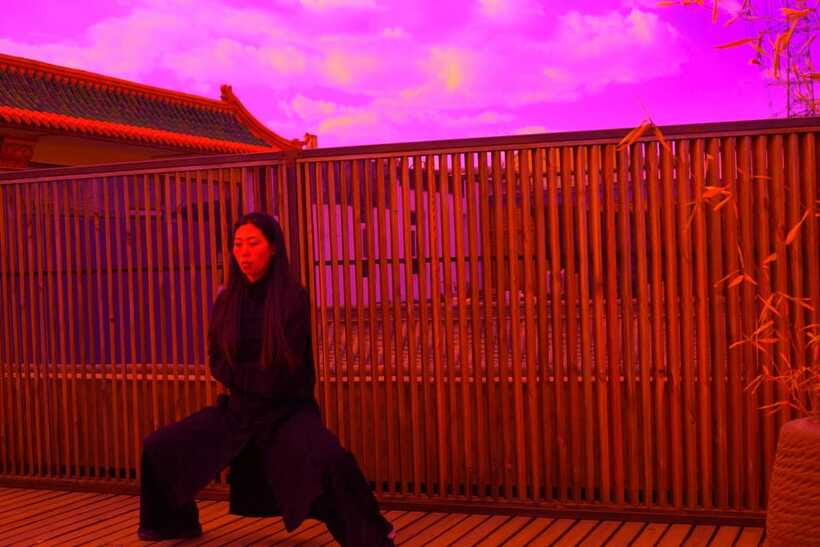
The instructor began training in Shaolin at age five and is presented as someone who teaches practical skill, not only performance. That distinction is important. If you are hoping to see impressive power and speed, you may get some of that in demonstrations, but the main purpose is to help you understand and attempt the movements yourself.
Limeng has been praised for patient translation and for explaining the fundamentals clearly. In one session, she translated the master’s explanations, helped a first-time participant follow self-defense movements, and answered questions about the practice.
This two-person teaching format works well for international visitors. The master can focus on movement and correction, while the guide handles English communication and local context. It also keeps the class from becoming a silent copycat exercise.
The experience is suitable for beginners. People with no martial arts background have learned basic movements during the lesson. Children have also been accommodated, though the information does not specify a minimum age, so families should confirm suitability before booking.
If you already train in martial arts, tell the guide what interests you. A more experienced participant received a personalized class focused on his own goals rather than a fixed beginner routine. That flexibility may be one of the best features for anyone who already knows the basics.
More hands-on classes in Beijing:
- Beijing Calligraphy Class
★ 4.9 · 112 reviews - Chinese Calligraphy Class for Small Group
★ 5.0 · 104 reviews - Beijing: Dumpling Making Workshop with Meal and Tea
★ 4.7 · 69 reviews - Online Cooking Class Beijing Dumplings and Cuisine by Sunflowerli Renowned Chef
★ 5.0 · 65 reviews
Practical self-defense, not movie kungfu
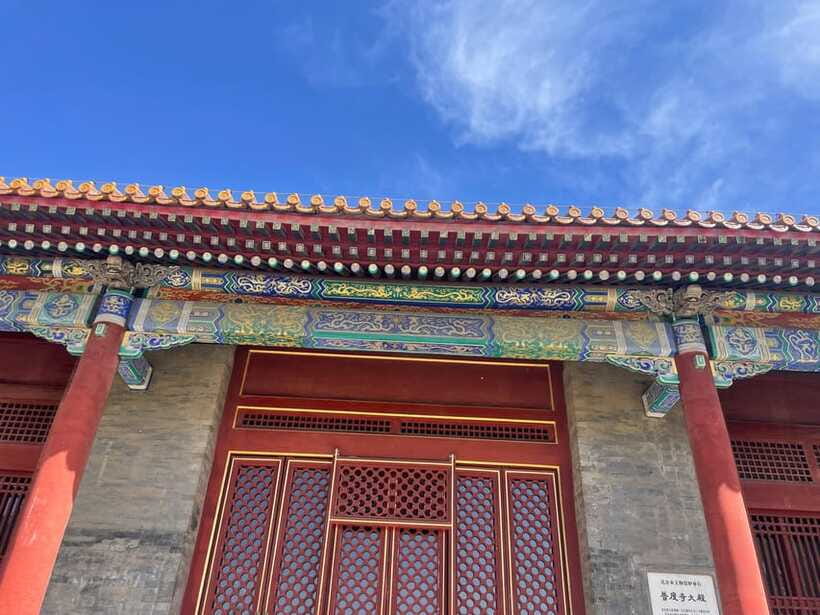
The word kungfu can bring to mind flying kicks and choreographed battles. This class takes a more grounded approach. The instructor demonstrates how selected movements might be used in a real defensive situation, then breaks them into steps you can attempt.
That does not make the session a replacement for serious self-defense training. You are learning a few principles and techniques during a short introduction. Real skill requires regular practice, fitness, and instruction over time.
Still, the practical angle gives the lesson more value than a purely ceremonial demonstration. You can ask why a movement works, how to position your body, and how to respond to an attack. The class also shows that traditional kungfu is not only about appearance or performance.
The teaching can be adjusted for different participants. One participant specifically appreciated learning defense and attack movements useful for a woman. The important point is not to expect a personal safety guarantee, but to use the class as a first introduction to awareness, movement, and basic technique.
Wear clothes that allow free movement. You may sweat, especially if the class includes repeated drills or demonstrations. One participant advised bringing an extra T-shirt, which is practical advice rather than a minor detail.
Adding the tea ceremony in the hutong
A tea ceremony is not listed among the core inclusions, but it has been arranged alongside the kungfu class. When offered as part of a booking, it takes place in a small hutong house and lasts about an hour.
The guide explains the tea process, and you try two types of Chinese tea with a small snack. This creates a gentler counterpoint to the physical class. Kungfu gives you movement and effort; tea gives you time to sit, ask questions, and talk about Chinese and foreign customs.
The order can vary. One booking began with tea before moving to a park and temple area for kungfu. If tea is important to you, confirm that it is included in your selected option rather than assuming the $45 kungfu price covers it.
I see the tea addition as a good choice for anyone wanting a broader cultural morning. If you mainly want martial arts practice, the one-hour kungfu lesson is the essential part. If you enjoy conversation, local customs, and a slower pace, tea can make the outing feel more complete.
What the $45 price really buys
At $45 per person, this is not the cheapest way to fill an hour in Beijing. It is also not simply an exercise class. The price covers access to a professional kungfu master, English assistance, instruction in Shaolin and other traditional forms, and practical technique practice in an unusual historic setting.
The value depends on what you want. If you are looking for a long training session, the price may feel high because the active lesson lasts about one hour. If you want a compact cultural experience near the Forbidden City, the combination of place, personal instruction, translation, and local contact makes the cost reasonable.
The price is especially attractive when the class becomes one-on-one or nearly private. That is not guaranteed, but the format has allowed some participants to receive very personal teaching. For a small group of friends, the cost also buys a shared activity that is more engaging than another standard sightseeing stop.
Ask about the tea ceremony and uniform before booking if those extras matter to you. Traditional practice suits are available to buy, with two upper garments and pants, and you can contact the provider about size and color. The uniform is an optional purchase, not part of the stated activity price.
Who should book this experience
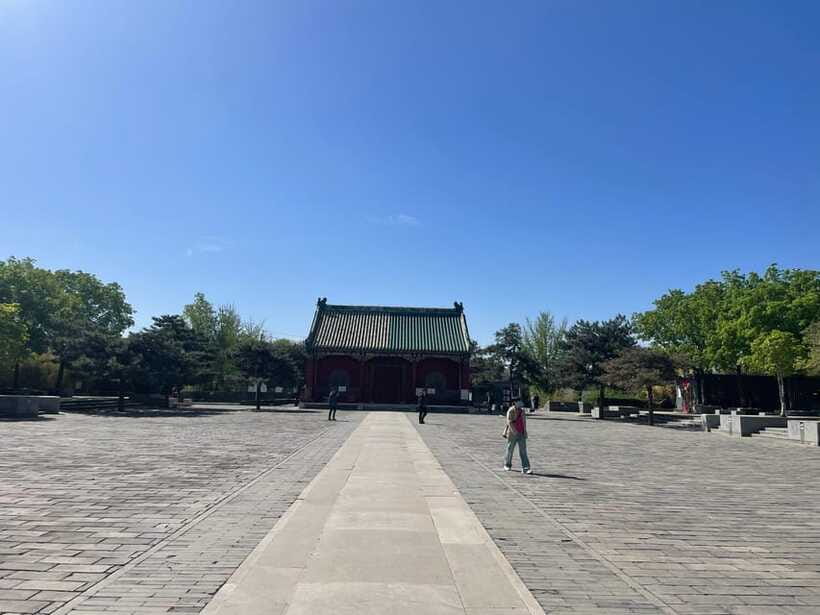
This class fits you well if you want to participate in Chinese culture rather than only look at it. It is a good pick for first-time martial arts students, couples, small groups of friends, and families with children who can follow an active lesson.
It also suits travelers who have already seen Beijing’s major monuments and want something more personal. The Forbidden City is enormous and formal. This class brings you into a smaller setting, where a guide can explain, translate, and respond to your questions.
Experienced martial artists should not dismiss it as a beginner-only activity. Share your background and interests in advance. The instructor has taught people with more experience and may be able to spend more time on the forms or techniques you want to explore.
You may want to skip it if you dislike physical activity, have only a few minutes between major sights, or expect a full martial arts course. The lesson involves practice and correction, so you need to take part. It is not a passive cultural show.
Booking details worth knowing
The activity is priced at $45 per person and is described as a three-day-valid experience. That three-day period is not the length of the class. The actual kungfu lesson lasts about one hour, while an optional tea ceremony can add roughly another hour.
The host or greeter is listed as English-speaking, and English is the available language. Free cancellation is offered up to 24 hours before the activity for a full refund. You can also reserve now and pay later, which helps if your Beijing schedule is still changing.
The provider is Bayi Teahouse. Since the setting is in a hutong and the exact meeting point may require careful navigation, read the directions and contact the provider if you are unsure where to go. A late arrival has been accommodated before, but you should not count on losing time without affecting the lesson.
My verdict on the kungfu experience
I would book this if I wanted a short, active cultural experience with a real local teacher. The old temple setting and practical instruction give it more character than a generic martial arts class, while the English translation makes the lesson approachable for beginners.
The main limitation is length. One hour is enough for an introduction, not mastery. The group arrangement can also vary, so private instruction should be viewed as a lucky possibility rather than a promise.
Book it if you are curious about kungfu, want to practice beside the Forbidden City, or enjoy meeting local people through a hands-on activity. Add the tea ceremony if you want a slower cultural visit, and bring a spare shirt if you plan to train seriously.
FAQ
Where does the kungfu class take place?
The class takes place in the Pudusi area, a nearly 700-year-old royal temple site in a hutong beside the east gate of the Forbidden City.
How long is the kungfu lesson?
The kungfu lesson lasts about one hour. The activity is valid for three days for booking purposes, but the class itself is not three days long.
Is the class taught in English?
The instructor is supported by an English-speaking host or translator. English translation is provided during the lesson.
What styles of kungfu are included?
The master teaches Shaolin kungfu along with other traditional Chinese kungfu styles. The lesson includes basic training and practical use of selected techniques.
Is self-defense included?
Yes. The class includes demonstrations and practice of practical kungfu techniques for defense and attack.
Is the tea ceremony included?
A tea ceremony may be arranged as an additional part of the experience, but it is not listed among the core kungfu inclusions. Confirm the option when booking.
Can I buy a kungfu uniform?
Yes. Traditional practice suits are available to purchase, including outer and inner garments and pants. You can contact the provider to choose a size and color.
Just added around Beijing
- Xian: Must see Eternal Love or Camel Bell Legend show Ticket★ 5.0 · 3 reviews
- Xian: Bus Tour of Terracotta Warriors With Guide & Lunch★ 4.2 · 5 reviews
- 2-Day Beijing Must-See Tour:4 UNESCO Sites+Tian’anmen&Hutong★ 5.0 · 4 reviews
- Beijing: 2-Day private Tour with Great wall& Forbidden city★ 5.0 · 5 reviews
- Private Transfer to Mutianyu Great Wall with professional driver★ 5.0 · 19 reviews
- Twilight Glow at Badaling Great Wall Evening Bus Tour+Ticket★ 4.9 · 11 reviews
- Yuxiandu Chinese Royal Cuisine Museum with Show and Royal Banquet★ 5.0 · 4 reviews
- ZANBUS: Trip to the Jinshanling Great Wall Departing at 7:30 AM★ 5.0 · 5 reviews
Acrobatics, Kung Fu and Opera Shows, compared.

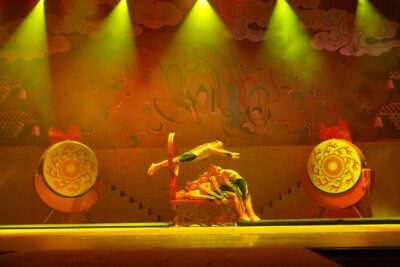
Red Theatre Beijing Acrobatic Show Tickets Official Booking
Read our review →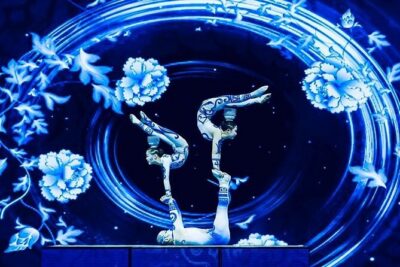
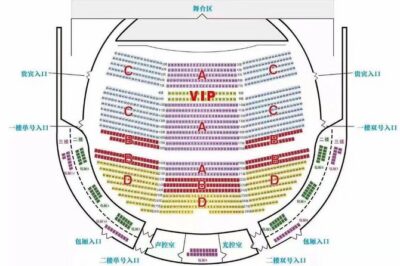
Beijing Golden Mask Dynasty Show with Private Transfer
Read our review →
Beijing Roast Duck Banquet and Acrobatics Show with VIP Seats Evening Tour
Read our review →
Beijing Red Theater Acrobatic Show with Private Transfer Service
Read our review →Browse the lists this tour appears in