
Reviewed · BEIJING ATTRACTION TICKETS
Beijing: China National Film Museum Entry Reservation
The China National Film Museum gives you a much bigger look at Chinese cinema than a simple display of movie posters. Across 21 exhibition halls, you follow film from its early development through different periods, while displays explain how movies were made and highlight important filmmakers. I like the museum’s scale and the chance to see both cinema history and working film technology in one visit.
I also like that your reservation includes an English textual and visual guide, and that you can enter with a separate QR code rather than waiting at a ticket counter. The main drawback is clear: much of the on-site information is in Mandarin, so English-speaking visitors may need a translation app to get the full story.
Key points to know before you go
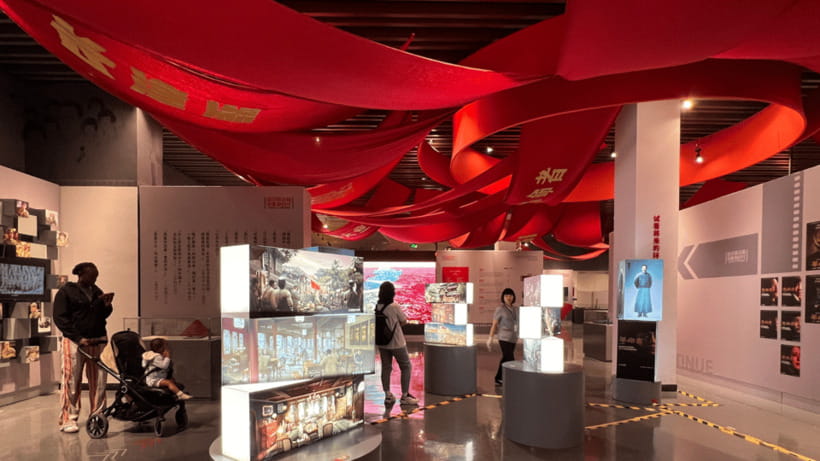
- Twenty-one exhibition halls: The museum presents Chinese film history across the second, third, and fourth floors, with a separate first-floor exhibition.
- Six movie halls: The complex includes an IMAX GT hall and can seat more than 1,000 people across its cinemas.
- A two-hour visit: That gives you enough time for a useful overview, but not a slow reading of every display.
- Mandarin-heavy displays: The English guide helps, but much of the museum’s written information is in Chinese.
- Separate QR code required: Use the e-ticket sent by email or WhatsApp, not the QR code shown in the booking app.
- Low entry price: At $4.82 per person, the reservation offers good value if you are interested in Chinese film or modern cultural institutions.
Why the China National Film Museum is worth your time
Film museums often lean heavily on costumes, famous faces, and old cameras. This one aims at something broader. It presents the development of Chinese cinema through changing periods and stages, while also showing the artistic work of many filmmakers and the technical side of production.
That makes the museum useful even if you do not recognize many Chinese actors or directors. You can still follow the basic story: how film developed, how styles changed, and how filmmaking became an important part of Chinese cultural life.
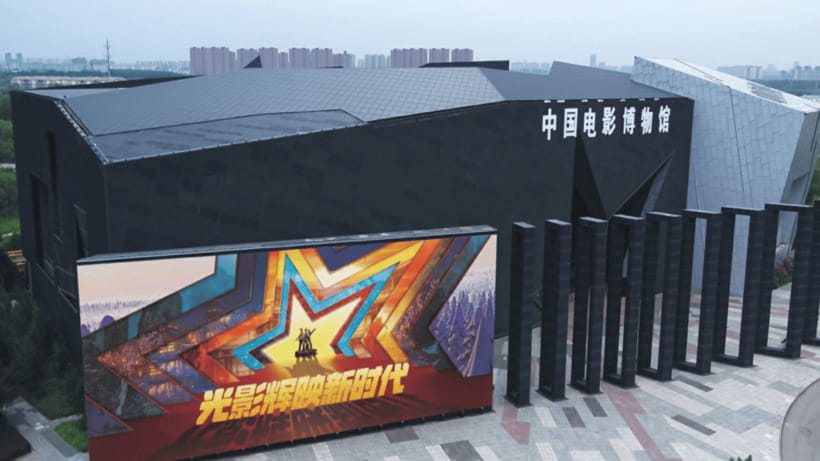
The building itself is large. The museum covers about 8.7 acres, with nearly 38,000 square meters of architectural space. That scale matters because you are not squeezing through a few small rooms. You have a proper cultural center with exhibition galleries, cinemas, and enough space for large displays.
The China National Film Museum was founded on December 29, 2005, and opened to the public on February 10, 2007. It was established as a major public cultural institution approved by China’s State Council. For you, that means the visit offers more than a commercial attraction. It is a formal national presentation of Chinese film history.
More Beijing attraction tickets:
- 4-Hour Small Group Tour to Forbidden City with Entry Tickets
★ 5.0 · 1,863 reviews - Beijing: Tiananmen Square Registration Service(Ticket)
★ 4.5 · 1,704 reviews - Beijing: The Temple of Heaven or Summer Palace Entry Ticket
★ 4.6 · 1,286 reviews
Starting on the first floor
Your visit begins with the first-floor exhibition called The Theme Exhibition of A New Journey of Struggle. The supplied information does not give a detailed description of every section in this exhibit, so you should treat it as a separate introduction rather than assume it follows the full century-long film timeline.
This first-floor stop may work best as a cultural orientation. It gives you a sense of how film can be used to present national stories and public themes. If your main interest is the development of Chinese cinema, you will likely spend more of your time on the upper floors.
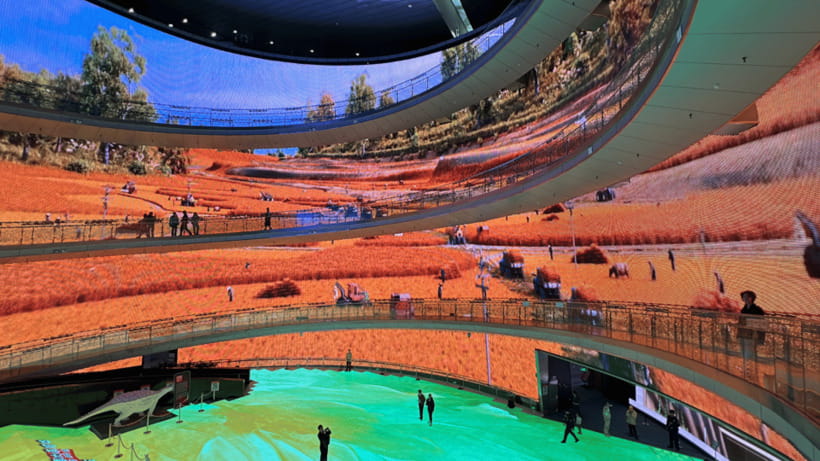
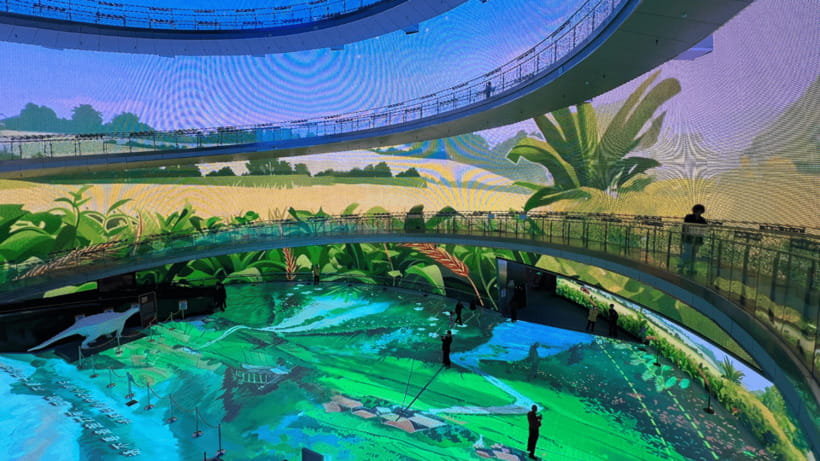
One useful point from the visitor feedback is the mention of dinosaur displays near the exhibition areas. The dinosaur section was described as an especially enjoyable part of the visit. It appears to be an additional attraction within the museum complex, not the core of the film-history program, but it may be a welcome change of pace if you are visiting with children or simply want something different between gallery sections.
Following a century of Chinese film
The central exhibition, A Century of History, A Century of Glory, occupies the second, third, and fourth floors. This is where the museum gives you its main chronological story.
The displays cover Chinese films across different periods and stages. You may find material on artistic developments, important filmmakers, changing film styles, and the practical work behind production. The museum also aims to show the secrets of filmmaking, so the visit is not limited to finished movies. It looks at the process that turns an idea into a film.
I like this approach because it gives you several ways into the subject. You can focus on cultural history, follow the work of specific filmmakers, or pay attention to the machinery and methods used in production. If you already know Chinese cinema, the displays may help place familiar films and directors into a larger timeline.
If you know little about Chinese film, the museum can still be worthwhile, but your experience will depend heavily on how you handle the language issue. The information is reported to be mainly in Mandarin. The included English textual and visual guide helps, but it may not translate every label or explain every object in full detail.
Bring your phone with a translation tool if you want to read more of the wall text. You should also allow extra time to interpret displays rather than expecting every section to be immediately clear in English. This is the largest limitation of the visit, and it is better to plan for it than arrive expecting a fully bilingual museum.
What the 21 halls give you
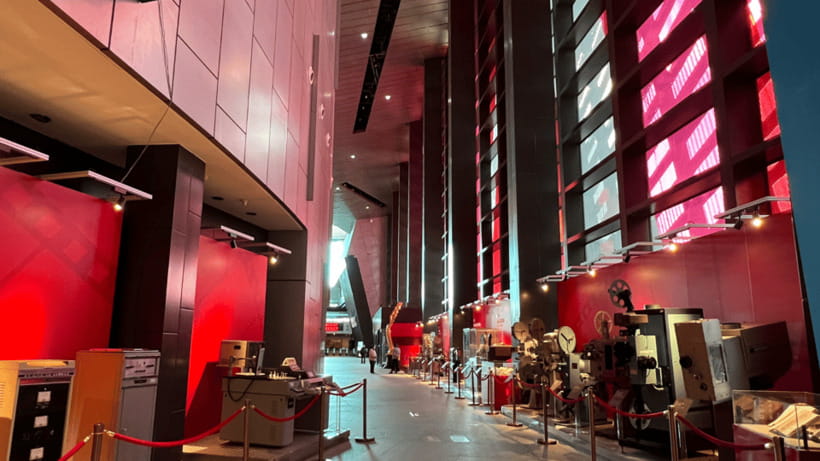
The 21 exhibition halls cover roughly 13,000 square meters. That is a lot of ground for a museum visit, and the number of rooms can sound more manageable than the actual scale. You will not be able to study every display closely in two hours.
For a two-hour visit, I suggest thinking in terms of a broad tour. Move through the major periods, stop for the displays that catch your eye, and give yourself time for the sections on filmmaking and notable directors. Trying to read every panel would make the visit feel rushed.
The arrangement across three floors also gives the visit a natural rhythm. You can take in the main historical sequence, move upward, and pause when a particular section deserves more attention. The museum is best for people who enjoy choosing their own pace rather than following a timed guide.
There is no live guide included. That gives you freedom, but it also means you will need to create your own structure. The English guide and a translation app become more important because no person is on hand to explain the displays or answer questions.
More museums in Beijing:
- Beijing: Tianmen Square, Forbidden City & Royal Museum Tours
★ 4.6 · 1,288 reviews - Beijing:Jingshan Park (Palace Museum Garden) Ticket
★ 4.5 · 185 reviews - Beijing Half Day: National Museum of China In-depth Tour with Subway Transfer
★ 5.0 · 70 reviews - Beijing’s Forbidden City with Special Viewing of Treasure Gallery and the Great Wall Ruins at Badaling
★ 4.5 · 24 reviews
The six movie halls and IMAX GT screen
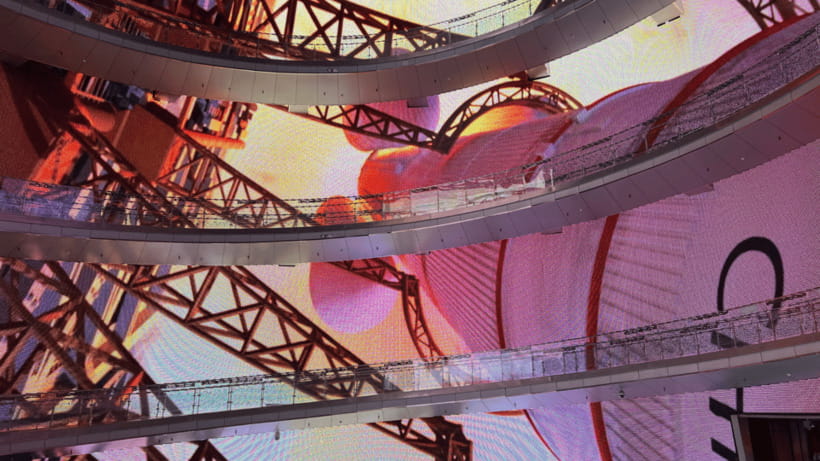
The museum includes six movie halls, one of them an IMAX GT hall. Together, the cinemas can hold audiences of more than 1,000 people.
This is a useful part of the complex, but you should separate it from the entry reservation. Paid movie screenings are not included in the admission. If you want to watch a film, you will need to pay the screening cost separately.
That distinction matters when you compare the price. The $4.82 reservation covers entry to the museum, not a complete cinema experience. Still, it is a modest fee for access to 21 halls and a national film institution. The cinemas add interest, but you should not assume that an IMAX screening is part of your booking.
The movie halls also help explain why the museum is so large. This is not only a collection of objects behind glass. It is designed as a working public film center, with space for audiences as well as exhibitions.
Is two hours enough?
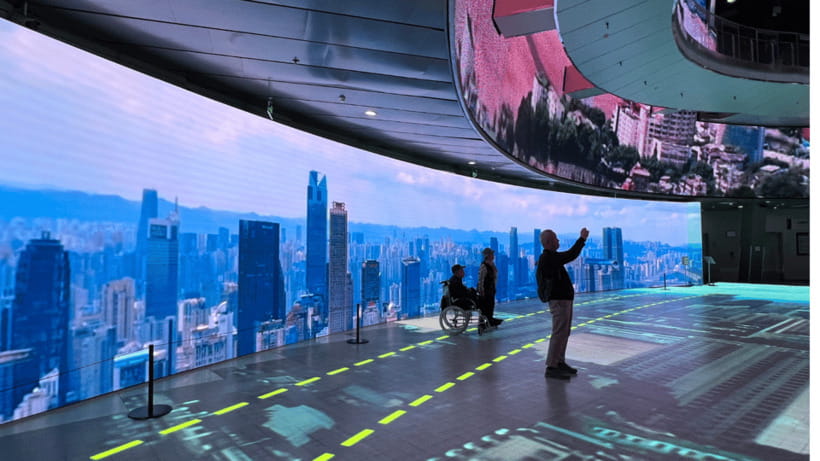
Two hours is a sensible first visit. It lets you see the main exhibitions and understand the museum’s overall structure without turning the day into a marathon.
I would use the time this way:
- Start with the first-floor exhibition and get oriented.
- Continue to the historical displays on the second through fourth floors.
- Pause for the filmmaker and filmmaking sections that interest you most.
- Leave time for the dinosaur displays if they are part of your plan.
- Treat the movie halls as an optional extra, since screenings cost more.
If you are a serious film enthusiast, two hours may feel short. The museum has 21 halls, and language barriers can slow you down. You may need more time simply to translate labels and understand the context.
If you are adding this to a wider Beijing schedule, two hours works well. It gives you a focused cultural stop without requiring an entire day. The museum is also a better match for visitors who enjoy exhibitions than for anyone looking only for a quick photo opportunity.
The English guide and language problem
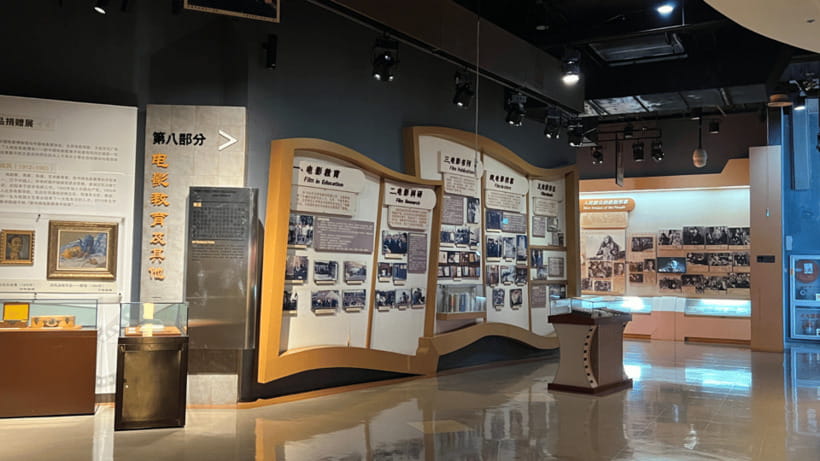
The reservation includes an English version of the textual and visual guide. That is helpful, but you should not read this as a promise that every exhibition label appears in English.
The practical reality is that the museum’s information is mainly in Mandarin. This point is important enough to shape your decision. A visitor who cannot read Chinese may see impressive displays but miss much of the explanation without digital translation.
I would download or prepare a translation tool before arrival. Also keep your phone charged, since you may use it to scan or photograph written material. The English guide should give you a basic framework, while translation helps with details.
This language issue does not make the museum pointless. Film is a visual subject, and cameras, posters, sets, equipment, and film-related objects can still be interesting without full translation. But the museum’s real value lies in its context, so English-only visitors should expect a more partial experience.
Entry, QR codes, and practical details
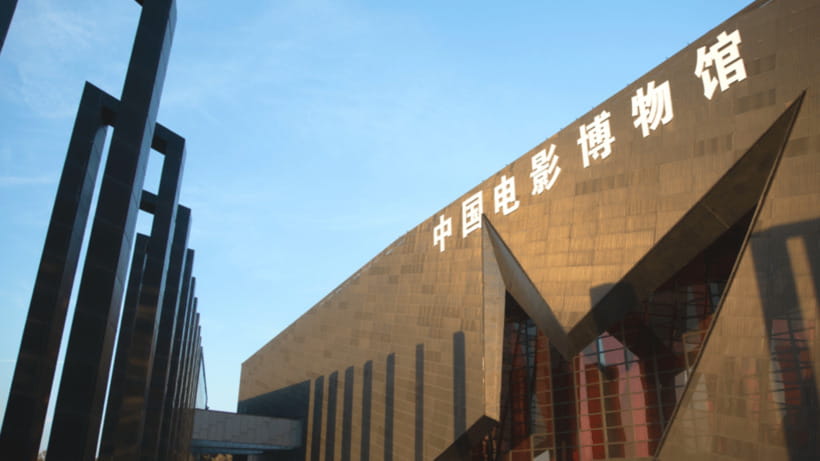
After booking, you receive your e-ticket by email or WhatsApp. Use the QR code from that message for admission. The code shown in the GetYourGuide app is not your entry ticket, so do not rely on it at the entrance.
Bring your passport. It is specifically required for the visit. Smoking is not allowed inside the museum.
The reservation is wheelchair accessible, which makes the large exhibition complex more practical for visitors with mobility needs. No live guide is included, and personal expenses are separate.
The booking allows cancellation up to 24 hours before the visit for a full refund. You can also reserve now and pay later, which helps if your Beijing schedule is still changing. Check the available starting times before booking, since the visit is listed as a two-hour activity.
Who will enjoy this museum most?
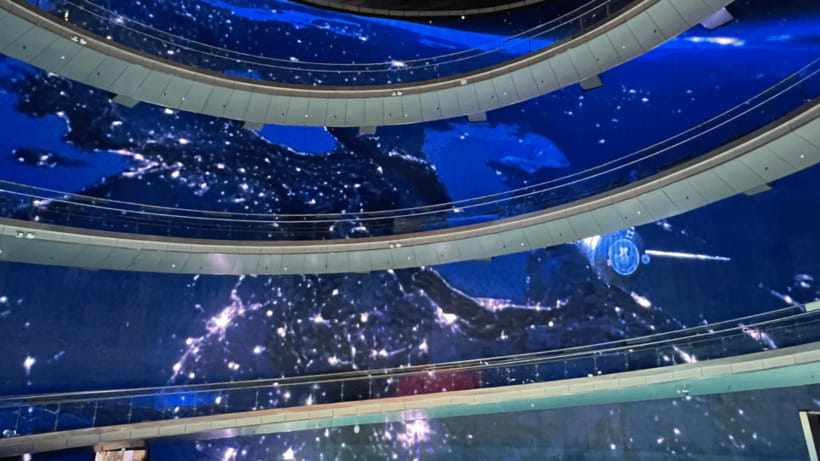
I would recommend this experience to you if you have an interest in Chinese culture, film production, national museums, or modern public institutions. It is also a sensible choice if you want something more specific than another palace, temple, or shopping street.
Families may like the combination of films and dinosaur displays, although the amount of text and the Mandarin-heavy presentation may limit how much younger children take from the historical exhibits.
Film students and serious cinema fans should find plenty to examine, but they may want longer than two hours. The six movie halls and IMAX GT screen add appeal, though screenings cost extra.
I would be more cautious if you want a fully guided experience in English. There is no live guide, and the included English material does not remove the language barrier completely. You will get more from the museum if you are comfortable exploring independently.
The value of $4.82
At $4.82 per person, the entry reservation is inexpensive for the amount of space and material available. You receive access to 21 exhibition halls, the major film-history displays, and the broader museum complex.
The value is strongest if you plan to spend the full two hours and have a real interest in the subject. It is less compelling if you only want to see an IMAX movie, since screenings are not included and require another payment.
The low price also makes the language limitation easier to accept. You are not paying for a private English tour or an intensive guided lesson. You are paying for entry to a large public museum, plus an English guide that gives you some support.
The rating of 4.5 from 11 evaluations points to a generally positive experience, with enthusiasm for the exhibitions, building, staff, and extra displays. The main criticism centers on Mandarin-only descriptions. That is a fair warning, not a minor footnote.
Should you book the China National Film Museum?
Book it if you want a low-cost, independent look at Chinese cinema and can accept that much of the museum is in Mandarin. The 21 halls, filmmaking displays, six cinemas, and IMAX GT facility give you plenty to see for a two-hour cultural stop.
I would especially choose it for a Beijing itinerary that already includes the city’s major historic sights and needs a different kind of experience. Bring your passport, prepare a translation app, and watch for the separate QR code sent by email or WhatsApp.
Skip it if you need a fully English-speaking guide or if your only goal is an included movie screening. For everyone else, the price is fair, the subject is distinctive, and the museum offers a useful window into how China presents its film story.
FAQ
How long does the China National Film Museum visit take?
The listed duration is two hours. That is enough for a broad visit, though you may need more time if you want to read every display.
What is included in the reservation?
The reservation includes entry to the China National Film Museum and an English version of the textual and visual guide.
Are movie screenings included?
No. Paid movie screenings are not included, including screenings in the museum’s six movie halls.
Does the museum have an IMAX screen?
Yes. The museum has six movie halls, including an IMAX GT hall.
What QR code should I use to enter?
Use the separate e-ticket QR code sent by email or WhatsApp. The QR code in the GetYourGuide app is not the museum entry ticket.
Do I need to bring my passport?
Yes. Your passport is listed as a required item for the visit.
Is the museum wheelchair accessible?
Yes. The activity is listed as wheelchair accessible.
Is there a live guide?
No. A live guide is not included. You receive an English textual and visual guide instead.
Can I cancel the reservation?
Yes. You can cancel up to 24 hours in advance for a full refund.
Just added around Beijing
- Xian: Must see Eternal Love or Camel Bell Legend show Ticket★ 5.0 · 3 reviews
- 2-Day Beijing Must-See Tour:4 UNESCO Sites+Tian’anmen&Hutong★ 5.0 · 4 reviews
- Beijing: 2-Day private Tour with Great wall& Forbidden city★ 5.0 · 5 reviews
- Xian: Bus Tour of Terracotta Warriors With Guide & Lunch★ 4.2 · 5 reviews
- Private Transfer to Mutianyu Great Wall with professional driver★ 5.0 · 19 reviews
- Twilight Glow at Badaling Great Wall Evening Bus Tour+Ticket★ 4.9 · 11 reviews
- ZANBUS: Trip to the Jinshanling Great Wall Departing at 7:30 AM★ 5.0 · 5 reviews
- One day tour to downtown Tianjin from Beijing by high speed train★ 5.0 · 3 reviews
Beijing Attraction Tickets, compared.

4-Hour Small Group Tour to Forbidden City with Entry Tickets
Read our review →

The Temple of Heaven or Summer Palace Entry Ticket
Read our review →
Beijing Forbidden City Ticket Booking (Optional: guide service)
Read our review →
The Forbidden City or Tiananmen Square Entry Ticket
Read our review →
Summer Palace Entry Ticket and Optional Guided Tour
Read our review →
Tiananmen Square and Forbidden City Entry Tickets
Read our review →
Browse the lists this tour appears in