
Reviewed · LAMA TEMPLE AND CONFUCIUS TEMPLE TOURS
Beijing: Lama Temple (Yonghe Temple) Admission Ticket
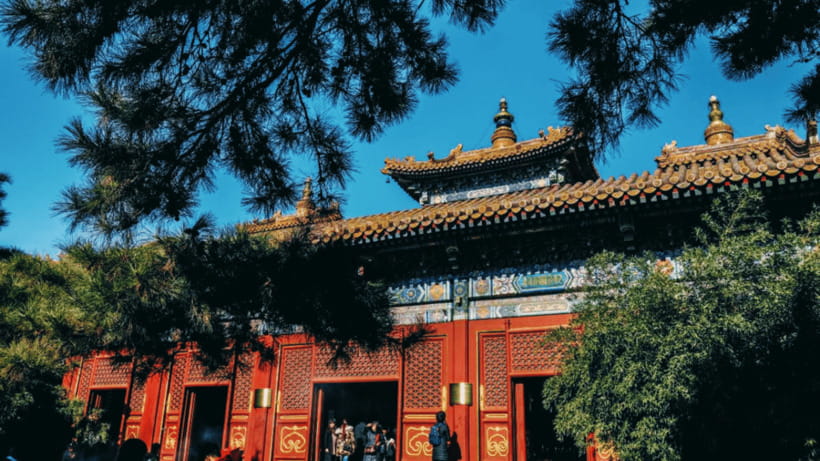
Beijing’s Lama Temple is a working Tibetan Buddhist sanctuary, not just another old palace. Incense hangs over the courtyards, worshippers stop to pray, and the famous 18-meter sandalwood Buddha gives the final hall real drama. I like the chance to see sacred life up close, along with the unusual blend of Han, Manchu, Tibetan, and Mongolian design.
I also like the low price, about $10, and the convenience of having admission arranged before you arrive. The main catch is that your GetYourGuide QR code is not the entry ticket, and you still must pass security yourself. Send your full passport name and number on time, then wait for the actual confirmation by email or WhatsApp.
Key points to know
- See the 18-meter sandalwood Buddha: The Maitreya statue is carved from one piece of sandalwood and has held a Guinness World Records place since 1990.
- Visit a living place of worship: Incense, prayer, and daily Buddhist practice are part of the scene, not a staged performance.
- Follow the complex from gate to gate: The route includes three archways, the Yonghe Gate, the Yonghe Palace Hall, four learning halls, and exhibition rooms.
- Expect independent sightseeing: Admission, major buildings, and exhibitions are included, but there is no guide or audio guide.
- Send accurate passport details: Real-name booking is required, and the name and passport number must match your identification.
- Allow time for security: Fast ticket entry does not mean skipping the security check.
Why the Lama Temple feels different from a palace visit
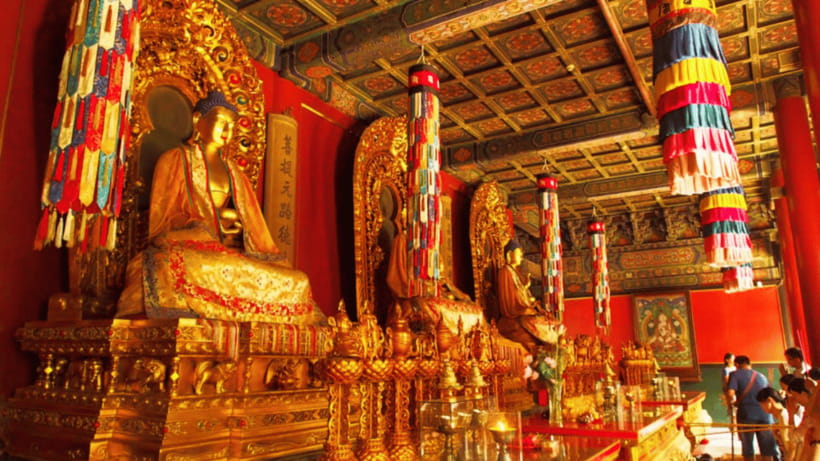
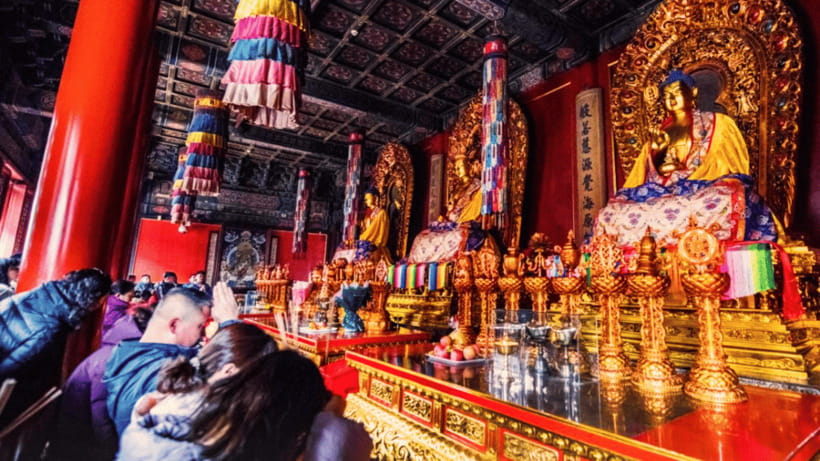
Many Beijing sights are grand, formal, and firmly tied to imperial power. Yonghe Temple has that background, but it also functions as a religious center. That changes the mood. You are not simply looking at painted beams and old courtyards. You may see people lighting incense, bowing, and praying in the same spaces you are visiting.
That living use is the temple’s strongest feature. The smoke from incense can soften the view across the courtyards, while the movement of worshippers gives the place a quiet purpose. You need to be respectful with photographs and keep in mind that this is a sacred site first and a sightseeing stop second.
The temple began in 1694, during the 33rd year of Emperor Kangxi’s reign. It was first the residence of the future Emperor Yongzheng. In 1725, it became an imperial palace, and in 1744, during Emperor Qianlong’s reign, it was converted into a Tibetan Buddhist temple.
That sequence explains the site’s unusual character. Imperial palace planning meets Buddhist ritual space, and Chinese architectural traditions mix with Tibetan and Mongolian details. For me, that is more interesting than a single-style monument because each courtyard and hall adds another part of the story.
More Lama Temple and Confucius Temple visits in Beijing:
- Temple Heaven, Lama Temple, Summer Palace & Peking Duck Bus Tour
★ 5.0 · 377 reviews - Temple Heaven, Summer Palace, Lama Temple, Hutong Bus Tour
★ 4.7 · 319 reviews - Temple of Heaven, Summer Palace, Lama Temple, Hutong Tours
★ 5.0 · 311 reviews
What you see from the three archways onward
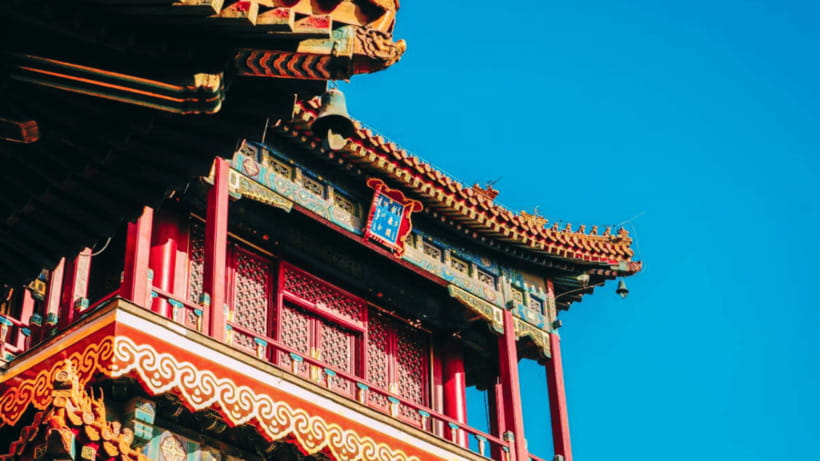
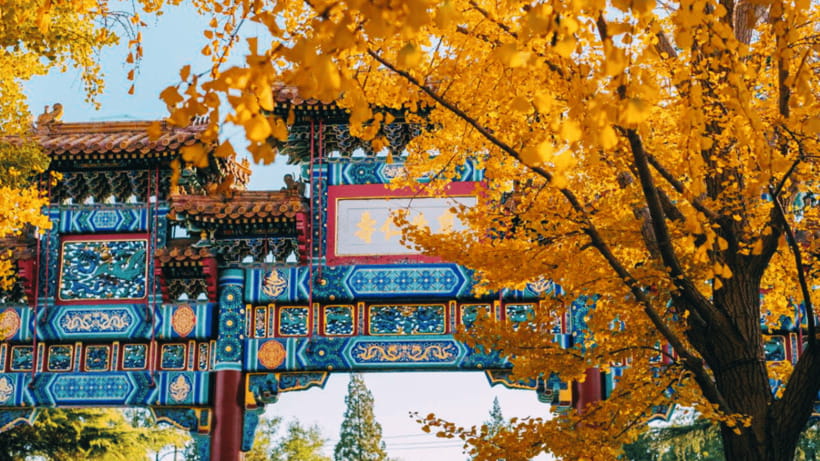
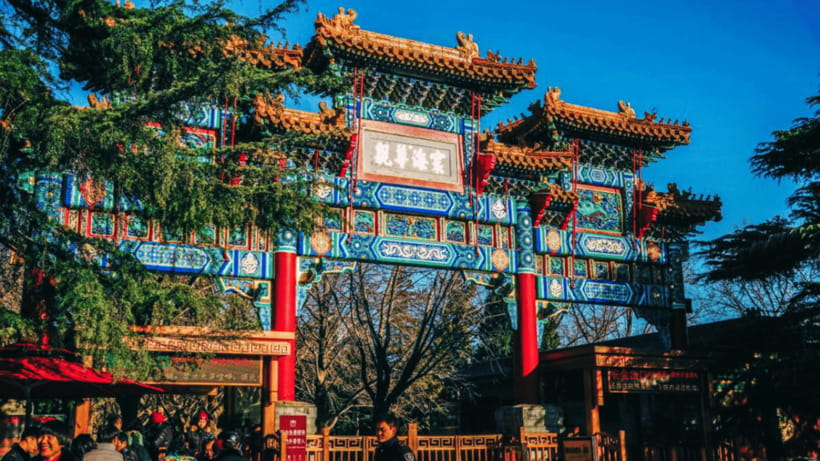
The visit follows the layout of the temple complex rather than a fixed guided itinerary. You enter through three carefully designed archways, then continue toward the principal halls and learning buildings. The arrangement gives the visit a natural rhythm: gate, courtyard, hall, courtyard, hall.
The Yonghe Gate is an important first stop. It introduces the formal scale of the complex and gives you a sense of the careful symmetry used throughout the site. Take a moment here instead of rushing straight to the next building. Looking back across the entrance can help you understand how the temple is organized.
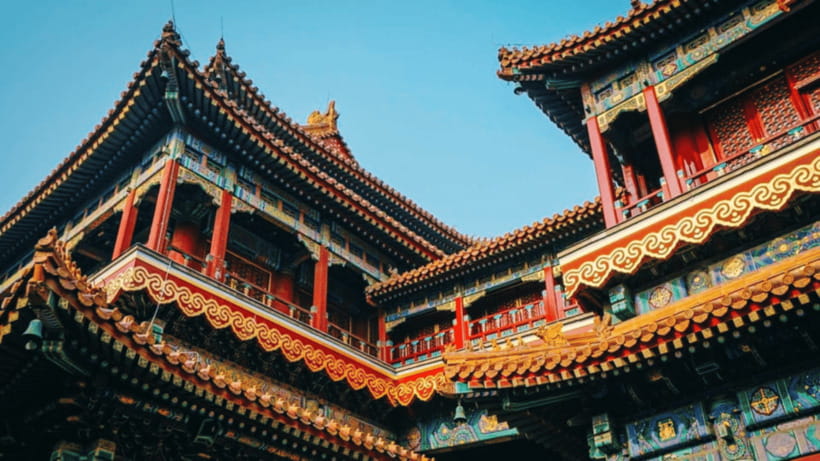
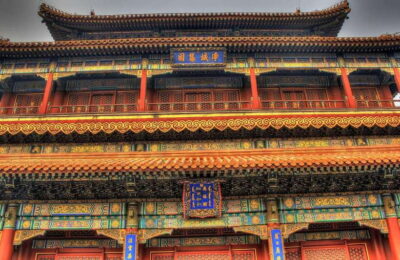
From there, the Yonghe Palace Hall brings you farther into the complex. Its name recalls the site’s imperial past, but its setting within a Tibetan Buddhist temple shows how the buildings changed purpose over time. Look for the layered rooflines, colored decoration, and carved details that combine several regional styles.
The four learning halls are the Hall of Medicine Buddha, Mathematics Hall, Tantric Hall, and Lecture Hall. Their names hint at the range of Buddhist study connected with the temple. Even if you do not know the details of Tibetan Buddhist teachings, the group makes clear that Yonghe was more than a place for brief prayer. It was also linked to learning and religious training.
Three exhibition rooms add cultural context through Buddha statues, thangkas, and other valuable objects. Since there is no included audio guide, I recommend reading every available display label and using the small electronic guide if one is sent with your ticket. Without that extra context, some of the objects may look similar at first glance.
The sandalwood Buddha is the main visual prize
The most memorable object is the 18-meter Maitreya Buddha, carved from a single piece of sandalwood. Its size is impressive, but the single-trunk construction is the detail worth holding on to. The statue has been listed in Guinness World Records since 1990, giving the final part of the visit a clear focal point.
You may find the hall crowded around this statue, especially at busy times. It is worth slowing down, looking upward, and taking in the full height before trying to take a photograph. The scale is difficult to judge from a quick glance.
The statue also shows why this ticket is better suited to independent visitors than to people seeking a lecture at every stop. The admission gets you inside the hall, but it does not explain the symbolism or religious meaning in detail. If you want a structured interpretation, you will need to read the displays or arrange your own guide separately.
Architecture that crosses four traditions
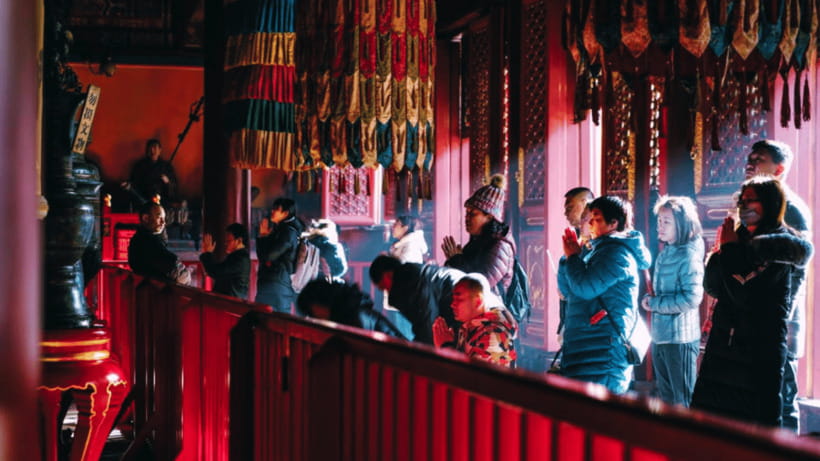
Yonghe Temple’s visual appeal comes from its mixed design. Han, Manchu, Tibetan, and Mongolian influences appear across the complex, creating a site that does not fit neatly into one architectural category.
The Han influence can be seen in the formal courtyard planning and familiar Chinese palace-style arrangement. Manchu connections reflect the Qing imperial setting. Tibetan and Mongolian elements point to the temple’s religious role and its place within wider Buddhist traditions.
I would not treat the buildings as empty decoration. The colors, carvings, roof shapes, archways, and hall layouts all help explain how imperial Beijing connected with Tibetan Buddhism. Even a short visit becomes more rewarding when you compare one building with the next instead of photographing each one in isolation.
The temple is relatively compact, so you can see the principal areas without needing a full day of walking. The ticket is valid for a one-day visit, though, so you can take your time. That is useful if you want to pause at the prayer areas, examine the displays, and avoid turning the whole experience into a hurried circuit.
More Beijing attraction tickets:
- 4-Hour Small Group Tour to Forbidden City with Entry Tickets
★ 5.0 · 1,863 reviews - Beijing: Tiananmen Square Registration Service(Ticket)
★ 4.5 · 1,704 reviews - Beijing: The Temple of Heaven or Summer Palace Entry Ticket
★ 4.6 · 1,286 reviews - Beijing Forbidden City Ticket Booking (Optional: guide service)
★ 5.0 · 1,263 reviews
A visit shaped by worship, incense, and crowds
The atmosphere can shift with the calendar. On January 1, one visit was described as especially crowded, with many people coming to pray. That is not necessarily a flaw. A busy religious site can feel more meaningful when you see it being used for its intended purpose, but it also means less quiet time in the courtyards.
You can burn incense at the temple, according to the visit details provided. Expect smoke and the scent of incense around active prayer areas. Follow the local example, stay calm, and avoid blocking people who are making offerings.
The temple may feel peaceful even when there are many people inside. That calm comes from the layout, the courtyards, and the respectful behavior expected in a religious setting. Still, do not assume every moment will be silent or empty. If you want a slower visit, arrive with enough time before the final admission period and avoid building your schedule around only a few minutes here.
You must enter no later than one hour before closing and leave 30 minutes before closing. Those limits matter because this is not a late-evening attraction where you can arrive just before the doors shut and still see everything.
What the $10 ticket really buys you
At about $10 per person, this is a good-value admission for a major Beijing cultural site. The price covers fast-track ticket entry, access to the main temple buildings and cultural exhibitions, and the reservation fee. It removes the need to arrange standard admission at the gate, which is useful when real-name booking rules are involved.
The value is strongest for independent visitors. You can move at your own pace, spend more time with the sandalwood Buddha, or pause in a courtyard without waiting for a group. You are paying for access and booking help, not for a fully explained tour.
That distinction is important. A guide is not included, and neither is an audio guide. If you want historical interpretation at each hall, this may feel too basic. If you prefer to explore alone and only need the ticket arranged, the cost is reasonable.
The service has received a 4.8 rating from 297 bookings, and the most consistent practical strength is communication. Ticket arrangements have been sent through WhatsApp or email, sometimes on the morning of the visit. That timing can work well, but it means you should monitor your messages rather than assuming the original booking QR code is enough.
The passport detail that can make or break entry
Real-name booking is mandatory. You must send your full name exactly as it appears on your passport, along with your passport number, so the reservation can be completed.
This is not a minor formality. Only genuine identification details are accepted at the ticket gate. If the required information is not received in time, the booking can be canceled and a cancellation fee may apply.
Bring your passport to the temple. Show the confirmed ticket at the designated entrance channel, then go through security before entering the grounds. The fast-track benefit applies to ticket entry, not to the security check. You should still allow time for screening, particularly on a crowded day.
Also note the difference between the booking QR code and the actual admission document. The GetYourGuide QR code itself is not valid for entry. Wait for the confirmation email or WhatsApp message, and contact the provider if the proper ticket has not arrived.
A practical route for your one-day visit
I would plan the visit in four simple stages:
- Start at the three archways and Yonghe Gate. Get a sense of the temple’s formal layout before moving inward.
- Continue through the Yonghe Palace Hall and the courtyards. Look at how imperial design and Buddhist use share the same setting.
- Spend time with the four learning halls and the exhibition rooms. Read the displays, especially if you are visiting without a guide.
- Finish at the hall with the 18-meter sandalwood Maitreya Buddha. Give yourself enough time to take in the statue’s height and construction.
This order follows the main sequence of the complex and keeps the biggest visual highlight toward the end. You do not need to rush, but you should watch the closing rules. Final entry is one hour before closing, and everyone must be out 30 minutes before closing.
The ticket is wheelchair accessible, which makes the site more practical for visitors with mobility needs. Pets, weapons, sharp objects, and explosive substances are not allowed. Bring only what you need for the visit and keep your passport available.
Who should book this Lama Temple ticket?
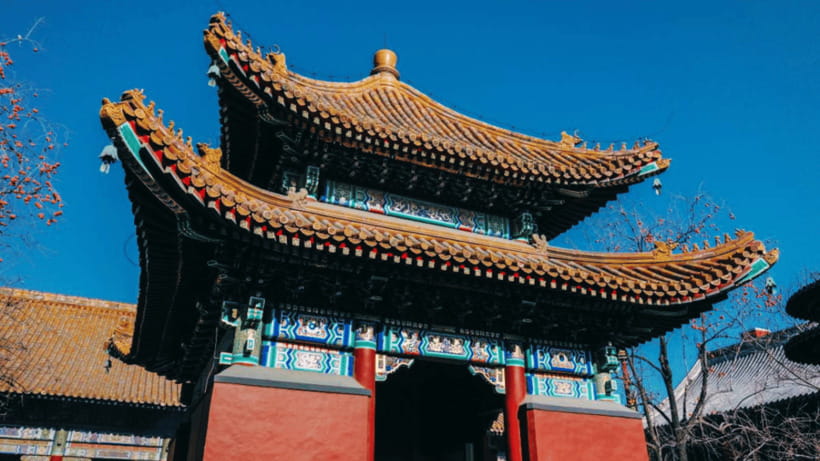
I recommend it most to people who want a self-guided cultural stop in Beijing. It suits independent visitors, first-time guests who want the admission process made easier, and anyone interested in Buddhist architecture, Qing-era history, or active places of worship.
It is also a good choice if you value flexibility. You can focus on the halls that interest you, take your time with the Buddha statue, and pause for incense and prayer without being tied to a group schedule.
I would think twice if you need a guide to explain every symbol or if you dislike handling booking messages close to the visit date. The ticket service does not replace a specialist tour. You must send passport information, wait for the proper confirmation, and manage your own visit once inside.
Should you book the Yonghe Temple admission ticket?
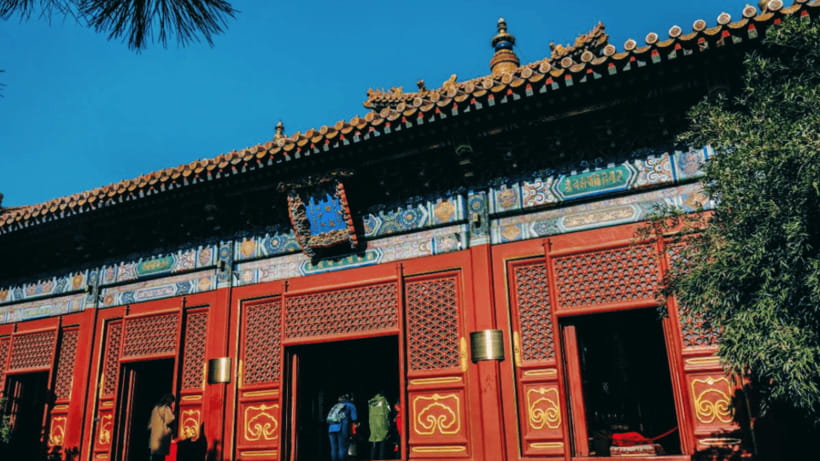
For around $10, I think this is a sensible purchase if you want easy independent entry to one of Beijing’s most distinctive religious sites. The strongest reasons are the low cost, the advance reservation, the access to all major buildings, and the chance to see a working temple rather than a purely decorative monument.
Book it if you are happy to explore without a guide and can provide accurate passport details promptly. Skip it only if you want detailed live commentary, since neither a guide nor an audio guide is included. Keep your expectations clear, watch for the actual email or WhatsApp ticket, and allow time for security. Done that way, Yonghe Temple offers a memorable look at Beijing’s imperial past and present-day Buddhist practice in one compact visit.
FAQ
How much does the Lama Temple admission ticket cost?
The listed price is $10 per person. It includes fast-track ticket entry, access to the major temple buildings and cultural exhibitions, and the reservation fee.
Is a guide or audio guide included?
No. Guided tours and audio guides are not included. A small electronic guide may be sent with the ticket information, but the visit is primarily self-guided.
Is the GetYourGuide QR code valid for entry?
No. The GetYourGuide QR code is not the valid admission ticket. You must wait for the confirmation email or WhatsApp message with the proper ticket information.
What identification do I need?
Bring your passport. You must provide your full name as shown on your passport and your passport number for the mandatory real-name booking.
Can I skip the security check?
No. The ticket provides fast-track entry for the ticket process, but it does not skip security checks. You must show your ticket at the designated entrance and then pass through security.
Can I cancel the booking?
Yes. You can cancel up to 24 hours in advance for a full refund.
Just added around Beijing
- Xian: Must see Eternal Love or Camel Bell Legend show Ticket★ 5.0 · 3 reviews
- 2-Day Beijing Must-See Tour:4 UNESCO Sites+Tian’anmen&Hutong★ 5.0 · 4 reviews
- Beijing: 2-Day private Tour with Great wall& Forbidden city★ 5.0 · 5 reviews
- Xian: Bus Tour of Terracotta Warriors With Guide & Lunch★ 4.2 · 5 reviews
- Private Transfer to Mutianyu Great Wall with professional driver★ 5.0 · 19 reviews
- Twilight Glow at Badaling Great Wall Evening Bus Tour+Ticket★ 4.9 · 11 reviews
- Yuxiandu Chinese Royal Cuisine Museum with Show and Royal Banquet★ 5.0 · 4 reviews
- ZANBUS: Trip to the Jinshanling Great Wall Departing at 7:30 AM★ 5.0 · 5 reviews
Lama Temple and Confucius Temple Tours, compared.
Temple Heaven, Lama Temple, Summer Palace & Peking Duck Bus Tour
Read our review →
Temple of Heaven, Summer Palace, Lama Temple, Hutong Tours
Read our review →
Beijing Historical Tour II including Summer Palace, Lama Temple & Panda Garden
Read our review →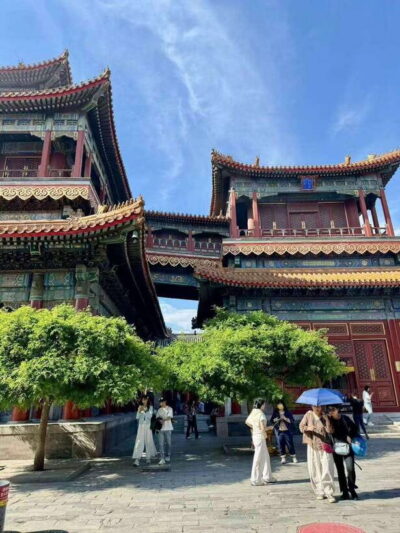
Beijing Lama temple ticket; #1 efficacious; limited Discount
Read our review →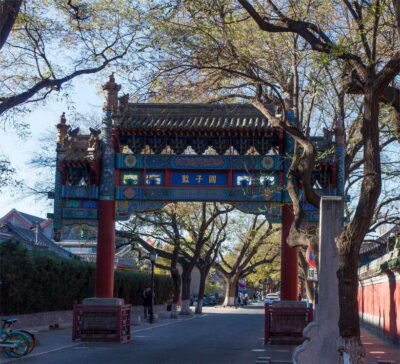
Confucius Temple and the Impercial College E-ticket
Read our review →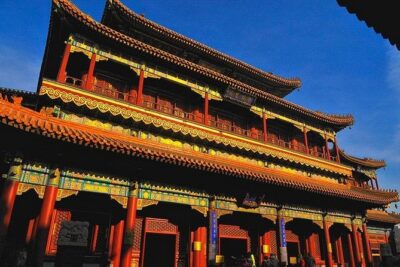
Panda House, Temple of Heaven, Lama Temple, Summer Palace & Lunch
Read our review →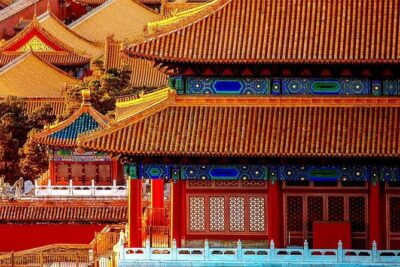
Private Day Tour Forbidden City Lama Temple and Temple of Heaven
Read our review →Browse the lists this tour appears in