

Reviewed · BEIJING WALKING TOURS
Beijing: Peking University Campus Guided Walking Tour
Peking University is more than a famous name on a campus map. Its old gardens, lake, pagoda, courtyards, and academic buildings tell the story of China’s changing approach to education. This two-hour walking tour gives you a way into that story, with a guide explaining what you are seeing instead of leaving you to guess.
I like the small group size, limited to 10 people, because it should be easier to ask questions and hear the guide. I also like the focus on details many visitors would miss, from the meaning of the Qilin statues to the way gardens and buildings were arranged around nature and study. The main drawback is time: two hours can introduce PKU well, but it cannot cover every corner of this large campus.
Key points at a glance
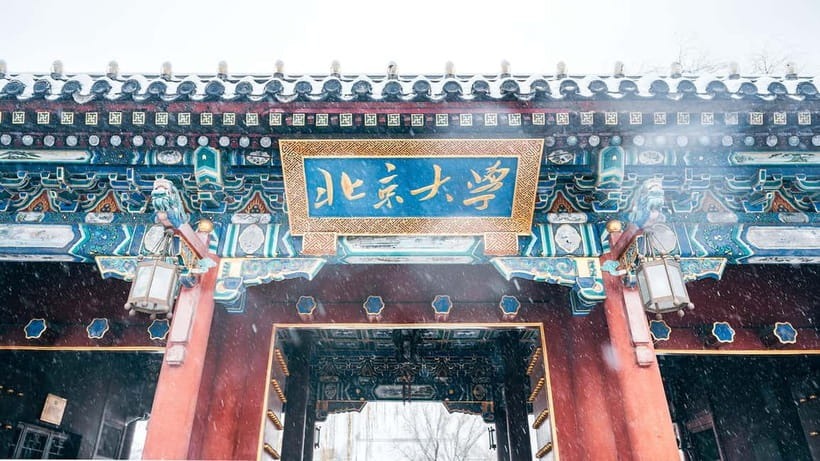
- Boya Pagoda and Weiming Lake: See two of PKU’s most recognizable landmarks and learn why they matter to the campus.
- A walk through Chinese academic culture: Hear about PKU’s roots in Yenching University, its links to Yuanmingyuan, and its place in modern China.
- Small English-speaking group: The group is capped at 10, with guides such as Henry praised for clear explanations and patience with children.
- Historic symbols: Visit the Bell Pavilion, Hua Biao ornamental pillars, Qilin statues, and the statue of Cai Yuanpei.
- A practical campus route: Meet at the East Gate and finish at the West Gate, so you see the university from one side to the other.
- Good value for curious visitors: At $39 per person, the price pays for context, interpretation, and access to a place that is otherwise easy to experience only from the outside.
Starting at Peking University’s East Gate
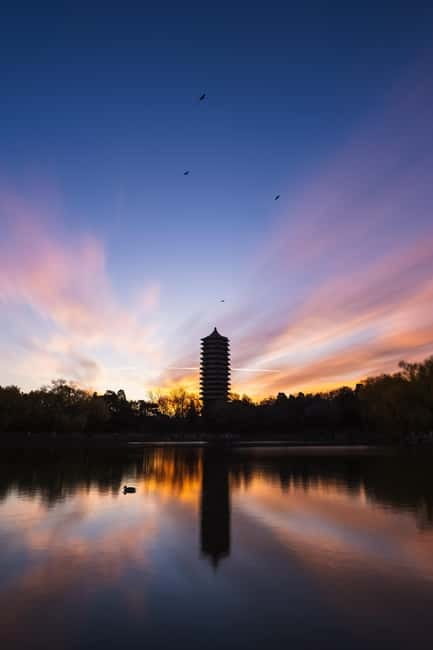
Your meeting point is the East Gate of Peking University in Beijing’s Haidian District. Look for the stone lion on the right side when you face the gate entrance. That detail matters. Large university entrances can be confusing, and the stone lion gives you a clear landmark rather than a vague instruction to wait somewhere nearby.
The tour then crosses the campus on foot and ends at the West Gate. Transportation to and from the university is not included, so allow extra time to reach the East Gate and arrange your next ride from the West Gate. Since the walk lasts two hours, wear shoes that can handle steady walking and bring a camera if you enjoy architectural photos.
The tour is conducted in English. The small group limit of 10 is useful here. University campuses are places where a good explanation can be lost if the group is too large, especially when the guide is pointing out details in a busy courtyard or explaining symbols on a building.
More walking tours in Beijing:
- Beijing Hutong Walking Food and Beer Tour at Hidden Restaurants
★ 5.0 · 1,132 reviews - Private Beijing Walking Tour of the Forbidden City with 7 Options
★ 5.0 · 675 reviews - Forbidden City Private Walking Tour with Optional Sights
★ 5.0 · 400 reviews
Boya Pagoda and Weiming Lake
Boya Pagoda is one of the first major sights on a PKU walk. The century-old structure gives the campus a strong visual marker, but the real value is the story around it. You are not simply stopping for a photograph. The guide connects the pagoda with the university’s past and explains how such a landmark fits into the campus setting.
Weiming Lake provides a change of pace. Its water, paths, and surrounding buildings make it one of the most appealing places on campus for photos. The tour uses the lake to explain the university’s traditional gardens and the idea that scholarship should exist in conversation with nature.
I like this part of the walk because it helps you read the campus as a designed place. The lake is not just a pleasant view between buildings. Garden layouts, courtyards, and buildings were planned with balance in mind. You might come away noticing how water, open space, old trees, and architecture guide the feeling of a place.
The lake area may also be one of the calmer portions of the route, though the tour is still a walk through an active university. It is best to think of this as a working campus with historic scenery, not a silent museum.
The Bell Pavilion, Hua Biao, and Qilin statues
The Bell Pavilion adds another layer to the tour. Ancient bells carry cultural meaning in China, and the guide explains the importance of this site within PKU. You will also see Hua Biao, or ornamental pillars, along with Qilin statues.
These features reward close attention. If you walked past them alone, they could look like decorative objects placed around the grounds. With an English-speaking guide, you get the cultural background needed to understand why they were chosen and what they suggest about learning, tradition, protection, and institutional identity.
This is one reason I think the tour works best for visitors who enjoy symbols and design. You do not need to be an architecture specialist. You simply need to be willing to pause and ask why a campus uses a particular animal, pillar, bell, or garden arrangement.
The tour also offers a useful balance between major sights and smaller details. Boya Pagoda and Weiming Lake are obvious stops. The Bell Pavilion and statues give you the less immediate story of PKU, where meaning is often carried by objects around the main buildings.
Peking University Library and Cai Yuanpei
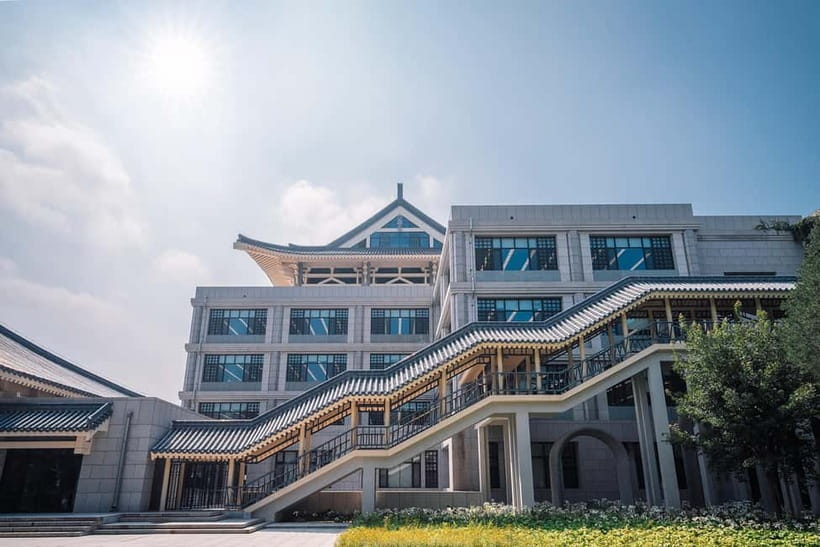
The Peking University Library is another major stop. The tour presents it as part of the university’s academic spirit, not just as a large building to photograph. You will learn how the library fits into the life of an institution known for scholarship and public debate.
The itinerary also includes the statue of Cai Yuanpei, a former president of PKU associated with a major period in the university’s development. The guide uses the statue to discuss the people and ideals that shaped the school.
For me, this stop gives the tour more substance. A campus can look attractive while remaining hard to understand. The library and Cai Yuanpei statue connect the physical grounds to the people who taught, studied, and shaped the institution.
You should not expect an extended indoor museum visit or a long look through the library’s collections. The experience is a guided campus walk, and the emphasis is on seeing important places and hearing their stories. Still, the library and statue make the route feel tied to education rather than sightseeing alone.
A completely different kind of day in Beijing:
- From Beijing: Mutianyu Great Wall Tours with Options
★ 4.9 · 9,216 reviews - Beijing: Forbidden City Tour(Group/Private)-Tickets Included
★ 4.8 · 7,974 reviews - Beijing: T-Square & Forbidden City Group or Private Tour
★ 4.8 · 4,446 reviews - All-Inclusive Tour: Tiananmen Square, Forbidden City, Great Wall
★ 5.0 · 2,873 reviews
From Yenching University to modern PKU
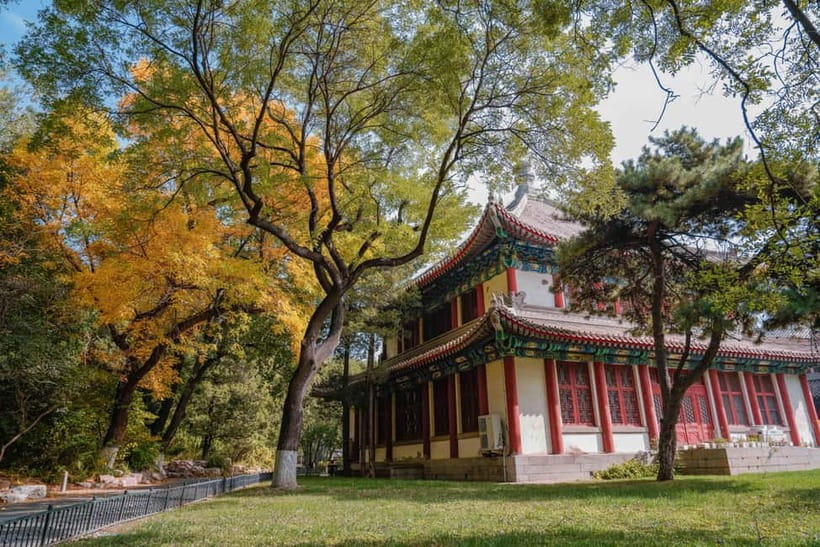
A key theme is PKU’s evolution from its roots as Yenching University. That background helps explain why the campus has such a blend of Chinese garden design, academic buildings, historic landmarks, and modern institutional life.
The guide also discusses PKU’s ties to Yuanmingyuan, the Old Summer Palace. This connection gives the university a wider Beijing setting. The campus is not treated as an isolated attraction. Its story reaches into the city’s imperial past and the changes that shaped modern Chinese education.
The tour even brings in Heshen, the infamous Qing Dynasty official. That detail may appeal to anyone who likes the less expected side of a city walk. Instead of presenting PKU as a sealed academic world, the guide links it to people, places, and political stories from earlier periods.
You will not receive a full course in Chinese history in two hours. That is a good thing, since the walk needs to keep moving. The goal is to give you enough background to understand the landmarks and to show how old and new layers meet on campus.
Traditional gardens with a purpose
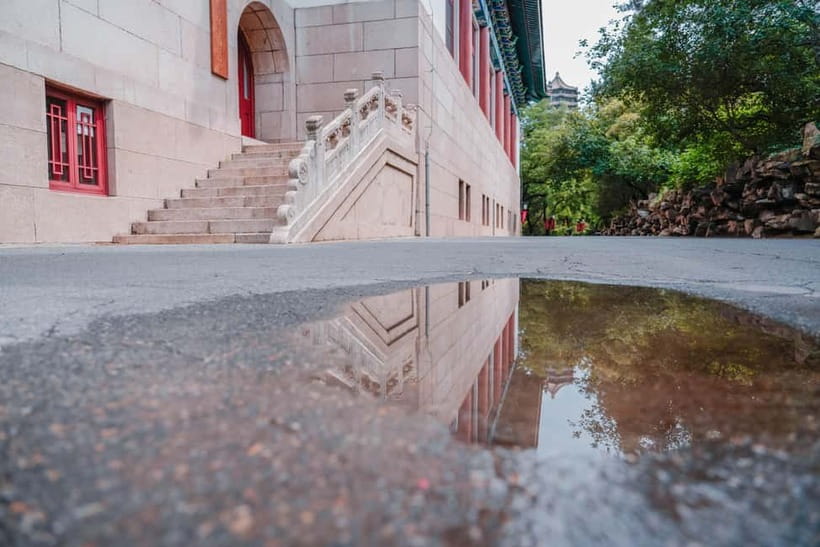
The gardens are one of the most interesting parts of the experience because they are easy to overlook. You will hear about the meaning behind courtyards, building placement, and the relationship between nature and scholarship.
This approach can change how you see the campus. Instead of treating a garden as a decorative break between lecture halls, you begin to notice how open space can frame a building, how water can create a sense of calm, and how a path can control what you see next.
I would pay close attention here and ask questions. The garden explanations are likely to be more memorable than a list of dates because they give you a way to interpret the campus on your own. They also make this experience different from a standard university orientation walk.
The route is still practical rather than theatrical. You are walking between real campus sites, not moving through a recreated historic setting. That means modern academic life remains part of the scene, which is useful if you want to understand PKU as a living university rather than a preserved monument.
What guides such as Henry add
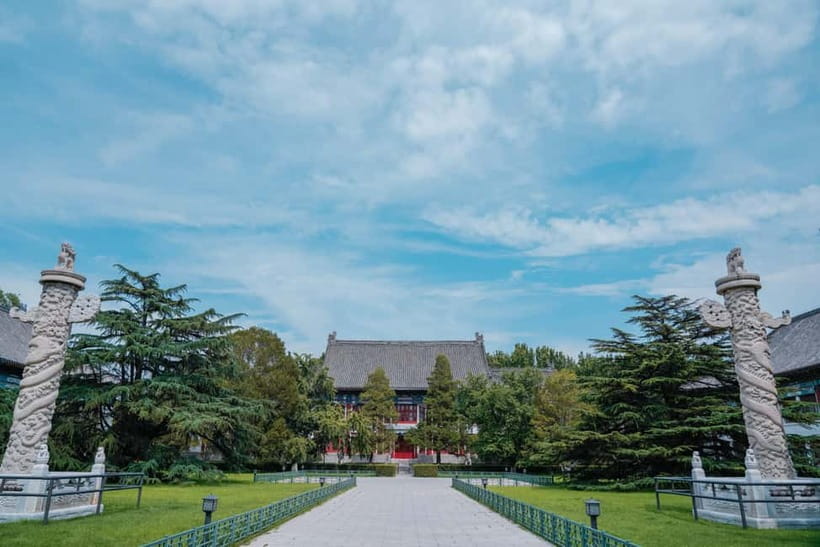
Henry is the guide named most often in the available feedback, and his style is described as friendly, clear, patient, and easy to communicate with. One family specifically appreciated his patience with four children. That is a useful sign for parents, since a two-hour history walk can test young attention spans.
He has also helped make the visit feel personal by sharing campus life and, on one occasion, inviting the group to eat in the school cafeteria. A cafeteria visit is not listed as a guaranteed part of the tour, and food is not included, but you can ask whether there is time for a casual campus meal after the walk.
The most important benefit of a guide here is interpretation. You can photograph Boya Pagoda without help. You cannot easily know why a particular statue matters, how Yenching University fits the story, or what a garden arrangement is meant to express.
The guide is also your best source for present-day student life. The tour includes discussion of academic culture, famous alumni, traditions, and modern PKU. That makes it suitable for families considering Chinese universities, students curious about campus life, and visitors who want more than a standard Beijing sightseeing route.
Is $39 a fair price?
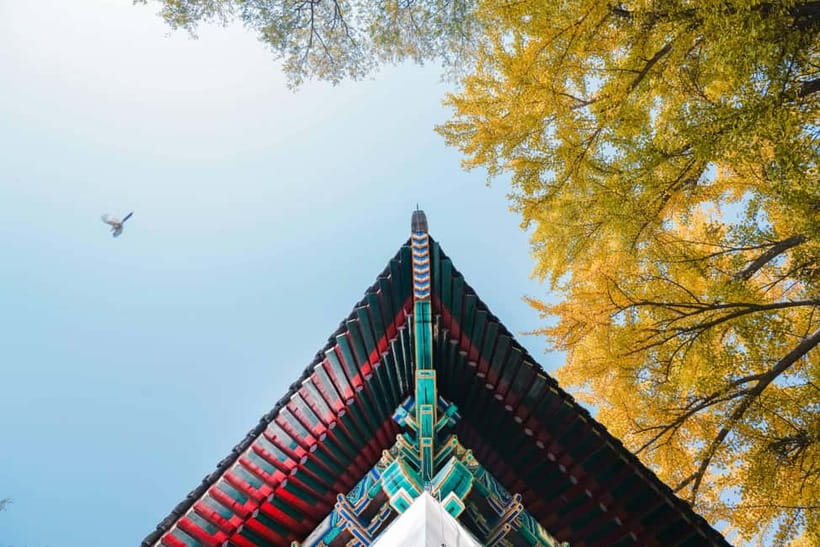
At $39 per person, this is not the cheapest way to see a university campus. You can walk around many public areas independently for little or no cost, depending on current campus access rules. The question is what you want from the visit.
The price is reasonable if you value a structured English tour, a small group, and background that would be difficult to assemble on your own. You are paying for two hours of guiding, not for food, hotel pickup, or transportation. That keeps the offer fairly simple and makes the value depend on the guide’s explanations.
The five-star score from nine reviews is encouraging, and the praise focuses on the points that matter most here: friendly guiding, clear explanations, good communication, and a professional pace. I would still keep expectations realistic. Two hours gives you a strong introduction, not an exhaustive examination of every building or department.
Families may find the cost worthwhile because a guide can keep children engaged with stories and symbols. Future students may also get more from the tour than casual sightseers, since the walk includes academic culture and student experience.
Who should take this walk?

I would recommend it to you if you enjoy:
- University campuses and academic culture
- Chinese architecture, gardens, and symbolic design
- Beijing history beyond the best-known imperial sights
- Small groups and direct access to an English-speaking guide
- Visits that combine current life with older traditions
- Family outings where children benefit from a patient guide
It is also a good choice for anyone considering a longer stay in Beijing and wanting to see Haidian District through its universities.
I would skip it if you dislike walking, want a fast photo stop, or prefer a tour focused only on imperial palaces and major city monuments. The campus route asks you to listen, notice details, and accept that some of the most valuable parts are stories rather than spectacular views.
Book comfortable shoes, carry water for yourself, and keep your schedule flexible around the two-hour walk. Food and drinks are not included, and transportation is your responsibility. Free cancellation is available up to 24 hours before the activity, and you can reserve now and pay later if you want to keep your Beijing plans open.
Should you book the Peking University tour?
Book it if you want to understand why PKU matters, not simply take a picture at its gate. Boya Pagoda, Weiming Lake, the library, Cai Yuanpei’s statue, and the old garden spaces give you plenty to see, but the guide’s explanations are the real reason to pay for the experience.
I would especially choose it for a first visit to PKU, for families with school-age children, or for anyone comparing Chinese universities. Henry’s clear and patient style is a useful plus when he is leading the group. Just remember that this is a focused two-hour introduction, with no included transportation or meal. For the right visitor, $39 buys a much better understanding of the campus than a solo stroll can provide.
FAQ
How long is the Peking University walking tour?
The tour lasts two hours.
Where does the tour begin?
It begins at Peking University’s East Gate in Beijing’s Haidian District.
Where exactly should I meet the guide?
Meet at the stone lion on the right side when facing the East Gate entrance.
Where does the tour finish?
The walk finishes at Peking University’s West Gate.
What language is the tour conducted in?
The tour is conducted in English with a live English-speaking guide.
How large is the group?
The tour is a small-group experience limited to 10 participants.
What landmarks are included?
The route includes Boya Pagoda, Weiming Lake, the Bell Pavilion, Hua Biao ornamental pillars, Qilin statues, Peking University Library, and the statue of Cai Yuanpei.
Does the tour include food or drinks?
No. Food and drinks are not included.
Is transportation to Peking University included?
No. Transportation to and from the university is not included.
What should I bring?
Wear comfortable shoes for walking and bring a camera if you want to take photos.
Can I cancel for a refund?
Yes. You can cancel up to 24 hours in advance for a full refund.
Can I reserve now and pay later?
Yes. The activity allows you to reserve your place and pay later.
Just added around Beijing
- Xian: Must see Eternal Love or Camel Bell Legend show Ticket★ 5.0 · 3 reviews
- 2-Day Beijing Must-See Tour:4 UNESCO Sites+Tian’anmen&Hutong★ 5.0 · 4 reviews
- Beijing: 2-Day private Tour with Great wall& Forbidden city★ 5.0 · 5 reviews
- Xian: Bus Tour of Terracotta Warriors With Guide & Lunch★ 4.2 · 5 reviews
- Private Transfer to Mutianyu Great Wall with professional driver★ 5.0 · 19 reviews
- Twilight Glow at Badaling Great Wall Evening Bus Tour+Ticket★ 4.9 · 11 reviews
- Yuxiandu Chinese Royal Cuisine Museum with Show and Royal Banquet★ 5.0 · 4 reviews
- ZANBUS: Trip to the Jinshanling Great Wall Departing at 7:30 AM★ 5.0 · 5 reviews
Beijing Walking Tours, compared.
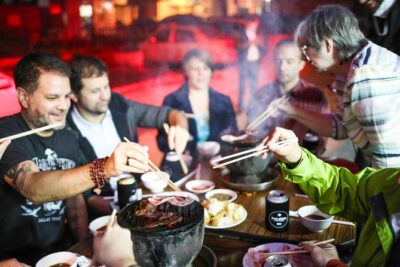
Beijing Hutong Walking Food and Beer Tour at Hidden Restaurants
Read our review →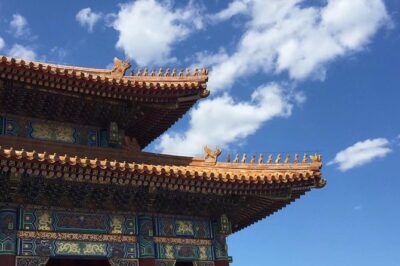
Private Beijing Walking Tour of the Forbidden City with 7 Options
Read our review →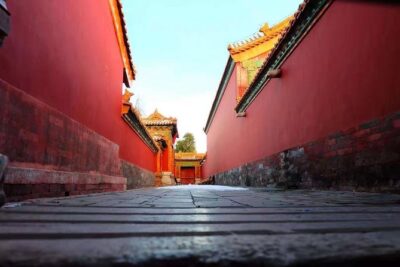
Forbidden City Private Walking Tour with Optional Sights
Read our review →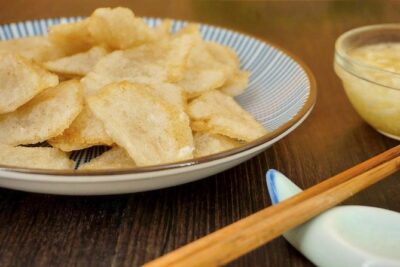

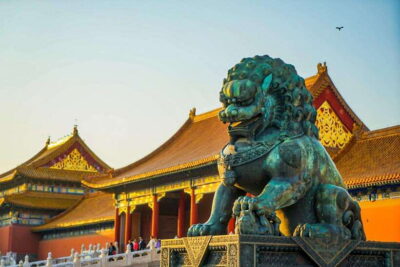
Highlights of Forbidden City Private Walking Tour
Read our review →

Beijing Historic City Guided Walking Tour + Calligraphy Creation
Read our review →Browse the lists this tour appears in