
Reviewed · BEIJING HUTONG TOURS
Discover Old Beijing: Hutong Walking Tour & Calligraphy
Beijing’s old neighborhoods are best understood on foot, and this tour takes you from an opera theater through narrow hutongs, old shopping streets, courtyard homes, and the Qianmen area. The most memorable stop is the calligraphy session, where you create a piece of Chinese writing to take home rather than just snap another photograph.
I like the mix of well-known sights and ordinary street corners. I also like the local angle, especially the stories about people who have lived through the changes in Beijing’s old neighborhoods. The main drawback is that this is a walking-heavy group tour, and the payment arrangement deserves a close look because one recent review described it as tip-based despite the advertised $25 price.
Five things to know before you go
- Calligraphy is included: You make your own Chinese artwork and take it home at no extra charge.
- The route mixes famous and local Beijing: Expect Qianmen and a view of Tiananmen Square, but also hutongs, a cinema, a courtyard, and a street market.
- The guides are the heart of the tour: Shery and Carrie were singled out for friendly, clear explanations, including Beijing’s past, present, and future planning.
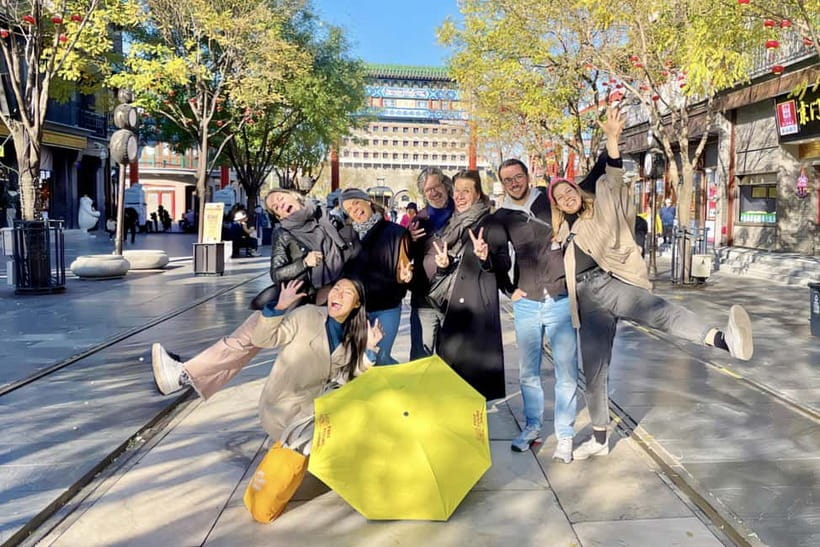
- Come early for the yellow umbrella: Meet at Hufangqiao Metro Station, Exit D, then walk 60 meters east to the green space.
- Budget three and a half hours on foot: The route includes snack stops and photo pauses, but it is not a sit-down sightseeing tour.
Why this walk gives you a useful first look at Beijing
Beijing can feel enormous and hard to read. Wide avenues, grand government buildings, old lanes, shopping streets, and modern transport all sit close together, yet they do not always seem to belong to the same city. This walk helps connect those pieces.
The tour begins in the area around Hufangqiao and moves through southern central Beijing. You get an introduction to the city’s long role as an imperial capital and modern political center, but the focus stays on how people use the city now. That matters because hutongs are not simply preserved museum streets. They are neighborhoods shaped by redevelopment, commerce, family life, and changing space.
I would choose this tour early in a Beijing visit. It gives you local street orientation before you tackle larger sights such as the Forbidden City, the Great Wall, or Tiananmen Square. It also helps explain why a narrow lane, an old theater, or a small courtyard can matter just as much as a major monument.
The walking pace should suit anyone who likes to stop for photographs and conversation. You will need comfortable shoes and enough energy for several hours outside. The schedule is full, so do not expect long breaks or a leisurely restaurant meal.
More hutong tours in Beijing:
- Beijing Hutong Walking Food and Beer Tour at Hidden Restaurants
★ 5.0 · 1,132 reviews - Old Beijing Dinner Tour
★ 5.0 · 348 reviews - Temple Heaven, Summer Palace, Lama Temple, Hutong Bus Tour
★ 4.7 · 319 reviews
Starting at Huguang Guild Opera Theatre
The meeting point is Hufangqiao Metro Station on Line 7, Exit D, marked as the southwest exit. Once outside, head straight to the main road, turn right, and walk about 60 meters east toward the green space at the intersection of Hufang Road and Luomashi Avenue.
Look for the yellow umbrella. This is more useful than relying on a map pin, since Google Maps does not work reliably in China. The listed landmark is Huguang Guild Opera Theatre, also called Huguang Guild Hall. If you are taking a taxi, the useful address is the corner of Hufang Road and Luomashi Avenue, by the theater.
Arrive five to ten minutes early. Hufangqiao is described as a very large metro station, and traffic or a wrong turn can easily cost you time. The guide may wait up to 20 minutes while giving the opening talk, but the walk cannot be delayed for late arrivals.
The theater is not just a place to gather. It gives the route a cultural opening, with a 30-minute guided visit connected to Beijing’s traditional performance world. You begin with a sense of ceremony and public culture before moving into everyday lanes.
Hutongs, courtyards, and the people behind old Beijing
The first major walking section takes you into Beijing’s hutongs. These lanes are one of the clearest ways to see the city at street level. Instead of viewing Beijing only through imperial gates and broad roads, you see the smaller spaces where residents have lived, worked, shopped, and adapted to urban change.
The guide’s storytelling is important here. The tour promises accounts from local people who have survived in old neighborhoods, along with an explanation of development problems facing the hutongs. That gives you more than a list of dates. You hear how old residential areas fit, or fail to fit, into a rapidly changing capital.
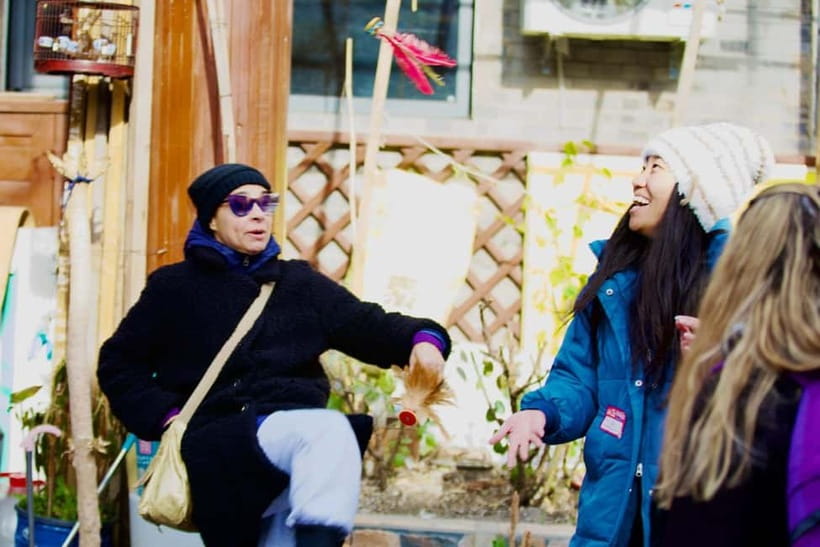
A special courtyard visit follows. Details about the exact home are not provided, so I would treat this as a short, personal stop rather than a full house museum. The scheduled visit lasts about 20 minutes. That is enough time to see the character of a traditional courtyard setting and ask questions, but not enough for a long architectural lecture.
This section may be the most valuable part for anyone curious about daily life. Big monuments tell you what a government wanted to display. A courtyard and a narrow lane show how ordinary housing worked. Keep your eyes open for small details, but follow the guide’s instructions about where to walk and what you may photograph.
Making calligraphy at the secret stop
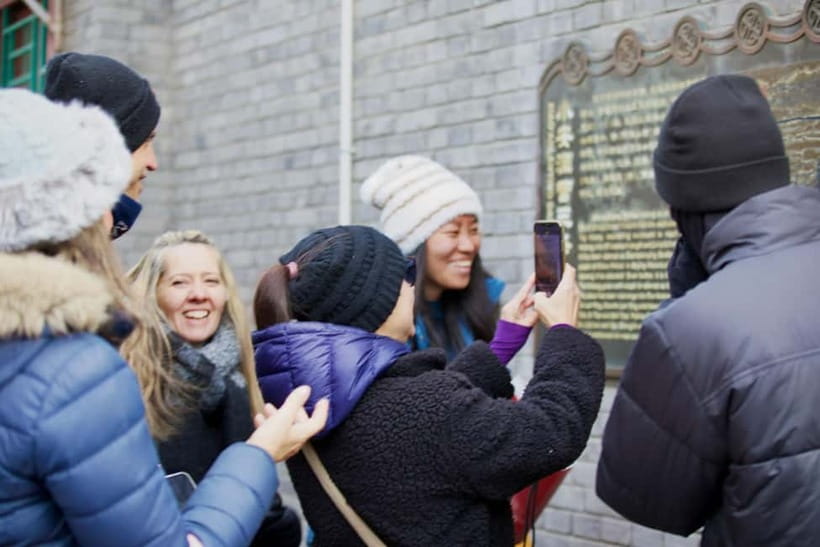
The calligraphy activity is the tour’s strongest hands-on feature. At a local calligraphy studio, you create your own Chinese calligraphy artwork and take it with you free of charge.
The activity is scheduled as a 20-minute secret stop, so the exact setting is not given in advance. Do not expect a full art class in Chinese brush technique. The available time suggests a compact introduction, guided practice, and a finished souvenir. That is still far more personal than buying a mass-produced keepsake.
I like this kind of stop because it gives you a physical memory tied to the place. You are not simply receiving a gift. You make something, however simple, and carry it home. It may also be a welcome pause after the first stretch of walking.
The activity is a good fit for families, first-time visitors, and anyone who wants a cultural experience without committing to a long workshop. If you are particular about calligraphy styles or want advanced instruction, keep your expectations modest. The tour’s main subject is Beijing, not formal art training.
More tea ceremony and calligraphy workshops in Beijing:
- Beijing Calligraphy Class
★ 4.9 · 112 reviews - Chinese Calligraphy Class for Small Group
★ 5.0 · 104 reviews - Traditional Chinese Tea Ceremony Experience
★ 4.7 · 74 reviews - Beijing Historic City Guided Walking Tour + Calligraphy Creation
★ 5.0 · 59 reviews
Yangmeizhu Byway and Beijing’s old commercial streets
The route continues along Yangmeizhu Byway for about 30 minutes. This is one of the places where the tour’s balance works well. You move through an older street environment, but the discussion also addresses how businesses, housing, and city planning are changing these districts.
A local antique shopping street appears along the way. The information provided does not promise purchases or a dedicated shopping session, so treat it as part of the street experience. You may find objects that catch your eye, but the value here is seeing how old-style commerce fits into a modern tourist district.
The tour also includes a local hutong street market and snack breaks. Specific foods and drinks are not named, so you should not book this expecting a particular dish. You can expect small local tastes along the route, which are useful for breaking up the walk and seeing what people buy in the neighborhood.
Food stops on a walking tour are usually brief. If you need a full meal, eat before the meeting time or plan one afterward. The snack is an introduction, not a substitute for lunch.
Daguanlou Cinema and the birthplace of Chinese cinema
Daguanlou Cinema receives a 20-minute guided visit. The tour presents it as the birthplace of Chinese cinema, giving the walk a different angle on Beijing’s cultural past.
This stop is especially useful because it moves beyond the usual imperial story. Beijing is not only gates, palaces, and political power. It has also been a place where new forms of entertainment and public culture took shape.
The visit is fairly short, so you should expect an explanation and a look at the site rather than a long film program. Still, it adds variety to the route. After hutongs and courtyards, a cinema shows another way the city’s public life developed.
For photographers, this can be a good change of scene. For film fans, it offers a direct link between a physical location and the story of Chinese cinema. The tour does not say that a screening is included, so plan on a guided stop only.
Dashilan, Qianmen, and the city’s changing face
Dashilan Residential District is given about 30 minutes. This section should help you compare residential hutongs with a more commercial setting. The district is known in the tour for its local shops, street life, and connection to the older southern city.
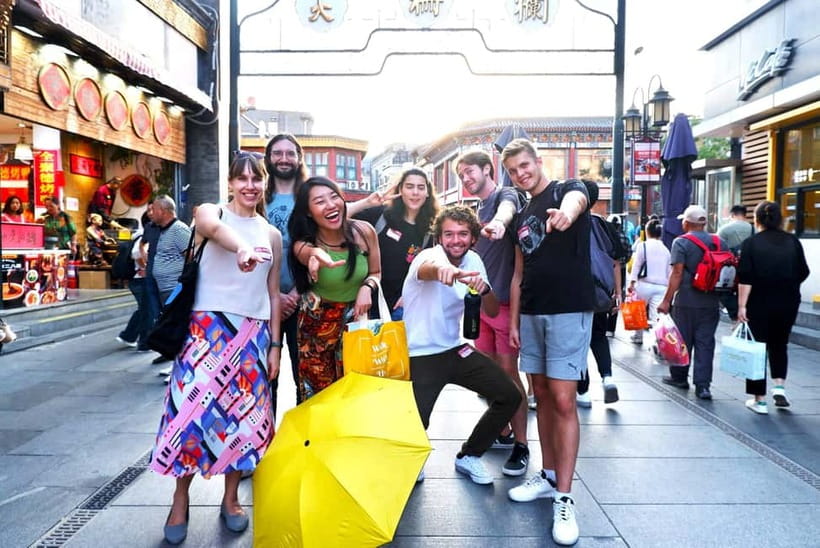
Next comes Qianmen Street, with about 40 minutes of guided explanation. Qianmen is one of the better places to see Beijing’s mix of old-looking streets, retail activity, and heavy sightseeing traffic. It can feel more polished and commercial than the residential lanes, which is precisely why the contrast matters.
The route also includes the narrowest hutong in Beijing. The exact name is not supplied, but the stop gives you a quick visual reminder of how tight the old street pattern can be. Narrow lanes are easy to underestimate in photographs. Standing inside one makes the limits of old urban design much clearer.
At the end, you reach Zhengyang Gate and the Arrow Tower, major defensive structures connected to Beijing’s old city walls. The walk also offers an outside view of Tiananmen Square. This is not a ticketed visit inside Tiananmen Square, and the itinerary describes the view as from outside. Keep that distinction in mind when comparing this experience with a dedicated Tiananmen or Forbidden City tour.
The final section is a good photo opportunity, but it may also be the busiest part of the route. You will be moving from smaller lanes toward a major pedestrian street and famous city landmarks. If you prefer quiet streets only, the commercial finish may feel less personal. If you want a broad first look at central Beijing, it gives the tour a satisfying endpoint.
What the $25 price really means
The advertised cost is $25 per person for 3.5 hours. Included are an English-speaking local guide, welcome gifts, a China survival guide, snack breaks, local drinks or street food, the courtyard visit, and the calligraphy activity.
At that price, the value depends on how much you use the guide. The route itself covers many areas you could reach on your own, but the benefit is the explanation connecting them. You are paying for context, a planned route, and access to a calligraphy stop rather than simply walking from one public street to another.
There is one point to clarify before booking. One recent five-star review described the experience as a free walking tour based on tips and called the platform price too high. The supplied activity information lists a $25 charge, so I would confirm the exact payment and tipping arrangement at booking. That is not a minor detail. A clear price is part of fair value, especially when a reviewer felt the guide deserved the money more than the booking platform did.
The overall rating is 4.3 from 24 reviews. The strongest praise focuses on the guides and the amount of information. One person called it a favorite Beijing activity alongside the Great Wall. Another said the guides explained the past, present, and future planning of hutongs. A less enthusiastic response found it good but not as exciting as expected, while still describing Shery as kind and helpful.
That pattern tells you what to expect. This is a story-led city walk, not an adrenaline activity. You will get the most from it if you enjoy history, urban change, street food, and conversation.
Who should book this Beijing walking tour?
I would recommend it to a first-time Beijing visitor who wants several city themes in one morning or afternoon. You see traditional performance, hutongs, a courtyard, cinema history, shopping streets, old gates, and an outside view toward Tiananmen Square.
It also suits solo visitors who want an easy way to meet people. The tour is designed for a group, and the activity description specifically presents it as a chance to meet fellow tourists. The shared walk and calligraphy stop give you natural moments to talk without forcing a formal social event.
Families and older children may enjoy the calligraphy and snack stops, though every person in the group must be comfortable walking for 3.5 hours. People with very limited time in Beijing may find the route efficient, while repeat visitors may prefer it for the hutong planning discussion rather than the major sights.
I would skip it if you want a private tour, a slow food crawl, or extended interior visits at major monuments. I would also skip it if the $25 price feels high for a group walk and the payment terms remain unclear.
Should you book it?
Book this tour if you want human stories and street-level Beijing more than a checklist of palace interiors. The calligraphy artwork, courtyard visit, snack breaks, and hutong discussion make it more personal than a simple landmark walk.
Before paying, confirm the price and tipping policy. Then arrive early at Hufangqiao, follow the written directions instead of Google Maps, and look for the yellow umbrella. With those details handled, this is a practical way to get your bearings, meet people, and see how old Beijing fits inside the modern capital.
FAQ
How long does the Hutong Walking Tour and Calligraphy experience last?
The tour lasts 3.5 hours.
What language is the tour conducted in?
The live tour guide speaks English.
How much does the tour cost?
The listed price is $25 per person. One recent review described the walk as tip-based, so confirm the payment and tipping terms when booking.
Where does the tour meet?
Meet at Hufangqiao Metro Station on Line 7, Exit D, the southwest exit. Walk about 60 meters east to the green space at the intersection of Hufang Road and Luomashi Avenue, beside Huguang Guild Opera Theatre.
How do I find the guide at the meeting point?
Look for the yellow umbrella at the green space. The written directions should be used instead of relying on Google Maps, which does not work reliably in China.
Is Chinese calligraphy included?
Yes. You can create your own Chinese calligraphy artwork at a local studio and take it home free of charge.
Are food and drinks included?
Snack breaks with local street food and drinks are included. The specific foods and drinks are not listed.
Can I cancel for a full refund?
Yes. You can cancel up to 24 hours in advance for a full refund. You can also reserve now and pay later.
More walking tours in Beijing
- Private Beijing Walking Tour of the Forbidden City with 7 Options
★ 5.0 · 675 reviews - Forbidden City Private Walking Tour with Optional Sights
★ 5.0 · 400 reviews - Beijing Private Hutong Food Walking Tour
★ 5.0 · 299 reviews - Beijing: Hutong Culinary Walking Tour with 15+ Tastings
★ 5.0 · 162 reviews
Just added around Beijing
- Xian: Must see Eternal Love or Camel Bell Legend show Ticket★ 5.0 · 3 reviews
- 2-Day Beijing Must-See Tour:4 UNESCO Sites+Tian’anmen&Hutong★ 5.0 · 4 reviews
- Beijing: 2-Day private Tour with Great wall& Forbidden city★ 5.0 · 5 reviews
- Xian: Bus Tour of Terracotta Warriors With Guide & Lunch★ 4.2 · 5 reviews
- Private Transfer to Mutianyu Great Wall with professional driver★ 5.0 · 19 reviews
- Twilight Glow at Badaling Great Wall Evening Bus Tour+Ticket★ 4.9 · 11 reviews
- Yuxiandu Chinese Royal Cuisine Museum with Show and Royal Banquet★ 5.0 · 4 reviews
- ZANBUS: Trip to the Jinshanling Great Wall Departing at 7:30 AM★ 5.0 · 5 reviews
Beijing Hutong Tours, compared.
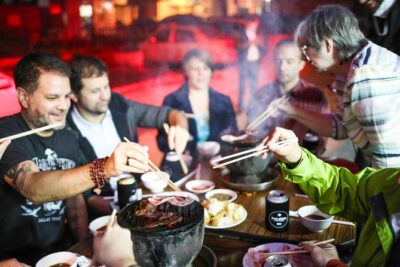
Beijing Hutong Walking Food and Beer Tour at Hidden Restaurants
Read our review →
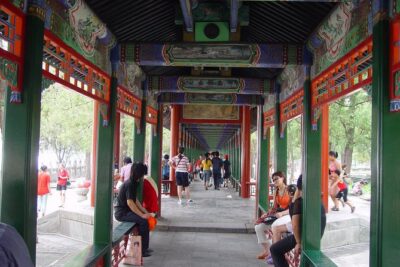
Temple of Heaven, Summer Palace, Lama Temple, Hutong Tours
Read our review →
Beijing City Walk: Explore Hutongs Life and Old Beijing
Read our review →Browse the lists this tour appears in