
Reviewed · BEIJING HUTONG TOURS
Beijing Hutong Walking Tour History, Architecture and Local Life
Beijing’s old city reveals itself in layers on this three-hour walking tour. You move from a church with Chinese design touches to a Buddhist temple, a Yuan Dynasty brick pagoda, an old hutong, and imperial buildings. The route ends near the modern financial center, giving you a sharp look at how old and new Beijing share the same city.
I like the small maximum of 10 people, which leaves room for questions and makes narrow lanes easier to manage. I also like the practical side: guides such as Lori and Dee explain hutong doors and layout, then offer restaurant suggestions and city tips over a traditional Beijing drink.
The main consideration is pace. Six stops in about three hours means you will see each place briefly, and the White Stupa is viewed from a nearby café balcony rather than entered. The Temple of Previous Dynasties is also visited only if it is open.
Key points to know before booking
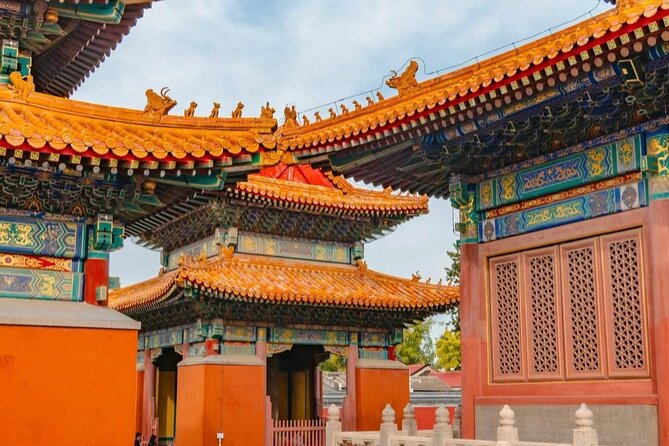
- A compact old-Beijing route: Cover a church, temple, pagoda, hutong, imperial shrine, and White Stupa area in one morning or afternoon.
- A walking-first experience: Private transportation is not included, and the time between locations counts toward the three-hour duration.
- Useful local guidance: Lori and Dee can explain hutong design, answer questions, and suggest places to eat.
- A small group format: The tour accepts no more than 10 people, a helpful limit in narrow historic lanes.
- A mix of famous and ordinary Beijing: You see formal religious buildings alongside lived-in lanes and local daily routines.
- A modest but useful value: At $49 per person, the cost includes entrance fees, bottled water, and a traditional Beijing drink.
Why this route gives you a sharper picture of Beijing
Many Beijing tours focus on grand landmarks. This one takes a smaller-scale route through Xicheng District, where history appears in doorways, courtyards, religious buildings, and side lanes.
You begin near Xisi Subway Station and finish at Fuchengmen Station, Exit C, close to Financial Street. That endpoint matters. You do not finish in an isolated tourist zone. Instead, you arrive near a modern business district, making it easy to continue exploring or connect with Beijing’s subway system.
I like the contrast built into the route. One moment you are looking at formal imperial architecture. Soon after, you are walking through a hutong where the interest comes from street layout and ordinary life. The tour is not only about taking photographs. It helps you understand how Beijing’s older neighborhoods functioned and why architectural details mattered.
The group limit of 10 is another practical advantage. You can usually hear explanations without standing beside a large flag or waiting for a long line to move. A small group also suits a walking route through narrow lanes, though the experience will still involve several stops in a short period.
More hutong tours in Beijing:
- Beijing Hutong Walking Food and Beer Tour at Hidden Restaurants
★ 5.0 · 1,132 reviews - Old Beijing Dinner Tour
★ 5.0 · 348 reviews - Temple Heaven, Summer Palace, Lama Temple, Hutong Bus Tour
★ 4.7 · 319 reviews
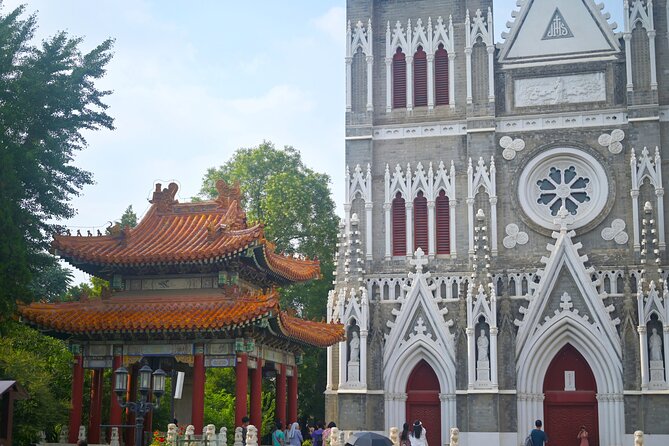
Xishiku Church: Beijing’s Chinese-style church
The first stop is Xishiku Church, described as Beijing’s earliest church. Its appeal comes from the way Christian design meets local architectural influence.
You have about 10 minutes here, so expect a quick introduction rather than an extended church visit. The guide explains the story behind the building and points out its Chinese touches. That makes this a useful opening stop because it expands your idea of Beijing’s religious past beyond temples and imperial shrines.
The short timing keeps the tour moving, but it also means you should not expect a full architectural study. If churches are a major interest for you, take mental notes and ask questions while the group is here. Admission is free.
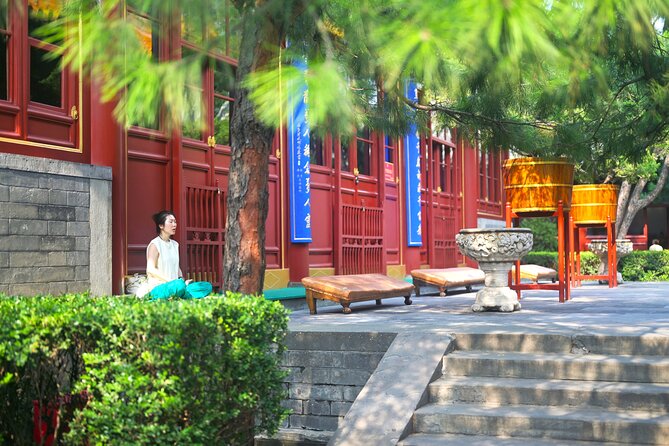
Guangji Temple and its old finger paintings
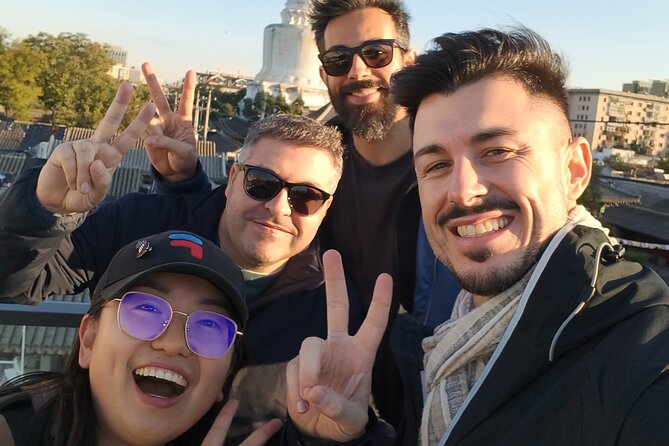
Next comes Beijing Guangji Temple, with about 20 minutes to look at traditional Chinese temple architecture and ancient finger paintings.
This stop gives the route a clear religious and artistic focus. The temple setting helps you read features that may otherwise pass quickly: the arrangement of buildings, the role of courtyards, and the visual language used in Chinese religious spaces.
The finger paintings add a more unusual detail. They give the guide something specific to explain rather than offering only a general account of temple customs. Admission is free, and the 20-minute visit is long enough for a focused look without turning the tour into a lengthy museum stop.
As with every stop on this route, listen for context about how the building is used and what you are seeing. The value here comes less from ticking off a temple and more from learning how to notice architectural elements in the next places.
Zhengyang Shuju and the Yuan Dynasty brick pagoda
At Zhengyang Shuju, you see the Wansong Brick Pagoda, which dates from the Yuan Dynasty, and explore old Beijing images in a siheyuan.
A siheyuan is a traditional courtyard home. Its buildings are arranged around an open central space, and the design helps explain why courtyards are so important to Beijing’s old neighborhoods. The tour connects the physical courtyard with images of the city’s past, giving you both a place and a visual record.
The Wansong Brick Pagoda adds another layer. Unlike a large palace or monumental gate, a brick pagoda can be easy to overlook if you are walking alone. Here, the guide explains its age and setting, helping you understand how historic remains can sit within the working city.
You have around 20 minutes at this stop. That is enough for a close look at the courtyard, the images, and the pagoda, though anyone wanting a detailed study of Yuan-era architecture may find the timing brief.
More walking tours in Beijing:
- Private Beijing Walking Tour of the Forbidden City with 7 Options
★ 5.0 · 675 reviews - Forbidden City Private Walking Tour with Optional Sights
★ 5.0 · 400 reviews - Beijing Private Hutong Food Walking Tour
★ 5.0 · 299 reviews - Beijing: Hutong Culinary Walking Tour with 15+ Tastings
★ 5.0 · 162 reviews
Zhuanta Lane and the everyday hutong
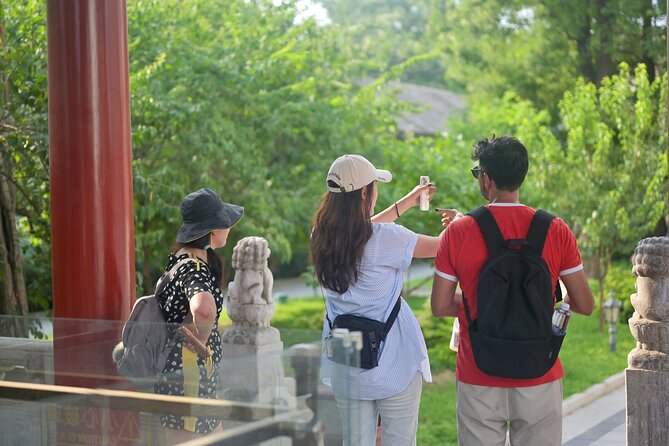
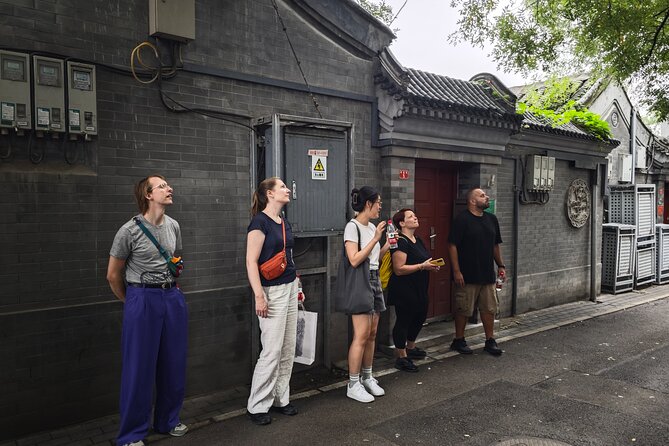
Beijing Zhuanta Lane is the most direct look at ordinary old-city life on the route. It is described as one of Beijing’s oldest hutongs, and you walk through it for about 15 minutes.
This is where the tour shifts from formal buildings to the human scale of the neighborhood. Hutongs are not simply pretty lanes. Their layout, entrances, walls, and doors reflect how homes and communities were organized.
The guides pay attention to door design and hutong arrangement. That is a useful detail because a row of doors can look decorative until someone explains what the placement and style tell you about a home’s status or function. Lori is specifically praised for explaining the meaning of doors and the way hutongs were laid out.
You should expect to see a lived-in area, not a preserved stage set. That is part of the appeal, but it also means conditions may feel less polished than at a major monument. Keep your pace respectful, stay with the group, and remember that this is a neighborhood as well as a historic setting.
The Temple of Previous Dynasties, if open
The Temple of Previous Dynasties, also called Lidai Diwang Miao, offers the route’s strongest look at grand palatial architecture. The visit takes about 20 minutes, but entry depends on the site being open.
The temple helps explain how Chinese traditions honored earlier rulers and ancestors. The emphasis is not simply on one emperor. Instead, the site reflects a broader practice of remembering successive dynasties within a formal architectural setting.
This stop is important for understanding the connection between buildings, ritual, and political memory. The palatial structures provide a visual contrast to the narrower hutongs you have just walked through.
Because access is not guaranteed, do not book the tour solely for this one site. Think of it as an important possible part of the route. If it is closed, the rest of the walk still includes several architectural and cultural stops.
The White Stupa from a café balcony
The final major sight is the White Stupa Temple, also known as Miaoying or Baita Si. The guide uses a nearby café balcony to show you the exterior design of the White Stupa and explain different types of Chinese pagodas.
This is a clever viewing arrangement. You get a raised perspective without a long detour, and the guide can point out the stupa’s shape while comparing it with other pagoda forms.
There is an important limit here: you view the White Stupa from the outside rather than touring the interior. The stop lasts about 15 minutes, so it works best as an architectural explanation and photo opportunity, not a full temple visit.
The café setting also ties into the social part of the experience. You receive a traditional Beijing drink, and the guide can offer food suggestions and general advice for the rest of your stay. Dee is described as especially willing to answer questions and recommend lunch options, which can make this portion useful if you are still deciding where to eat in the city.
What the three-hour timing really means
The advertised duration is about three hours, and that total includes movement between locations. You are not getting three full hours inside monuments.
The scheduled stop times add up to roughly 100 minutes. The remaining time covers walking and travel between sites, plus explanations along the way. This is a good format if you want a compact orientation early in your visit. It is less suited to you if you prefer long, quiet visits at one or two monuments.
Wear comfortable walking shoes and plan for a steady outing. Private transportation is not included, so the route is built around walking and public transport access at the start and end. The tour begins at Xisi Subway Station and concludes at Fuchengmen Station, Line 2, Exit C, in the Financial Street area.
The mobile ticket makes entry simple. Confirmation arrives when you book, and the group size is capped at 10. Most people can participate, and service animals are allowed.
Is $49 a fair price?
At $49 per person, this is not the cheapest way to walk around Beijing, but the price is reasonable if you want interpretation rather than a self-guided stroll.
The cost includes all fees and taxes, bottled water, and a traditional Beijing drink. Admission is free at several stops, while the Temple of Previous Dynasties has an included admission fee when that visit is available. You are mainly paying for the guide’s route planning, explanations, local suggestions, and the convenience of connecting several sites in one outing.
I would see the value in this tour if you are new to Beijing or want help reading the city beyond major imperial sights. The advice about restaurants and travel can also save time later in your trip. If you already know Beijing well and prefer exploring alone, $49 may feel high for a short walk with brief stop times.
The small group improves the value. A maximum of 10 is much more manageable than a large coach group, especially in a hutong. Still, this is not a private tour, and the route will follow a set pace.
Who will enjoy this Beijing walk?
This experience suits first-time visitors who want a quick orientation to local culture, old neighborhoods, and religious architecture. It also works well for repeat visitors who have seen the major palace sites and want a closer look at neighborhood life.
You will get the most from it if you enjoy asking questions. The guides are there to explain hutong layout, door details, architecture, local customs, and food choices. Dee is described as personable and ready to answer many questions, while Lori is noted for making hutong design easier to understand.
Families and mixed-interest groups may also find the route useful because it changes subject often. A church, temple, pagoda, courtyard home, hutong, imperial shrine, and stupa keep the walk varied.
I would hesitate to recommend it to anyone looking for long interior visits or a relaxed photography session. Six stops in three hours creates a clear rhythm, and the Temple of Previous Dynasties may not be open. The White Stupa viewing is also from a balcony, not an interior tour.
You can cancel for a full refund up to 24 hours before the start time. The experience depends on good weather and a minimum number of participants. If poor weather or insufficient bookings cancel the walk, you are offered another date or experience, or a full refund.
Should you book this hutong tour?
Book it if you want a well-packed introduction to old Beijing with a guide who can explain the details you would likely miss alone. The strongest parts are the mix of religious and residential architecture, the small group, the Zhuanta Lane walk, and the practical restaurant and city advice.
Skip it if your priority is entering every site, spending an hour at each monument, or traveling by private vehicle. You will move at a steady pace, and two highlights have limits: the Temple of Previous Dynasties is only visited if open, while the White Stupa is viewed from outside.
For a first or second day in Beijing, I think the route makes good sense. It gives you a working map of the old city, shows how history survives beside modern offices, and leaves you near a useful subway station when the three hours are over.
FAQ
How long is the Beijing hutong walking tour?
The tour lasts approximately three hours, including the time spent moving between each location.
Where does the tour begin?
It begins at Xisi Subway Station in Xicheng District, Beijing.
Where does the tour end?
It ends at Fuchengmen Station, Exit C, on Line 2, near Financial Street in Xicheng District.
What is included in the price?
The price includes all fees and taxes, bottled water, and a complimentary traditional Beijing drink.
Is private transportation included?
No. Private transportation is not included. The experience is a walking tour, and travel time between locations is part of the total duration.
How many people can join the tour?
The maximum group size is 10 people.
Can I cancel for a full refund?
Yes. You can cancel at least 24 hours before the experience start time for a full refund. Cancellations or changes made less than 24 hours in advance are not refunded or accepted.
More historic sites in Beijing
- Beijing Historical Tour II including Summer Palace, Lama Temple & Panda Garden
★ 4.0 · 187 reviews - Beijing Historical Tour I – Forbidden City, Tiananmen Square & Temple of Heaven
★ 4.0 · 120 reviews - Beijing Historic City Guided Walking Tour + Calligraphy Creation
★ 5.0 · 59 reviews - Beijing Culture: Tea Ceremony, Heritage Instrument & Calligraphy
★ 5.0 · 57 reviews
Just added around Beijing
- Xian: Must see Eternal Love or Camel Bell Legend show Ticket★ 5.0 · 3 reviews
- Xian: Bus Tour of Terracotta Warriors With Guide & Lunch★ 4.2 · 5 reviews
- 2-Day Beijing Must-See Tour:4 UNESCO Sites+Tian’anmen&Hutong★ 5.0 · 4 reviews
- Beijing: 2-Day private Tour with Great wall& Forbidden city★ 5.0 · 5 reviews
- Private Transfer to Mutianyu Great Wall with professional driver★ 5.0 · 19 reviews
- Twilight Glow at Badaling Great Wall Evening Bus Tour+Ticket★ 4.9 · 11 reviews
- Yuxiandu Chinese Royal Cuisine Museum with Show and Royal Banquet★ 5.0 · 4 reviews
- ZANBUS: Trip to the Jinshanling Great Wall Departing at 7:30 AM★ 5.0 · 5 reviews
Beijing Hutong Tours, compared.
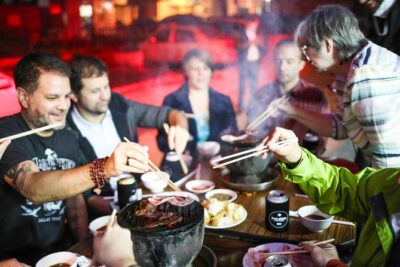
Beijing Hutong Walking Food and Beer Tour at Hidden Restaurants
Read our review →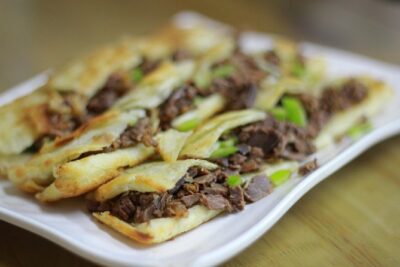
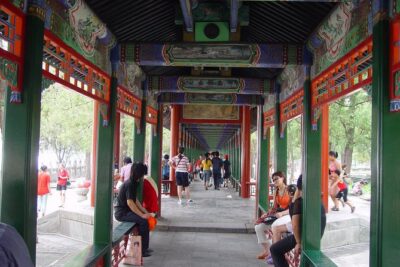
Temple of Heaven, Summer Palace, Lama Temple, Hutong Tours
Read our review →
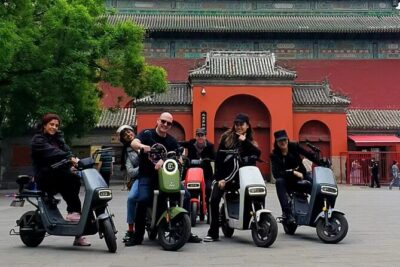

Beijing City Walk: Explore Hutongs Life and Old Beijing
Read our review →Browse the lists this tour appears in