
Reviewed · TEA CEREMONY AND CALLIGRAPHY WORKSHOPS
Beijing Culture: Tea Ceremony, Heritage Instrument & Calligraphy
The remarkable part of this Beijing experience is that you do not simply watch Chinese traditions from behind a rope. You brew tea, hold the brush, and play the Guqin, China’s elegant seven-stringed instrument. The setting is a private heritage venue at 813 Creative Park, away from the usual show stages and crowded attractions.
I like the small maximum of eight people, which gives the artists room to guide your hands. I also like the mix of quiet learning and hands-on fun: you may begin with tea, struggle pleasantly with a brush, then feel a real melody take shape under your fingers. The main consideration is price. At $78.60 per person, this is not a casual drop-in activity, and transportation to the venue is not included.
Key points at a glance
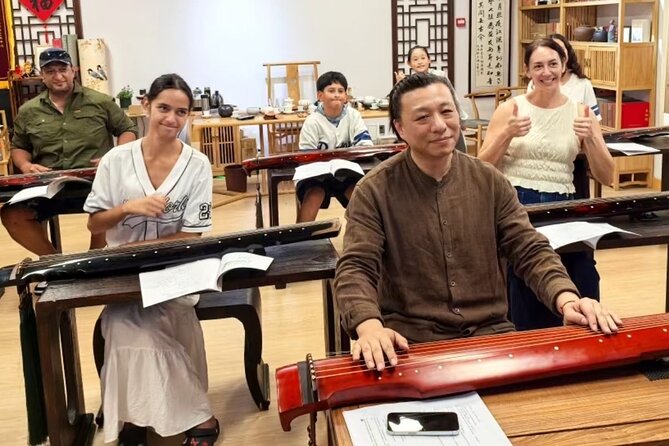
- Play a full Guqin melody: A national-level heritage artist gives a live performance, then helps you try the instrument yourself.
- Brew tea with a certified tea master: You taste Chinese tea while learning the purpose behind the ceremony’s slow movements.
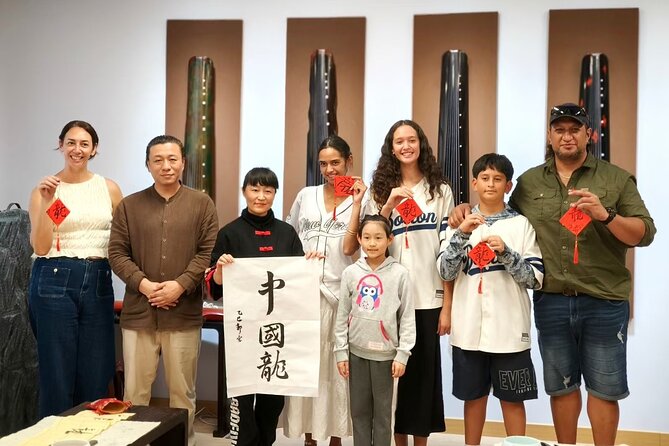
- Take home your own calligraphy: The workshop includes expert brush guidance, including help writing your Chinese name.
- Small group, maximum eight people: The format allows more personal help than a large cultural show.
- Dress for ritual photos: Traditional outfit rental is included, along with tea snacks and a bilingual guide.
- Plan your own transport: The meeting point is 813 Creative Park in Chaoyang, near public transportation, but transfers are not provided.
Why this small Beijing workshop feels different
Beijing offers plenty of cultural performances. Many are easy to fit into an evening, but they leave you sitting in the audience. This workshop takes a quieter route. You meet artists who practice the traditions they teach, then try selected parts yourself.
That distinction matters. The tea ceremony is not just a cup of tea served in a pretty room. You learn how tea is prepared and tasted, and you see why the ritual moves at a measured pace. Calligraphy is not merely a photo opportunity with an oversized brush. You make marks on paper and learn something about the older roots of the characters.
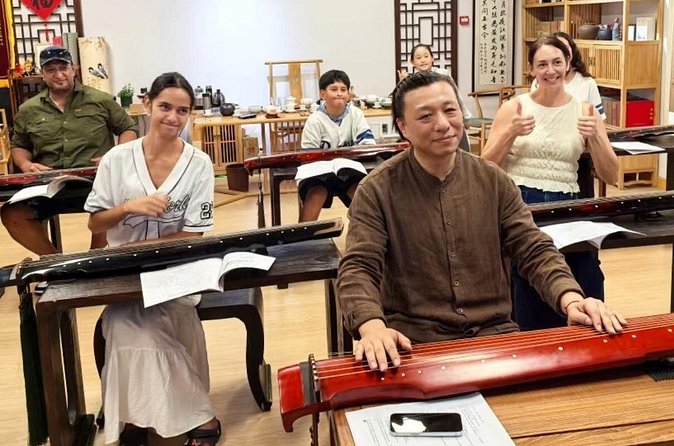
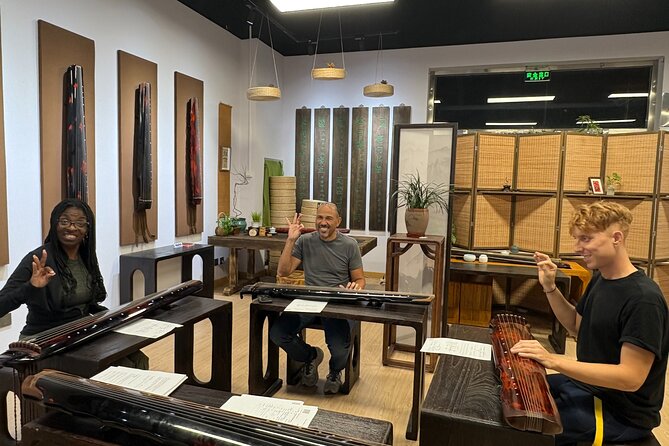
The Guqin session may be the most unusual part. You first hear the instrument played by a national-level heritage artist. Then you sit with the instrument and receive hands-on help as you attempt a complete melody. You should not expect concert-level results in one session, but you can feel the strings and understand how the sound is produced.
I appreciate the balance. The activity is educational without feeling like a lecture, and elegant without becoming stiff. The bilingual guide, who holds an M.A. in History and Sociology, helps connect the actions to Chinese philosophy and history in English.
More tea ceremony and calligraphy workshops in Beijing:
- Beijing Calligraphy Class
★ 4.9 · 112 reviews - Chinese Calligraphy Class for Small Group
★ 5.0 · 104 reviews - Traditional Chinese Tea Ceremony Experience
★ 4.7 · 74 reviews
Tea ceremony: a calm start with real participation
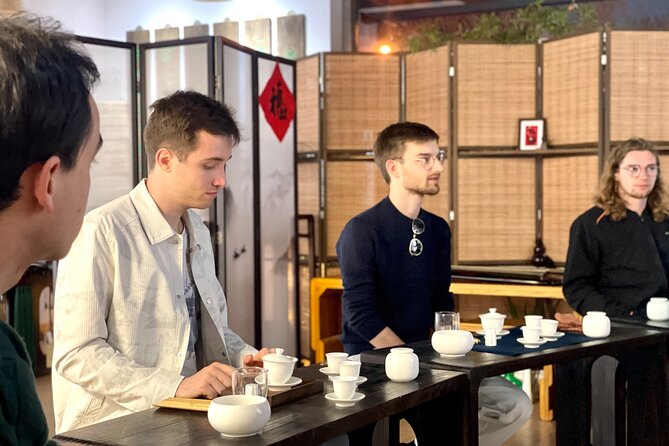
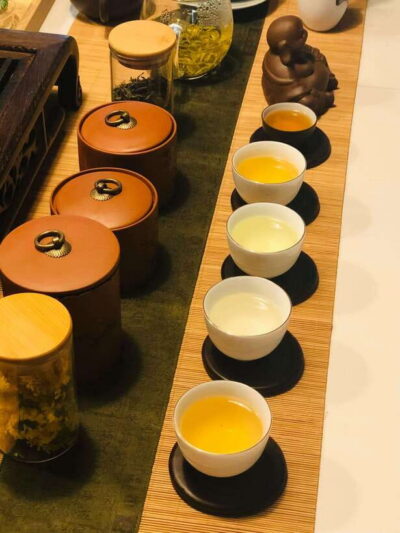
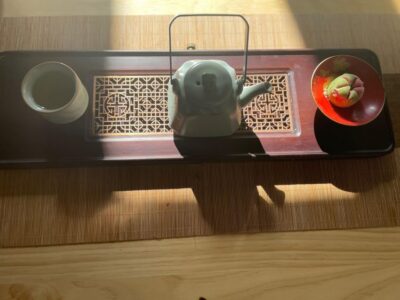
Tea is one of the best ways to begin a cultural activity because it gives you time to settle in. Here, the certified tea master guides the preparation and tasting rather than simply handing you a finished drink.
You can expect to handle the process, follow the ritual, and taste the tea at the right moments. The experience includes tea snacks, so this is a tasting and ceremony rather than a meal. If you enjoy learning through small physical details, this section should suit you well. The temperature, pouring, timing, and presentation all become part of the lesson.
The slower pace may be the point, but it will not suit everyone. If you prefer fast sightseeing with a list of landmarks, the ceremony can feel deliberate. I would treat that as useful contrast. Beijing can be noisy and demanding, and this gives you a quiet pause without requiring a full day away from the city.
The setting is air-conditioned and private, which helps with comfort. The venue is closed to the public during the experience, so you are not trying to listen over a passing crowd or a second group. That privacy is valuable during the tea ritual, where a little quiet makes the details easier to notice.
Guqin music: hear it first, then try the strings
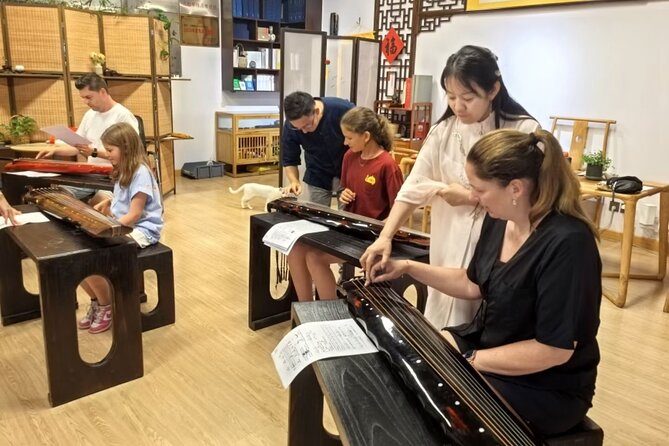
The Guqin is the emotional center of the workshop for many people. It is China’s most classical instrument, with a long place in Chinese artistic and scholarly life. You first hear a live performance, then receive instruction during a hands-on session.
The order gives you a useful frame. Before you attempt the instrument, you hear what a practiced musician can do. Afterward, your own effort has context. A short melody may still require concentration, but the goal is not to turn you into a musician in one afternoon. The goal is to let you feel the instrument and understand its quiet, precise sound.
The teacher guides your fingers, which is especially helpful if you have no musical background. You do not need to arrive knowing Chinese music or traditional instruments. The activity is designed to make the session approachable for beginners.
This is also where the small group matters most. With a maximum of eight people, the artist has a better chance of correcting your hand position and giving you a real turn. In a large demonstration, you might hear the Guqin clearly but never get close enough to play it. Here, participation is built into the visit.
I would not choose this activity if you want a polished concert lasting most of the afternoon. The performance is one part of a larger two-and-a-half-hour program. Choose it for the unusual chance to sit at the instrument yourself, not for an extended recital.
Calligraphy: a souvenir with some meaning
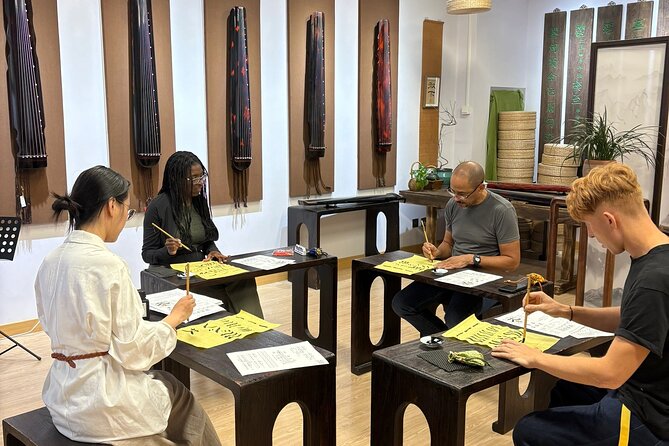
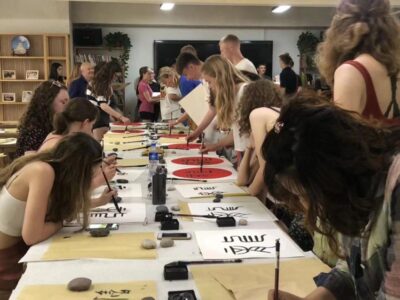
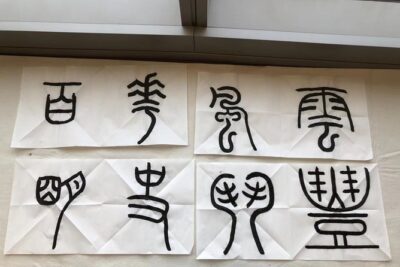
The calligraphy workshop turns a familiar travel souvenir into a short lesson in writing. You use a brush, receive expert guidance, and learn about the ancient roots of Chinese characters.
One particularly useful touch is help writing your Chinese name. You can take the finished paper with you, which gives the activity a lasting result instead of a memory that disappears when you leave the venue. You may find it worth framing at home, especially if you enjoy objects that connect to a specific place and activity.
Calligraphy takes patience. The brush does not behave like a pen, and a simple character can demand more control than expected. That is part of its appeal. You get a direct sense of why traditional calligraphy is treated as an art rather than ordinary handwriting.
The session should work for complete beginners because instruction is provided. Still, do not expect a formal calligraphy course. In this setting, you are learning selected movements, character forms, and cultural meaning within a compact workshop. It is a good introduction, not a substitute for repeated practice.
The included traditional outfit rental adds a visual element for photos. That can feel playful, but it also fits the setting and ritual character of the day. If you prefer not to dress up, the clothing is optional in spirit, but the supplied information presents it as part of what is included, so ask the provider if you have concerns about fit or use.
More historic sites in Beijing:
- Beijing Historical Tour II including Summer Palace, Lama Temple & Panda Garden
★ 4.0 · 187 reviews - Beijing Historical Tour I – Forbidden City, Tiananmen Square & Temple of Heaven
★ 4.0 · 120 reviews - Beijing Historic City Guided Walking Tour + Calligraphy Creation
★ 5.0 · 59 reviews - 2-Hour Beijing Private Forbidden City Tour: History & Highlights
★ 5.0 · 28 reviews
A two-and-a-half-hour schedule with room to breathe
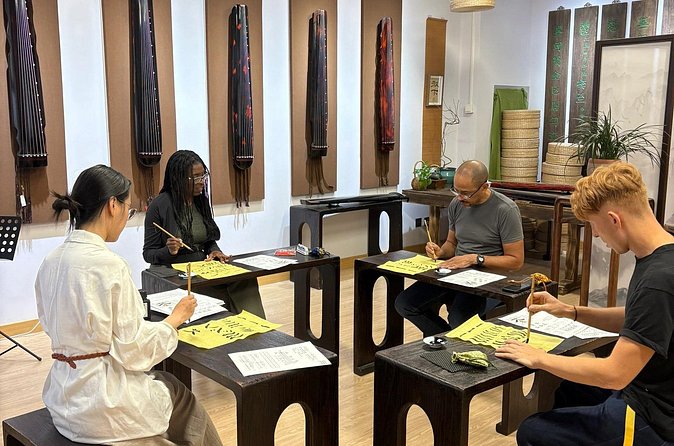
The full experience lasts about two hours and 30 minutes. That is long enough to give each tradition attention, but short enough to place beside other Beijing plans.
You will work through three main activities:
- Tea preparation, tasting, and tea snacks with the certified tea master
- A Guqin performance followed by your own learning session
- Chinese calligraphy with expert help and the option of traditional attire for photos
The bilingual guide provides the connecting thread. Rather than leaving you to copy movements without context, the guide explains the ideas behind the rituals and their place in Chinese culture. That is important because tea, music, and writing can otherwise become disconnected craft demonstrations.
The program is described as taking place in a serene, air-conditioned cultural venue. You should expect a peaceful indoor setting rather than a sightseeing route through several historic sites. There are no listed meals beyond the tea snacks, and the activity does not include transportation.
Because the group is capped at eight, the pace may depend slightly on how many people attend and how much assistance each person needs. That is a benefit for hands-on teaching, though it means you should not expect a rigid stage schedule.
What the $78.60 price really covers
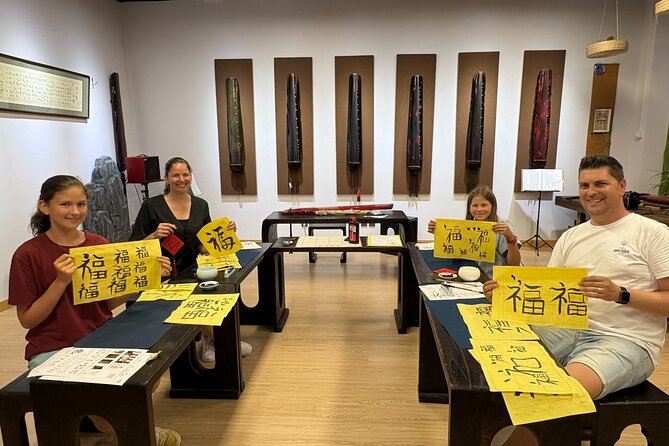
At $78.60 per person, the price sits above a simple tea tasting or short calligraphy class. You are paying for a combined program, specialist instruction, a private venue, a live Guqin performance, tea snacks, traditional clothing rental, and an English-supported cultural explanation.
The value is strongest if you would otherwise book several separate activities. A tea tasting, a cultural music performance, and a calligraphy lesson could easily take more time and involve more planning. This package puts them in one compact session and gives each one a practical element.
The value is weaker if you mainly want entertainment. You will spend time learning, listening, and repeating unfamiliar movements. This is not a quick photo stop. It asks you to take part.
Transportation is the main extra cost to remember. You must reach 813 Creative Park in Chaoyang on your own, and the activity ends back at the same meeting point. The venue is near public transportation, but the package does not include hotel pickup, drop-off, or other transfers.
I also would not treat the tea snacks as lunch. The included food is part of the ceremony, not a replacement for a proper meal before or after. Plan your day accordingly.
Who will enjoy this most
I would recommend this workshop to you if you want contact with living Chinese traditions rather than another display of objects. It suits first-time visitors who want a gentle introduction, as well as people who have spent years in China and want a more personal cultural activity.
It is also a strong choice for anyone who enjoys making things. You leave with calligraphy, a memory of the tea preparation, and the physical experience of touching the Guqin. Parents and older children may enjoy the variety, though the supplied information does not specify a minimum age.
You do not need prior experience with tea, calligraphy, or music. The instruction is designed for participation, and most people can take part. Service animals are allowed, and the venue is near public transportation.
I would be more cautious if you want a major historic site, a long stage performance, or a meal-centered outing. This is a workshop in one venue, not a tour of Beijing’s monuments. It is also not ideal if your schedule cannot spare a fixed two-and-a-half-hour block.
Practical details before you book
The meeting point is 813 Creative Park, VGP3+CCX, Chaoyang, China, 100124. The activity ends there, so allow time to travel both ways. A mobile ticket is accepted, and confirmation is sent within 48 hours of booking, subject to availability.
The group maximum is eight people. That small size is one of the strongest reasons to choose this activity, particularly for the Guqin and brush sessions. It also means dates may fill in advance, so booking well ahead is sensible. The average booking point is 51 days before the experience.
Free cancellation is available if you cancel at least 24 hours before the start time. Changes made inside that window are not accepted, and the amount paid is not refunded for a late cancellation. The activity can also be affected by poor weather or by failing to reach the minimum number of participants. If the provider cancels for either reason, you are offered another date or experience, or a full refund.
The weather requirement is worth noting even though the venue is described as air-conditioned and private. Keep a little flexibility in your Beijing schedule if possible.
Should you book this Beijing cultural experience?
I would book it if you want a quiet, hands-on encounter with Chinese culture and are willing to pay for skilled instruction rather than just a performance. The strongest elements are the small group, the national-level Guqin artist, the tea master, and the chance to produce your own calligraphy.
At $78.60, it is a considered purchase, not a bargain activity. But the combination is unusual, and the two-and-a-half-hour format makes it practical. Choose it for participation, patience, and cultural context. Skip it if you need a cheap stop, a full meal, or a major landmark tour.
FAQ
Where does the experience begin?
It begins at 813 Creative Park, VGP3+CCX, Chaoyang, China, 100124.
Where does the experience end?
The activity ends back at the meeting point at 813 Creative Park.
How long does the workshop last?
The experience lasts approximately two hours and 30 minutes.
How many people can join?
The group has a maximum of eight participants.
Is transportation included?
No. Transportation to and from the venue is not included. The venue is near public transportation.
What is included in the price?
The price includes a traditional tea ceremony and tasting with a certified tea master, a live Guqin performance, a hands-on Guqin session, a Chinese calligraphy workshop, traditional outfit rental, tea snacks, and a bilingual guide.
Do I need previous experience?
No previous experience with tea, calligraphy, or the Guqin is stated as required. Most people can participate, and instruction is provided.
Can I cancel for a full refund?
Yes, if you cancel at least 24 hours before the experience start time. Cancellations made less than 24 hours in advance are not refunded.
Just added around Beijing
- Xian: Must see Eternal Love or Camel Bell Legend show Ticket★ 5.0 · 3 reviews
- 2-Day Beijing Must-See Tour:4 UNESCO Sites+Tian’anmen&Hutong★ 5.0 · 4 reviews
- Beijing: 2-Day private Tour with Great wall& Forbidden city★ 5.0 · 5 reviews
- Xian: Bus Tour of Terracotta Warriors With Guide & Lunch★ 4.2 · 5 reviews
- Private Transfer to Mutianyu Great Wall with professional driver★ 5.0 · 19 reviews
- Twilight Glow at Badaling Great Wall Evening Bus Tour+Ticket★ 4.9 · 11 reviews
- Yuxiandu Chinese Royal Cuisine Museum with Show and Royal Banquet★ 5.0 · 4 reviews
- ZANBUS: Trip to the Jinshanling Great Wall Departing at 7:30 AM★ 5.0 · 5 reviews
Tea Ceremony and Calligraphy Workshops, compared.
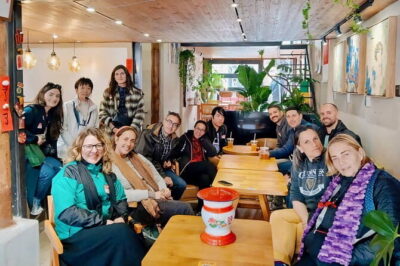
Beijing Historic City Guided Walking Tour + Calligraphy Creation
Read our review →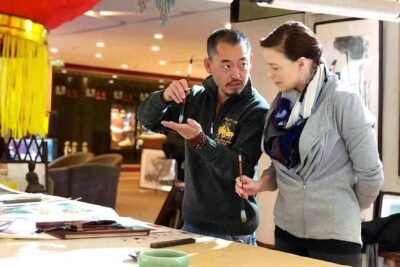
Beijing Wangfujing Calligraphy Class by Forbidden City
Read our review →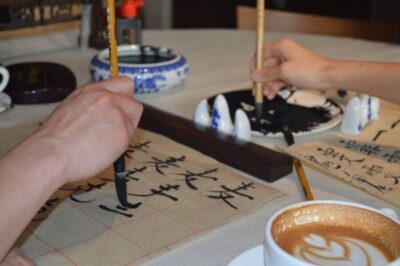
Beijing Wangfujing Calligraphy Class Nearby Forbidden City
Read our review →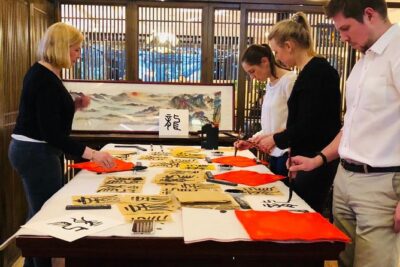
Chinese Tea ceremony in Beijing Hutong courtyard
Read our review →Browse the lists this tour appears in