
Reviewed · FORBIDDEN CITY TOURS
Beijing Wangfujing Calligraphy Class by Forbidden City
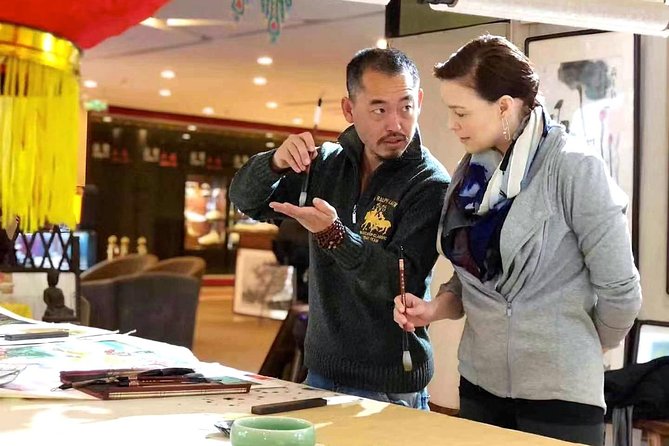
Chinese calligraphy turns a simple character into a small lesson in patience, balance, and Chinese culture. At this Wangfujing class, you learn to handle the brush, control ink, and write characters on rice paper instead of only looking at finished works in a museum.
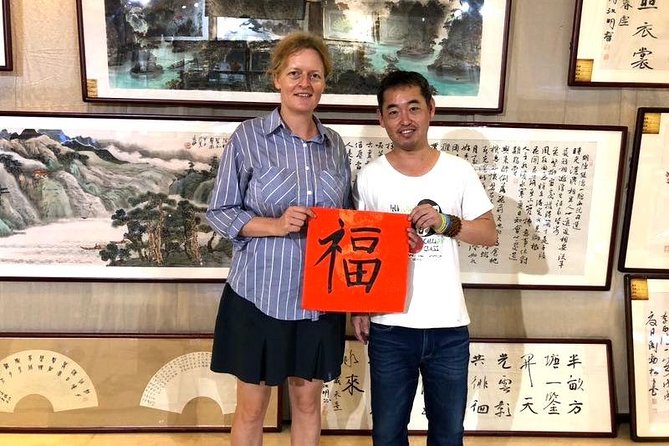
I like the hands-on format, especially the chance to write a character such as 福, meaning happiness or good fortune. I also like the convenient central setting, the English-speaking teacher, and the small maximum group of 15.
The main point to check before booking is the duration. The experience is advertised in several versions, from 30 minutes to two hours, so confirm the option you select. The listed price is about $20 per person, which is good value for a short cultural activity, but the shorter session will naturally offer less practice.
Key points at a glance
- Write your own Chinese characters: Practice brush strokes, then create work you can keep.
- Learn from an English-speaking teacher: Richard is one named instructor associated with the class.
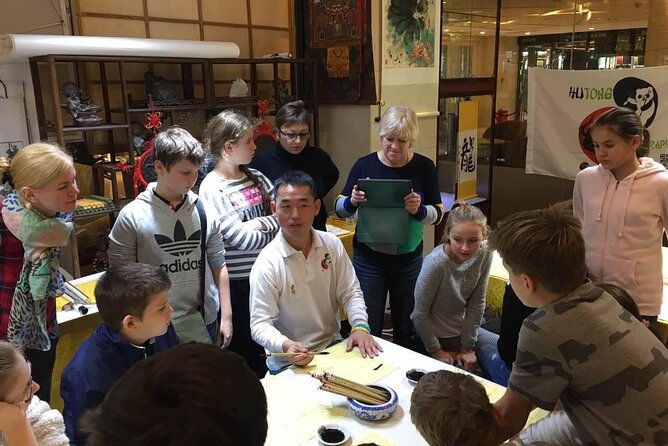
- Study traditional tools: The lesson introduces brushes, ink, rice paper, inkstones, and seal carvings.
- Choose your lesson length: Options include 30 minutes, one hour, 90 minutes, and two hours.
- A useful Wangfujing location: Meet at No. 8 Wangfujing Dongjie, at the Hilton Beijing Wangfujing area.
- Good for families: Children and adults can take part, and the group size is capped at 15.
Why this one-hour brush lesson works
A calligraphy class gives you something that a standard sightseeing stop cannot: a simple activity that makes you slow down and pay attention. You are not only learning what Chinese characters mean. You are learning how a brush stroke changes with pressure, speed, ink, and posture.
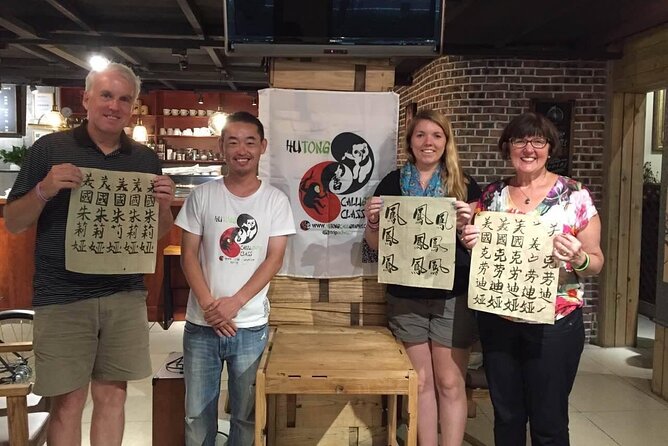
The class focuses on Chinese calligraphy as an art form and as a part of daily culture. Your teacher explains the role of the brush, rice paper, ink, and inkstone, then shows you how written language becomes a visual design. That connection between meaning and movement is the heart of the experience.
I especially like the fact that the lesson is personal without requiring a full private tour. The maximum group size is 15, so you should have room to ask questions and watch the teacher demonstrate. If you are a complete beginner, that matters. You do not need to arrive knowing Chinese.
The standard duration is about one hour, but you can choose among several versions when booking. A 30-minute class suits a tight sightseeing schedule. The 90-minute and two-hour sessions make more sense if you want extra practice or are booking for children who need time to settle in and try again.
More Forbidden City tours in Beijing:
- Beijing: Forbidden City Tour(Group/Private)-Tickets Included
★ 4.8 · 7,974 reviews - Beijing: T-Square & Forbidden City Group or Private Tour
★ 4.8 · 4,446 reviews - All-Inclusive Tour: Tiananmen Square, Forbidden City, Great Wall
★ 5.0 · 2,873 reviews
Finding the class in Wangfujing
The meeting point is the Hilton Beijing Wangfujing, at No. 8 Wangfujing Dongjie in Dongcheng District. This puts the class in a central part of Beijing, useful if you are already exploring Wangfujing or planning a visit to the Forbidden City area.
The provided address is specific, which helps in a city where similar names and translated addresses can cause confusion. Save the Chinese address, 王府井东街8号, on your phone before you go. Your activity ends back at the meeting point, so you do not need to arrange a separate return transfer.
One unusual detail is that the class takes place in a bookstore setting, according to the class description shared by a participant. That gives the session a quieter, more cultural feel than a large commercial workshop. The room is air-conditioned, and tea is available, two small comforts that can make a difference during Beijing’s hot or cold seasons.
No transportation is included, so plan your own route to the meeting point. The activity is short enough to pair with other central Beijing sights, but leave enough time to arrive at the Hilton rather than trying to squeeze it between two timed admissions.
What happens during the calligraphy class
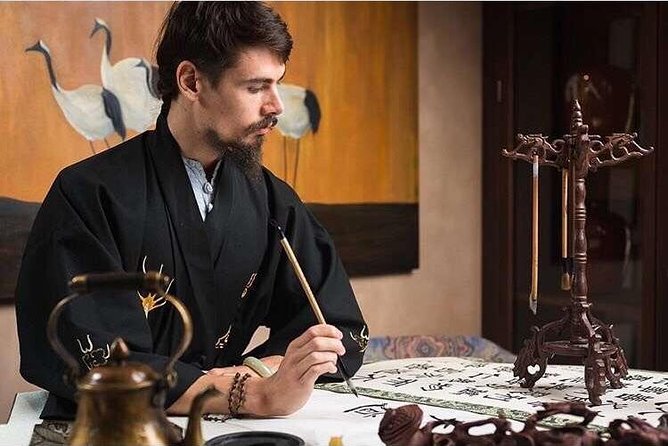
The class begins with an introduction to Chinese calligraphy and its place in Chinese culture. Your teacher explains why the form of a character matters, not only its meaning. A character is built from separate strokes, and each stroke contributes to the final balance.
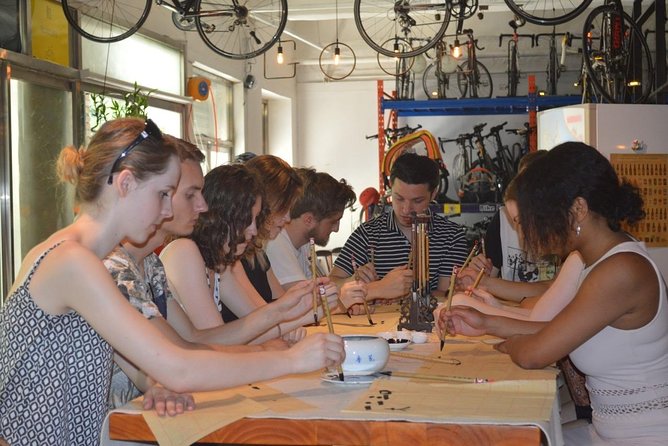
You then learn about the main tools. The class supplies the materials, so you do not need to carry a brush, ink, or paper with you. You should expect to handle traditional calligraphy brushes and work on rice paper while learning how ink behaves on the surface.
The teacher also introduces inkstones and seal carvings. These details help put the activity in context. Calligraphy is not just handwriting with a decorative brush. It is connected to painting, seals, scholarship, and the display of written characters in homes and public spaces.
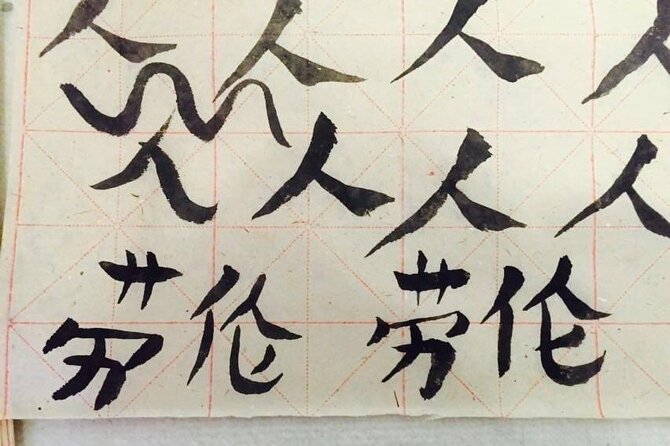
After the demonstration, you practice. Expect your first strokes to look uneven. That is part of the fun, and the teacher can show you how to adjust the brush angle and pressure. The goal is not perfect work on the first attempt. It is to understand the movement well enough to produce a character with your own hand.
A popular choice is 福, the character associated with happiness and good fortune. Practicing a meaningful character gives the session a clear purpose, especially for children. Once your hand feels more comfortable, you may write the character on a decorative board or finished piece, depending on the class format and the time you choose.
The teacher makes the difference
An English-speaking teacher is included, which removes a major barrier for beginners. You can ask why a character is written in a certain order, what a symbol means, or how the brush should be held without relying only on gestures.
Richard is specifically associated with the class and is praised for guiding beginners through the process. The teaching style appears suited to families and first-time students rather than people seeking advanced artistic training.
I would treat this as an introductory cultural lesson, not a professional calligraphy workshop. You will gain a feel for the tools and a basic understanding of the art. You should not expect formal mastery after one hour.
That is not a weakness. The class works because it gives you a manageable entry point. You can ask questions, copy the teacher’s strokes, and leave with a better sense of why calligraphy remains important in China.
More tea ceremony and calligraphy workshops in Beijing:
- Beijing Calligraphy Class
★ 4.9 · 112 reviews - Chinese Calligraphy Class for Small Group
★ 5.0 · 104 reviews - Traditional Chinese Tea Ceremony Experience
★ 4.7 · 74 reviews - Beijing Historic City Guided Walking Tour + Calligraphy Creation
★ 5.0 · 59 reviews
Why the family-friendly format is useful
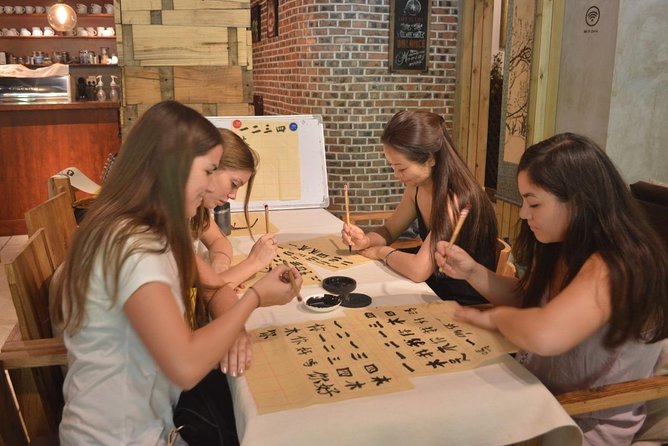
Children can become restless during long museum visits, but calligraphy gives them something to do with their hands. Writing 福 provides an immediate goal, and the decorative result can feel more personal than buying a souvenir.
Adults benefit in a different way. The slow brush movements offer a break from Beijing’s crowded sights and busy streets. You may find that the activity helps you notice small differences in line thickness and shape that you would miss when simply viewing calligraphy on a wall.
The class is also a good choice for families with mixed interests. One person can focus on the cultural background, another can practice the characters, and children can enjoy the creative part. Since the group maximum is 15, the class should remain manageable, though the exact amount of individual attention depends on the group that day.
If your child is very young, choose a longer session only if they enjoy quiet, careful activities. A 30-minute version may be a better test. Older children and adults who want to make a finished decorative piece should consider the one-hour or longer options.
Is $20 good value?
At about $20 per person, this is a reasonably priced cultural activity in central Beijing. The cost includes the teacher and calligraphy supplies, so you are paying for instruction and participation rather than only admission to a room.
The value is strongest if you want a short activity that adds cultural context to your sightseeing. You receive an introduction to calligraphy, guided practice, and the chance to make your own characters. Tea and an air-conditioned setting add comfort, especially when you need a quiet break.
The price is less compelling if you only want a quick photograph or a basic souvenir. You can find calligraphy items elsewhere, but the point here is learning how the brush works and understanding the meaning behind what you write.
Check the duration carefully. A 30-minute class and a two-hour class are very different experiences even if the booking page groups them under the same activity. If you want the best balance for most visitors, I would choose the one-hour option. It gives you enough time to hear the background, practice, and create something without taking a large part of your day.
Group discounts are available, which may improve the value for families or larger parties. The exact discount should be confirmed at booking.
Practical details that affect your visit
Confirmation is provided when you book, and a mobile ticket is available. Keep the ticket accessible on your phone and save the meeting address in both English and Chinese.
The activity has free cancellation if you cancel at least 24 hours before the start time. Cancellations or changes made less than 24 hours before the local start time are not refunded or accepted, so check your Beijing schedule before committing.
Most people can participate, and the class has a maximum of 15 participants. No separate accessibility details are provided, so if you have specific mobility or participation needs, ask the provider before booking.
Gratuities are not included and are recommended. Other expenses are also excluded, so do not assume that anything beyond the listed class materials is covered.
The class is booked, on average, about 13 days ahead. That does not guarantee that every date sells out, but it is a useful reason to reserve early if you are visiting Beijing on fixed dates or want a particular lesson length.
How to fit it into a Beijing day
Because the class lasts about an hour in its standard form, it works well as a pause between major sights. You can schedule it around a day in central Beijing rather than treating it as a separate full-day excursion.
The Wangfujing location is practical for visitors staying in or visiting central Dongcheng. It also makes sense for families who want an indoor activity after walking. The air-conditioned bookstore setting can be welcome after time outside.
Do not book the class so tightly that you arrive rushed. Calligraphy depends on calm attention, and you will get more from the lesson if you have time to find the meeting point and settle in.
If you are choosing between the short and long options, think about your group. A couple interested in the art may enjoy 90 minutes or two hours. A family fitting several sights into one day may prefer one hour. A visitor with only a small gap in the schedule can still get a taste of the practice in 30 minutes.
Who should book this experience?
I recommend it for first-time visitors who want a cultural activity with direct participation. It is especially suitable if you are curious about Chinese characters but cannot read Mandarin. You can appreciate the shape and movement without needing language skills.
Families should give it serious consideration, particularly if children are choosing between another major sightseeing stop and a creative activity. Writing 福 and producing a decorative piece can become one of the more memorable moments of a Beijing visit.
It also suits couples, solo visitors, and small groups looking for a calm indoor experience. The English instruction and supplied tools keep the practical side simple.
I would be more cautious if you are seeking advanced calligraphy training, a private lesson, or a long historical lecture. The class is designed as an accessible introduction. Its strength is the chance to try the art yourself, not to provide specialized study.
Should you book the Wangfujing calligraphy class?
Book it if you want to do more than look at Beijing’s cultural treasures. For around $20, you get an English-led introduction, traditional materials, practice time, and the chance to write a meaningful Chinese character of your own.
Choose the one-hour session for the best all-around fit. Select 30 minutes if your schedule is tight, and choose 90 minutes or two hours if you want repeated practice and more time with the brush.
The central meeting point, small group limit, air-conditioned setting, tea, and family-friendly format all add practical value. Just confirm the exact duration, allow time to reach the Hilton Beijing Wangfujing, and remember that this is a beginner class rather than formal artistic training.
FAQ
Where does the calligraphy class meet?
The meeting point is the Hilton Beijing Wangfujing, at No. 8 Wangfujing Dongjie in Beijing’s Dongcheng District.
Where does the activity finish?
The class ends back at the meeting point.
How long does the calligraphy class last?
Several durations are available: 30 minutes, one hour, 90 minutes, and two hours. You choose the duration when booking.
Is the class taught in English?
An excellent English calligraphy teacher is included. Richard is one teacher associated with the class.
Are calligraphy materials included?
Yes. Calligraphy supplies for use during the class are included.
How many people can join the class?
The activity has a maximum group size of 15 participants.
Can I cancel for a full refund?
Yes, if you cancel at least 24 hours before the experience start time. Cancellations or changes made less than 24 hours before the local start time are not refunded or accepted.
More hands-on classes in Beijing
- Beijing: Dumpling Making Workshop with Meal and Tea
★ 4.7 · 69 reviews - Online Cooking Class Beijing Dumplings and Cuisine by Sunflowerli Renowned Chef
★ 5.0 · 65 reviews - Chinese Kungfu class in old temple beside Forbidden Ci
★ 4.8 · 53 reviews - Noon Calligraphy Class
★ 5.0 · 47 reviews
More Beijing markets and shopping tours
- Beijing Wangfujing Calligraphy Class Nearby Forbidden City
★ 5.0 · 56 reviews - Private Beijing Markets Tour with Tea Tasting at Hongqiao Pearl Market
★ 5.0 · 18 reviews - Beijing Exclusive Private Shopping Tour: Curated Just for You
★ 5.0 · 12 reviews - Beijing Private Night Walking Tour: Qianmen Street, Tian’ammen Square and Wangfujing Street
★ 4.0 · 9 reviews
Just added around Beijing
- Xian: Must see Eternal Love or Camel Bell Legend show Ticket★ 5.0 · 3 reviews
- 2-Day Beijing Must-See Tour:4 UNESCO Sites+Tian’anmen&Hutong★ 5.0 · 4 reviews
- Beijing: 2-Day private Tour with Great wall& Forbidden city★ 5.0 · 5 reviews
- Xian: Bus Tour of Terracotta Warriors With Guide & Lunch★ 4.2 · 5 reviews
- Private Transfer to Mutianyu Great Wall with professional driver★ 5.0 · 19 reviews
- Twilight Glow at Badaling Great Wall Evening Bus Tour+Ticket★ 4.9 · 11 reviews
- Yuxiandu Chinese Royal Cuisine Museum with Show and Royal Banquet★ 5.0 · 4 reviews
- ZANBUS: Trip to the Jinshanling Great Wall Departing at 7:30 AM★ 5.0 · 5 reviews
Forbidden City Tours, compared.

Forbidden City Tour(Group/Private)-Tickets Included
Read our review →
T-Square & Forbidden City Group or Private Tour
Read our review →
All-Inclusive Tour: Tiananmen Square, Forbidden City, Great Wall
Read our review →
4-Hour Small Group Tour to Forbidden City with Entry Tickets
Read our review →
Beijing Full Day Tours: Tiananmen Sq, Forbidden City, Great Wall
Read our review →
Tianmen Square, Forbidden City & Royal Museum Tours
Read our review →
Beijing Forbidden City Ticket Booking (Optional: guide service)
Read our review →
Forbidden City and Tian’anmen Square Waking Tour
Read our review →Browse the lists this tour appears in