
Reviewed · LAMA TEMPLE AND CONFUCIUS TEMPLE TOURS
Beijing Private Religious Tour: White Cloud Temple, Lama Temple, Niujie Mosque
Beijing’s religious story is best understood by seeing its sacred places side by side. This private tour takes you from the colorful Lama Temple to the Confucius Temple, White Cloud Temple, and Niujie Mosque, showing how Buddhism, Confucianism, Daoism, and Islam shaped the city.
I like the private car and flexible schedule, since you are not tied to a large group or forced to rush between distant sites. I also like that lunch and admission fees are included, which keeps the day simple. The main drawback is the pace: four major stops in eight hours gives you about an hour at each site, so serious students of Chinese religion may want more time.
- Four religious traditions in one day: Buddhism, Confucianism, Daoism, and Islam all appear on the route.
- Private transport throughout: A driver handles the roads, parking, and transfers between sites.
- English explanations matter: Guides Peter and Stephen are praised for clear English, detailed stories, and Chinese folklore.
- A useful first-day option: Hotel pickup, prepaid admissions, and lunch remove several small planning chores.
- The schedule can change: Timing may be adjusted for your interests, the weather, or unexpected conditions.
- Plan for an eight-hour day: Extra time after eight hours costs more, so keep the schedule in mind.
Four faiths, one Beijing day
This tour gives you a useful introduction to Beijing through religion rather than palaces and shopping streets. You see Buddhist worship at Yonghegong, imperial Confucian learning at the Guozijian and Confucius Temple, Daoist tradition at White Cloud Temple, and Islamic culture at Niujie Mosque.
That mix is the strongest reason to book it. These places are not four versions of the same temple. Each has a different purpose, visual style, and place in Chinese society. You get a clearer sense of how several belief systems existed together and influenced everyday life.
The day begins at about 8:30 a.m. Your guide and private driver meet you in your hotel lobby. The air-conditioned vehicle takes you to each stop and returns you to your hotel at the end, with gas, tolls, and parking covered.
You should expect roughly one hour at each main sight. That is enough for a guided introduction and a good look around, but not enough for slow photography, extended prayer observation, or a detailed study of every building. If one site matters most to you, ask to adjust the timing before the day begins.
Starting at the Lama Temple
The Lama Temple, also called Yonghegong, is the first stop and the most celebrated Buddhist site on the route. It is one of Beijing’s largest and most influential Buddhist temples, so it gives you a strong opening lesson in the city’s religious life.
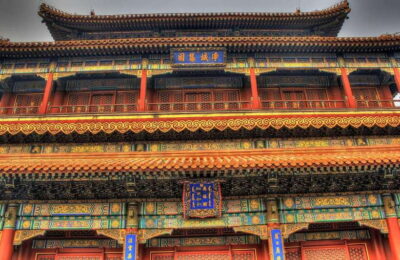
You can expect colorful halls, traditional temple architecture, and a setting used for active worship rather than only sightseeing. Your guide explains the Buddhist background as you move through the complex, helping you read the symbols and understand why the temple matters.
An hour here works well for a first look. You can take in the main courtyards and halls, listen to the guide, and get a feel for the place without spending the whole morning on one site. The tradeoff is that you may not have time to linger at every building.
I especially like beginning here because it gives the day visual energy. The later sites are important for other reasons, but Yonghegong offers a clear introduction to living Buddhist practice in Beijing. Admission is included, so you do not need to stop at a ticket booth.
More Lama Temple and Confucius Temple visits in Beijing:
- Temple Heaven, Lama Temple, Summer Palace & Peking Duck Bus Tour
★ 5.0 · 377 reviews - Temple Heaven, Summer Palace, Lama Temple, Hutong Bus Tour
★ 4.7 · 319 reviews - Temple of Heaven, Summer Palace, Lama Temple, Hutong Tours
★ 5.0 · 311 reviews
Confucius Temple and the old university
Next comes the Confucius Temple and Guozijian Museum, located beside the Lama Temple. This pairing is central to understanding imperial China. The Guozijian was an ancient university complex where scholar-officials were trained, while the Confucius Temple was a place to honor and worship Confucius.
This stop shifts the conversation from personal worship to education, government, and social order. Confucian ideas influenced the officials who ran imperial China, so the site helps explain why learning, examinations, and public service carried such weight.
You spend about an hour here, usually moving between the temple and the former university complex. The guide’s role is especially useful because the significance is less immediate than the bright colors and statues at the Lama Temple. Without context, you might simply see an old school and a temple. With a good explanation, the connection between education and government becomes much clearer.
The supplied information describes this stop as a place to learn about Confucianism’s influence on China. That makes it a valuable part of the route, not an add-on. If you are more interested in architecture than political history, this may feel quieter than the first stop.
White Cloud Temple and Daoist tradition
After the Confucius Temple, the driver takes you to White Cloud Temple, also called Baiyunguan. It is one of the Three Great Ancestral Courts of the Quanzhen school of Daoism and carries the traditional title First Temple under Heaven.
The temple was first founded in the mid-eighth century, giving it a long connection with Daoist practice. Your guide explains its place in Daoism and points out the features that make it important within that tradition.
This is the stop where a strong guide can make the biggest difference. The title, the Quanzhen connection, and the temple’s age are useful facts, but they need explanation to become meaningful. Stephen, one of the guides associated with this experience, is especially praised for sharing Chinese fables and folklore along with site information.
That storytelling is worth noting if you prefer cultural context over a rapid list of dates. Folklore can make a religious site easier to remember and gives you a sense of how belief is carried through stories, not just buildings.
Again, plan on about an hour. White Cloud Temple deserves longer if Daoism is a major interest, but the private format lets you ask for more time if the rest of the day permits. The itinerary is described as flexible, though extra time beyond eight hours brings an additional fee.
Niujie Mosque and Beijing’s Muslim community
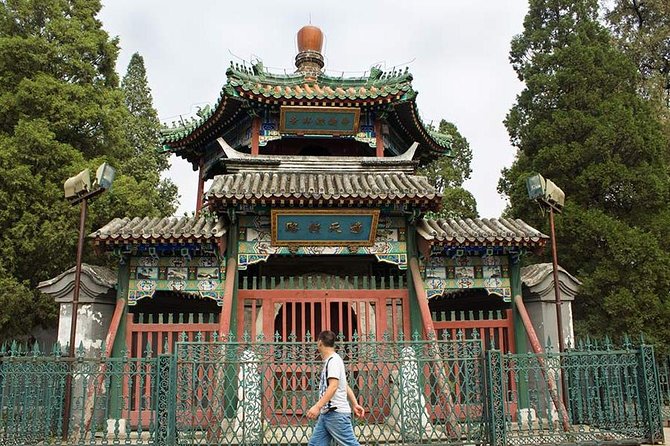
The final destination is Niujie Mosque, one of the oldest and most important mosques in China. It is also the largest mosque in Beijing and an important place for the city’s Muslim community.
This stop broadens the day in a useful way. After Buddhist, Confucian, and Daoist sites, the mosque shows that Beijing’s religious identity is not limited to Chinese temple traditions. The visit adds an Islamic chapter to the story and helps you see the city as a meeting point of several cultures.
You have about an hour here. Your guide explains the mosque’s importance and its place in Beijing. Because the site is an active religious place, follow your guide’s instructions about where you can go and what behavior is suitable.
Niujie Mosque is a particularly good reason to choose this route instead of a tour focused only on imperial monuments. It adds variety and gives the day a wider cultural reach. At the same time, visitors who want a long, detailed look at Islamic architecture may find the scheduled hour brief.
More private tours in Beijing:
- Beijing: Forbidden City Tour(Group/Private)-Tickets Included
★ 4.8 · 7,974 reviews - Beijing: T-Square & Forbidden City Group or Private Tour
★ 4.8 · 4,446 reviews - Beijing:Mutianyu Great Wall Private Trip with English Driver
★ 5.0 · 1,263 reviews - Private Mutianyu Great Wall Trip with English-Speaking Driver
★ 5.0 · 927 reviews
What the private vehicle changes
The private driver is more than a comfort feature. Beijing’s four sites are spread across the city, and the day includes several transfers. Having a driver handle the route, parking, tolls, and drop-off means you can use the travel time to rest or continue the conversation with your guide.
Hotel pickup and return are included, with a planned start at 8:30 a.m. That makes the tour easy to add to a Beijing itinerary, especially if you do not want to work out several local transfers on your own.
You are not joining a shared group, so only your party participates. That gives you room to ask questions and request small changes. The itinerary can be adjusted for personal interests, weather, or unexpected conditions.
There is one practical limit. The tour lasts approximately eight hours, and an extra fee is requested after that point. If you want a leisurely lunch, long photo stops, or extra time at the Lama Temple, discuss the plan early so the day does not run over without warning.
Lunch and the value of $144
The price is $144 per person. That includes an English-speaking guide, private air-conditioned vehicle, driver, fuel, tolls, parking, hotel pickup and drop-off, entrance tickets, and lunch at a local restaurant.
I would judge the value by what the price removes from your day. You do not need to buy four sets of admission tickets, arrange transport between sites, find parking, or locate a lunch stop while moving through Beijing. You are paying for a full private day, not only for entry to the monuments.
The value is strongest for two or more people sharing the experience. A solo visitor pays the full per-person rate, while a small group gets more benefit from private transport and a dedicated guide. Group discounts are available, though the exact amount is not specified.
Lunch is described as a complimentary Chinese meal at a local restaurant. Dinner is not included, and accommodation is not part of the tour. Gratuities for the guide and driver are also separate, so budget for those if the service is good.
The guides and the storytelling
The guide can make or break a religion-focused tour. The information supplied about Peter and Stephen points to the qualities you should value here: clear English, complete explanations, kindness, and memorable Chinese stories.
Peter is described as especially clear and helpful, which matters when the subject includes unfamiliar names, schools of thought, and historical roles. Stephen is praised for his knowledge of Chinese fables and folklore, adding a more personal storytelling layer to the monuments.
You should still be clear about your interests at the start. Ask for more detail on architecture, religious practice, imperial education, Islamic history, or folklore, depending on what you want from the day. Since this is a private tour, your questions can shape the experience more than they would on a large group outing.
The tour description does not promise a particular guide, so Peter or Stephen may not be the person assigned to your group. Their names are useful examples of the kind of English explanation and storytelling associated with the experience, not a guarantee of who will lead your day.
Who will get the most from this tour
I would recommend this day to you if you want an organized introduction to Beijing’s religious traditions and prefer a private format. It suits first-time visitors who want several important sites without arranging four separate visits.
It also works well for families and small groups. Children must be accompanied by an adult, and a child rate applies only when the child shares with two paying adults. The private vehicle can make a long cultural day easier for a family, though four religious sites may be too much for very young children.
This is a good choice if you care about context. The tour is not simply a photo route. The guide connects the sites to Buddhism, Daoism, Confucian education, imperial government, and Islam in China.
You may want another plan if you prefer to spend half a day at one temple, travel independently, or avoid a tightly structured schedule. Four stops and about eight hours create a broad introduction, not an expert-level study of any single tradition.
Booking, timing, and cancellation
Confirmation is provided when you book, and the tour is commonly reserved about 10 days ahead. That advance pattern suggests you should not leave it until the last minute if this is important to your plans.
Free cancellation is available up to 24 hours before the start time for a full refund. Cancellations or changes made less than 24 hours before the tour are not accepted for a refund, and the cutoff uses local Beijing time.
The tour is designed for most people to participate, though the supplied details do not give a more specific accessibility description. Children need adult supervision. Since the schedule can change with weather or personal interests, speak with the provider about priorities before the morning pickup.
Should you book this religious tour?
Book it if you want four distinct sides of Beijing in one private day, with transport, tickets, lunch, and an English-speaking guide handled for you. The best features are the varied route, the clear storytelling associated with guides such as Peter and Stephen, and the freedom to adjust the plan.
Think twice if you need long, quiet visits or want to focus intensely on one tradition. Four one-hour stops move at a steady pace, and the extra-hour fee means you should keep an eye on the clock.
For a first look at Beijing’s Buddhist, Confucian, Daoist, and Islamic heritage, the $144 price is reasonable when you value a private car and guide. It gives you a useful cultural framework for the rest of your time in the city.
FAQ
What time does the tour start?
The planned start time is 8:30 a.m. The guide and driver meet you in your hotel lobby.
How long does the experience last?
The tour lasts approximately eight hours. An extra fee is requested if the tour continues beyond eight hours.
Which sites are included?
The route includes Lama Temple, the Temple of Confucius and Guozijian Museum, White Cloud Temple, and Niujie Mosque.
Is lunch included?
Yes. Lunch at a local Chinese restaurant is included. Dinner is not included.
Is transportation included?
Yes. A private driver and air-conditioned vehicle provide hotel pickup, transfers between the sites, and hotel drop-off. Gas, tolls, and parking fees are included.
Can the itinerary be changed?
Yes. The itinerary can be adjusted for your personal interests, the weather, or unexpected conditions. Any changes should be discussed during the tour, and extra time beyond eight hours costs more.
Just added around Beijing
- Xian: Must see Eternal Love or Camel Bell Legend show Ticket★ 5.0 · 3 reviews
- 2-Day Beijing Must-See Tour:4 UNESCO Sites+Tian’anmen&Hutong★ 5.0 · 4 reviews
- Beijing: 2-Day private Tour with Great wall& Forbidden city★ 5.0 · 5 reviews
- Xian: Bus Tour of Terracotta Warriors With Guide & Lunch★ 4.2 · 5 reviews
- Private Transfer to Mutianyu Great Wall with professional driver★ 5.0 · 19 reviews
- Twilight Glow at Badaling Great Wall Evening Bus Tour+Ticket★ 4.9 · 11 reviews
- Yuxiandu Chinese Royal Cuisine Museum with Show and Royal Banquet★ 5.0 · 4 reviews
- ZANBUS: Trip to the Jinshanling Great Wall Departing at 7:30 AM★ 5.0 · 5 reviews
Lama Temple and Confucius Temple Tours, compared.
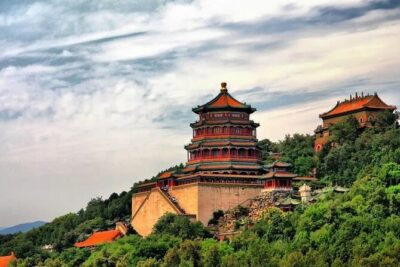
Temple Heaven, Lama Temple, Summer Palace & Peking Duck Bus Tour
Read our review →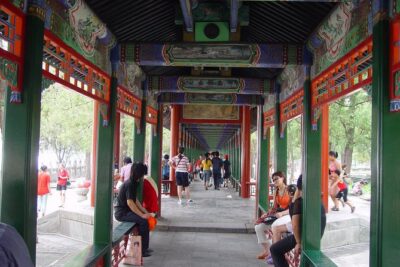
Temple of Heaven, Summer Palace, Lama Temple, Hutong Tours
Read our review →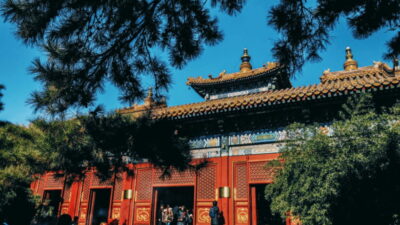
Beijing Historical Tour II including Summer Palace, Lama Temple & Panda Garden
Read our review →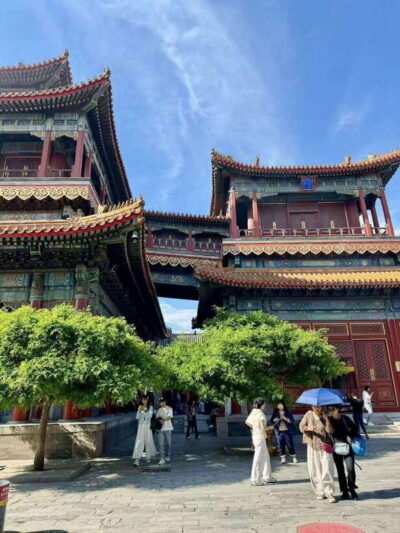
Beijing Lama temple ticket; #1 efficacious; limited Discount
Read our review →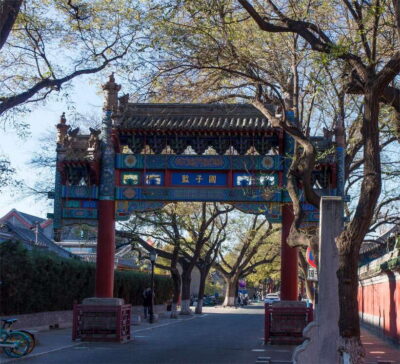
Confucius Temple and the Impercial College E-ticket
Read our review →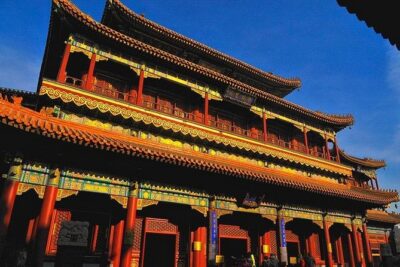
Panda House, Temple of Heaven, Lama Temple, Summer Palace & Lunch
Read our review →Browse the lists this tour appears in