
Reviewed · LAMA TEMPLE AND CONFUCIUS TEMPLE TOURS
Beijing: Yonghe Lama Temple Tickets with guide (optional)
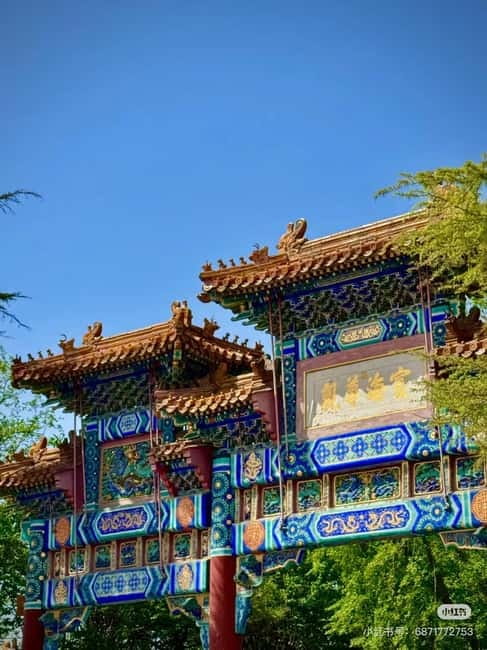
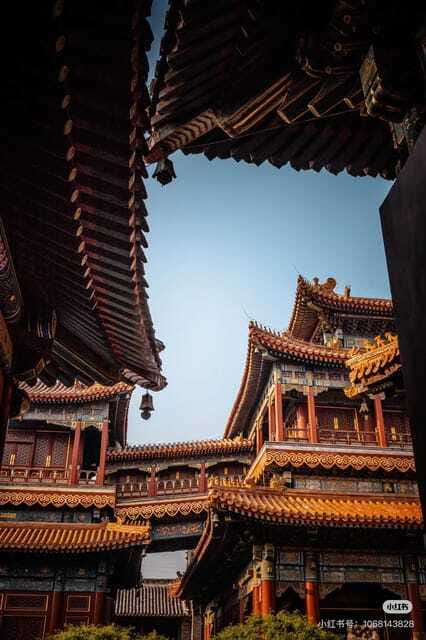
The most interesting part of Yonghe Lama Temple is the way its design changes as you walk north. Courtyards narrow, halls grow taller, and the complex shifts from formal Qing imperial architecture toward a grand Tibetan Buddhist setting. Three archways and five major halls give the visit a clear route rather than a jumble of buildings.
I like the advance ticket because it removes one small chore from a busy Beijing day. I also like the choice of an English-speaking guide or a self-guided visit, since the buildings reward both quiet looking and added explanation.
The main drawback is timing. The temple closes early, especially from November through March, and entry ends before the grounds close. The site is also not suitable for wheelchair users, so check the practical details before booking.
Key points to know before you go
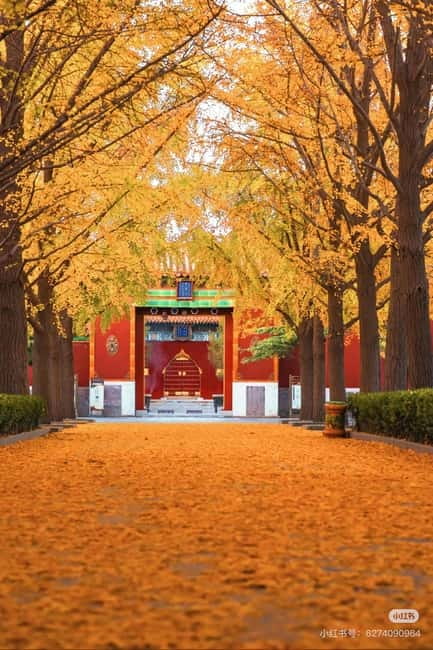
- The temple covers 66,400 square meters, with more than 1,000 rooms across its courtyards and halls.
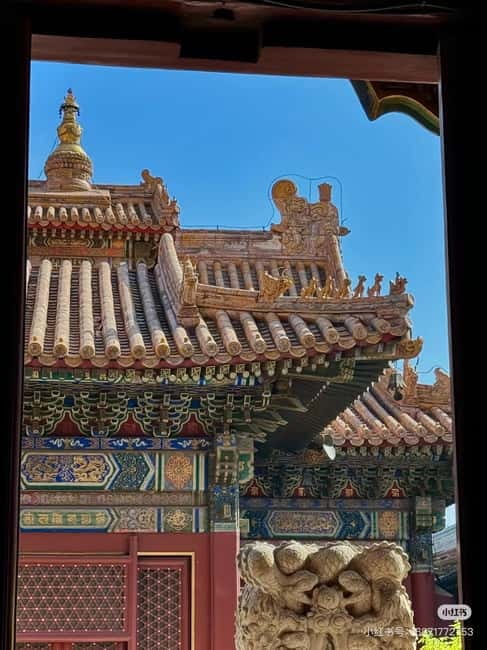
- The architecture combines Tibetan Buddhist and Chinese styles, with Han, Manchu, Mongolian, and Tibetan cultural influences.
- The Line 5 metro stop is Yonghe Lama Temple Station, giving you a direct public transport option.
- An English-speaking guide is available, with a small-group option listed.
- The ticket costs $12 per person, including the Yonghegong Lama Temple admission and information service fee.
- Winter hours are shorter, with entry ending at 4:00 PM from November 1 through March 31.
Why Yonghe Lama Temple is worth your Beijing time
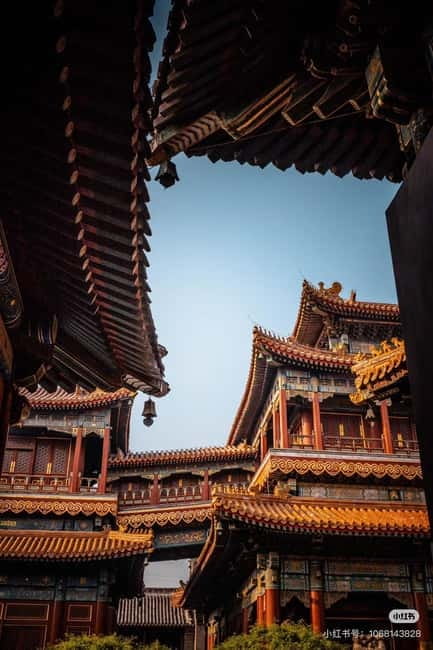
Yonghe Lama Temple is not simply a place to pass through, take a few photographs, and leave. Its value comes from the way the entire site unfolds. You begin with a sequence of formal entrances, then move through courtyards and halls that become taller and more imposing as you continue north.
The temple was first built in 1694, during the reign of Qing Emperor Kangxi. It later became one of the most important Buddhist temples of the late Qing period. That background helps explain the unusual mixture of imperial Chinese planning and Tibetan Buddhist purpose.
I find the cultural blend especially useful for understanding Beijing. The site reflects Han, Manchu, Mongolian, and Tibetan influences, not in a museum display but in the layout, decoration, and religious function of the buildings themselves. You can look at the rooflines, gateways, courtyards, and hall arrangement as parts of one carefully planned place.
The $12 price is reasonable if you value convenience. You receive the entrance ticket and an information service fee, and you can book ahead rather than deal with ticket purchasing at the entrance. The price does not include a guide as a required feature, so you can choose the level of help that suits your budget and interest.
More Lama Temple and Confucius Temple visits in Beijing:
- Temple Heaven, Lama Temple, Summer Palace & Peking Duck Bus Tour
★ 5.0 · 377 reviews - Temple Heaven, Summer Palace, Lama Temple, Hutong Bus Tour
★ 4.7 · 319 reviews - Temple of Heaven, Summer Palace, Lama Temple, Hutong Tours
★ 5.0 · 311 reviews
Reaching the temple on Line 5
The address is No. 12 Yonghegong Street in Beijing’s Dongcheng District. The listed metro route is Line 5, with a stop called Yonghe Lama Temple Station.
That makes this an easy stop to add to a day in northeastern central Beijing, at least from a transport point of view. I would check the exact station exit and booking instructions before setting out, since the information provided does not specify a meeting point or exit number.
A pre-booked ticket is useful if you have a tight schedule. You will not need to spend part of your visit arranging admission on the spot, and the one-day validity gives you some room to plan around other sights. Still, the temple has fixed opening hours, so a flexible ticket does not mean you can arrive at any time of day.
Bring your passport. It is specifically listed as required, and having it ready can save time at entry.
First impressions at Zhaotai Gate
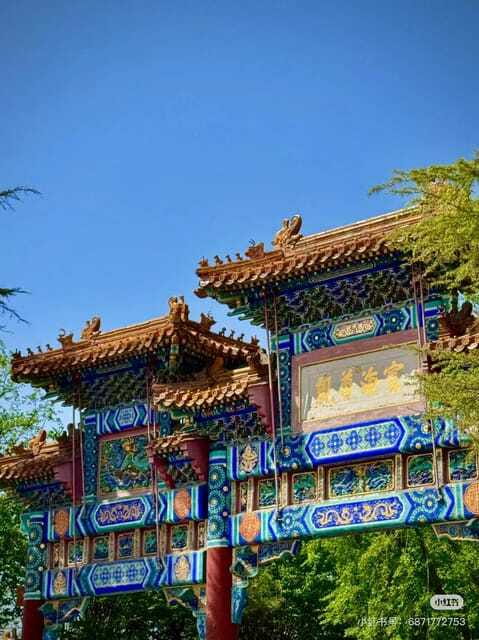
The visit begins with the temple’s formal southern approach and its three archways. The Zhaotai Gate is one of the key structures named for the complex, and it helps establish the site’s ceremonial character.
Do not rush this first section. The sequence of gates is part of the experience. Rather than entering one large open compound, you pass through a series of thresholds, each preparing you for the next courtyard.
This arrangement also gives the temple a strong sense of order. The buildings do not appear randomly placed. They form a central axis, with the courtyards and halls arranged to draw you steadily northward.
If you have an English-speaking guide, this is a useful place to begin asking questions about the temple’s architecture and religious role. The tour description does not provide a guide’s name, so you should not expect a named guide to be guaranteed. What is confirmed is English-language guiding and the availability of a small-group format.
Bell Tower, Drum Tower, and Yonghe Gate
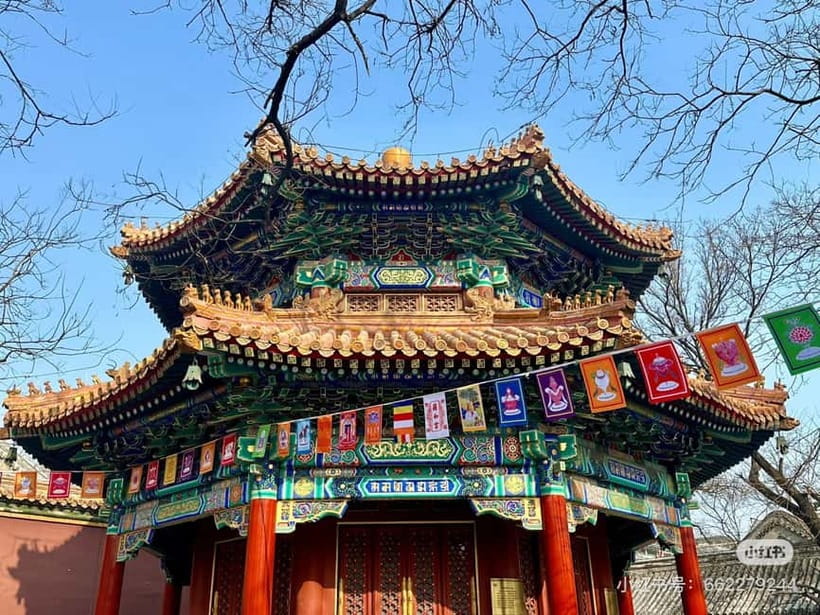
After the first approach, the Bell Tower and Drum Tower add another layer to the complex. Their presence is a reminder that this is a functioning religious site shaped by ritual and daily practice, not only a collection of historic buildings.
The Yonghe Gate continues the northward progression. I like this part of the visit because the architecture gives you a natural sense of movement. You do not need a detailed map to understand that each gate and courtyard leads toward a more important interior space.
The setting can also help you pace yourself. The grounds cover 66,400 square meters, and the complex contains over 1,000 rooms. You will not see every room during an ordinary visit, so focus on the named halls and the overall layout rather than trying to inspect every corner.
A guide can be most useful here if you want context for the ceremonial sequence. On your own, you can still appreciate the scale and symmetry, but some of the religious meaning may be less clear without explanation.
More entry tickets in Beijing:
- Beijing: Forbidden City Tour(Group/Private)-Tickets Included
★ 4.8 · 7,974 reviews - 4-Hour Small Group Tour to Forbidden City with Entry Tickets
★ 5.0 · 1,863 reviews - Beijing: Tiananmen Square Registration Service(Ticket)
★ 4.5 · 1,704 reviews - Beijing: The Temple of Heaven or Summer Palace Entry Ticket
★ 4.6 · 1,286 reviews
The five main halls and changing courtyard scale
The five main halls are the backbone of the temple visit. As you continue north, the courtyards become narrower while the halls increase in height. This change creates a feeling of growing importance and rising scale.
That design is one of the strongest reasons to walk the route in order. If you skip around, you may see attractive individual buildings, but you lose the sense of progression that makes the whole complex memorable.
The Grand Hall, also called the Hall of Great Buddha, is one of the central structures. Its name signals the importance of the space, though the supplied information does not specify which images or objects are displayed inside. Take your time with the exterior, the surrounding courtyard, and the relationship between the hall and the buildings behind it.
The Yongyou Hall is another key stop. Along with the Grand Hall, it helps show how the temple combines a formal Chinese compound layout with Tibetan Buddhist use. I would allow enough time to pause rather than treating the halls as quick photo stops.
The Hall of the Wheel of the Dharma is especially important to note in the route because it reflects the temple’s Buddhist identity. The name points toward Buddhist teaching and practice, while the surrounding Chinese architectural framework shows how different traditions were brought together in one imperial-era complex.
Pavilion of Ten Thousand Blessings
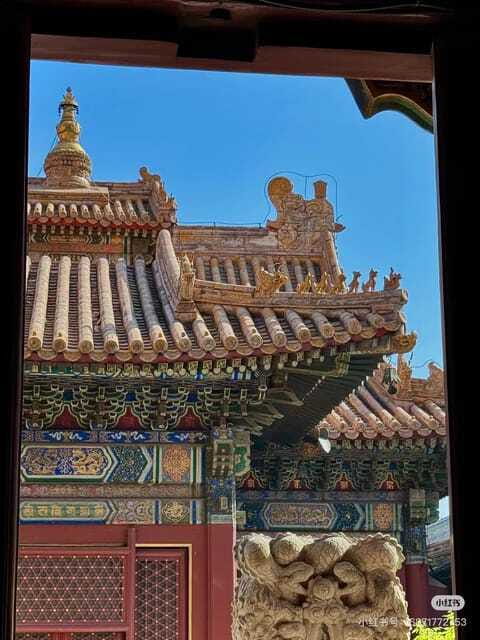
The northern part of the temple leads toward the Pavilion of Ten Thousand Blessings, one of the most distinctive structures listed in the complex. By this point, you have moved through the gates, towers, courtyards, and main halls, so the pavilion serves as a fitting final focus.
The rising height of the buildings becomes most noticeable as you progress. The layout is not flat in feeling, even though the visit is primarily across courtyards. The sequence gives the northern end greater visual weight.
This is where I would slow down and review the whole design. Look back toward the courtyards and consider how the complex began with lower, more formal spaces before building upward in scale. You are seeing a planned architectural journey, not just a collection of attractive façades.
The information provided does not promise a particular ceremony, special event, or interior display, so you should book this as an architectural and religious site visit rather than expecting a scheduled performance.
Choosing the guide option
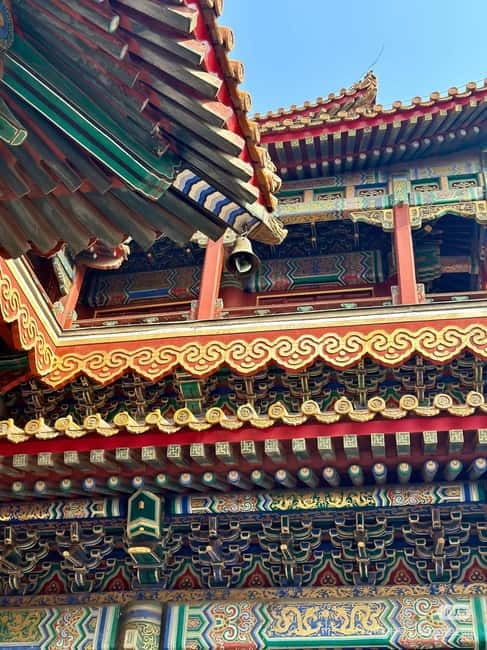
The English-speaking guide is optional, which is a useful feature. I would choose the guide if you want help understanding the blend of Tibetan Buddhism and Chinese architectural planning, or if you have limited time and want the main points explained as you move.
A small group can offer a middle ground between a private tour and wandering alone. You get some explanation without committing to a large organized party. The available information does not state the exact group size, so treat small group as a general format rather than a guaranteed number.
A self-guided visit may suit you if you prefer to move slowly, spend more time in a favorite courtyard, or take photographs without keeping pace with a group. The pre-booked ticket still gives you the convenience of arranging admission in advance.
One practical point matters here: an English guide is listed, but no guide name or detailed commentary plan is provided. If you want specific religious, artistic, or historical subjects covered, check the booking details before paying.
Opening hours and the best time to arrive
The temple is open from 9:00 AM to 5:00 PM in summer and autumn, defined here as April 1 through October 31. Last admission is at 4:30 PM, and the grounds are cleared by 5:00 PM.
From November 1 through March 31, the hours are 9:00 AM to 4:30 PM. Last admission is at 4:00 PM, with the grounds cleared by 4:30 PM.
These cutoffs are important. I would not plan to arrive close to the final admission time, especially if you want to see the gates, five main halls, and northern pavilion. A late visit may technically be possible, but it would leave little time for the full route.
Morning or early afternoon gives you the best margin. You can move at a comfortable pace, stop in the courtyards, and use the guide option without constantly watching the clock. The booking system lists availability by starting time, so check the date and time carefully before confirming.
What the $12 ticket really delivers
At $12 per person, this is a modestly priced cultural visit in a major capital. The value is strongest if you appreciate organized access and want to avoid buying the ticket on arrival.
You are paying for the temple admission and information service fee. The ticket is valid for one day, giving you some planning flexibility, but it does not turn the visit into an all-day guided tour. The duration is listed as one day, which should be understood as ticket validity rather than a promise that a guide will accompany you continuously for an entire day.
The optional English guide changes the value calculation. If you are comfortable reading signs and following the central route, the ticket alone may be enough. If you want the architecture and Buddhist traditions explained in clear English, the guided option can make the visit more rewarding.
Free cancellation up to 24 hours in advance and reserve-now, pay-later booking also reduce the risk of committing too early. Those terms are useful in Beijing, where weather, transport, and other timed bookings can affect your plans.
Who will enjoy this visit most
I would recommend Yonghe Lama Temple to you if you enjoy architecture, religious sites, Qing-era planning, or cultural places that reward careful observation. It is also a good fit if you prefer to build your own day around a single pre-booked sight.
The visit may suit families and first-time Beijing visitors who want a clear route through a major temple. The gates and halls create a simple structure, while the optional guide can help explain what you are seeing.
It is less suitable if you need wheelchair access. The activity is specifically listed as not suitable for wheelchair users, and no adapted route is described.
You should also avoid treating it as a quick stop squeezed into the final hour of the day. The complex is large, and the closing times are firm. Give yourself enough time to reach the entrance, pass through the archways, and continue to the northern halls.
Temple manners and practical preparation
Alcohol and drugs are not allowed, and making a fire is prohibited. These rules are straightforward, but remember that this remains a Buddhist temple rather than a theatrical attraction.
Wear something suitable for walking through a large compound. The supplied information does not specify a dress code, so I would focus on comfortable clothing and respectful behavior. Keep your passport accessible, since it is required.
The ticket does not list meals, transport, or other services as included. Plan those separately. The included items are the Yonghegong Lama Temple ticket and the information service fee.
I would also save the address in Chinese and English before leaving: No. 12 Yonghegong Street, Dongcheng District, Beijing. That is particularly helpful if you need to show the destination to a driver or compare it with the metro stop.
Should you book Yonghe Lama Temple with a guide?
Book it if you want a low-cost, well-structured visit to one of Beijing’s major Buddhist complexes, especially if advance admission and an English explanation matter to you. The architecture gives you plenty to see, from the three archways to the five halls and Pavilion of Ten Thousand Blessings.
Choose the guide option if you want the cultural meaning explained as you go. Choose the ticket-only approach if you prefer independence and already understand that the site is best appreciated slowly.
Skip it if the winter closing time, passport requirement, or wheelchair access issue creates a problem. For everyone else, the $12 ticket is a practical way to reserve time for a large and visually impressive temple without making the visit complicated.
FAQ
Where is Yonghe Lama Temple located?
Yonghe Lama Temple is at No. 12 Yonghegong Street in Beijing’s Dongcheng District, in northern China.
Which metro station serves the temple?
You can use Beijing Metro Line 5 and get off at Yonghe Lama Temple Station.
How much does the experience cost?
The listed price is $12 per person.
Is an English-speaking guide available?
Yes. An English-speaking live guide is available, and a small-group option is listed. The guide is optional.
What does the price include?
The price includes admission to Yonghegong Lama Temple and an information service fee.
What are the temple’s opening hours?
From April 1 through October 31, the temple is open from 9:00 AM to 5:00 PM. From November 1 through March 31, it is open from 9:00 AM to 4:30 PM.
When is the last admission?
During summer and autumn, last admission is at 4:30 PM. During winter and spring, last admission is at 4:00 PM.
What should I bring, and are there any restrictions?
Bring your passport. Alcohol, drugs, and making a fire are not allowed. The experience is not suitable for wheelchair users.
Just added around Beijing
- Xian: Must see Eternal Love or Camel Bell Legend show Ticket★ 5.0 · 3 reviews
- 2-Day Beijing Must-See Tour:4 UNESCO Sites+Tian’anmen&Hutong★ 5.0 · 4 reviews
- Beijing: 2-Day private Tour with Great wall& Forbidden city★ 5.0 · 5 reviews
- Xian: Bus Tour of Terracotta Warriors With Guide & Lunch★ 4.2 · 5 reviews
- Private Transfer to Mutianyu Great Wall with professional driver★ 5.0 · 19 reviews
- Twilight Glow at Badaling Great Wall Evening Bus Tour+Ticket★ 4.9 · 11 reviews
- Yuxiandu Chinese Royal Cuisine Museum with Show and Royal Banquet★ 5.0 · 4 reviews
- ZANBUS: Trip to the Jinshanling Great Wall Departing at 7:30 AM★ 5.0 · 5 reviews
Lama Temple and Confucius Temple Tours, compared.
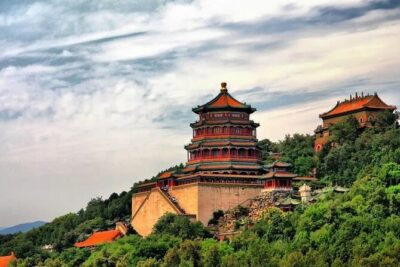
Temple Heaven, Lama Temple, Summer Palace & Peking Duck Bus Tour
Read our review →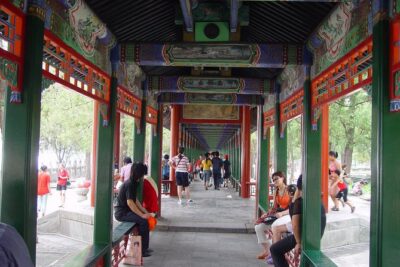
Temple of Heaven, Summer Palace, Lama Temple, Hutong Tours
Read our review →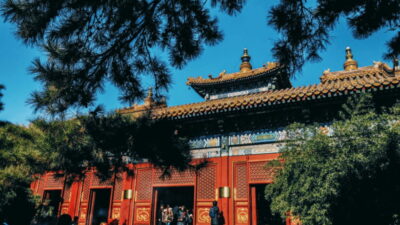
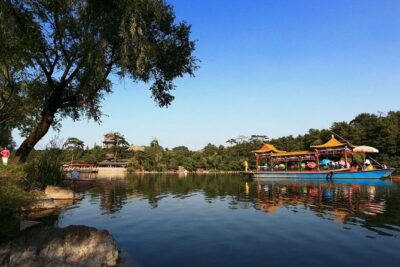
Beijing Historical Tour II including Summer Palace, Lama Temple & Panda Garden
Read our review →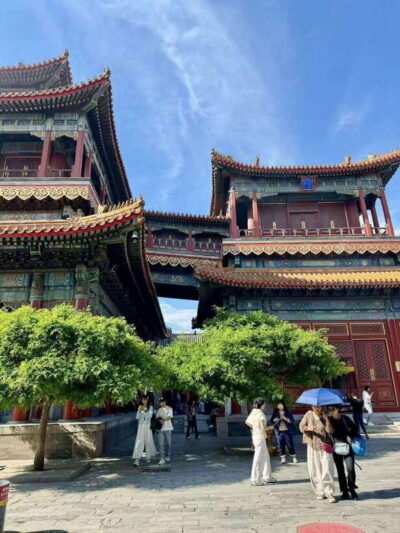
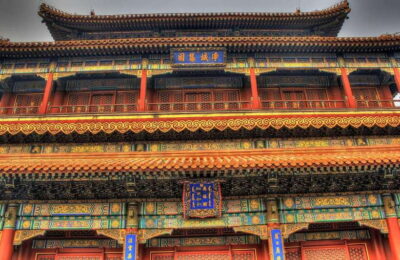
Beijing Lama temple ticket; #1 efficacious; limited Discount
Read our review →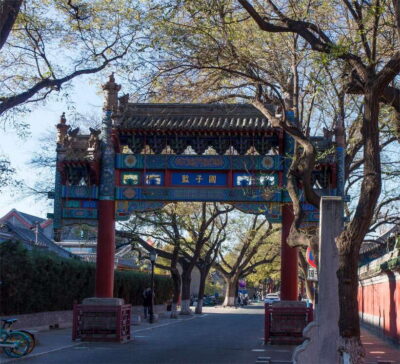
Confucius Temple and the Impercial College E-ticket
Read our review →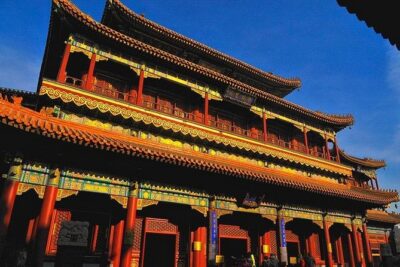
Panda House, Temple of Heaven, Lama Temple, Summer Palace & Lunch
Read our review →Browse the lists this tour appears in