
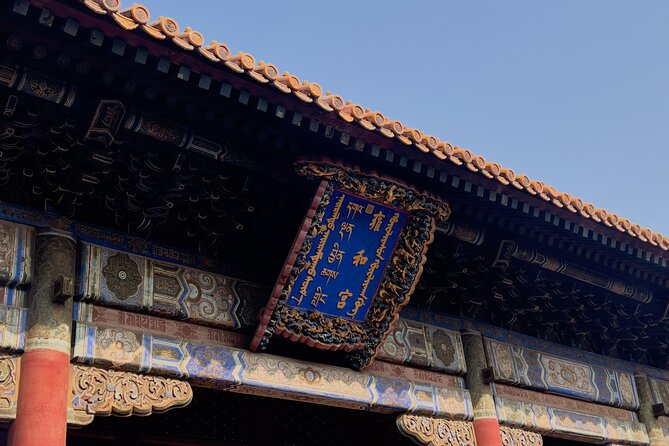
Reviewed · LAMA TEMPLE AND CONFUCIUS TEMPLE TOURS
Lama Temple Tour with Tickets: Beijing’s Hidden Mystical World
Beijing’s Lama Temple tour pairs Buddhist worship with the old hutong lanes that surround one of the city’s most atmospheric districts. I like that you do more than look at temple buildings: you learn how to burn incense, pray for blessings, draw lots for wishes, and understand the Feng Shui ideas behind everyday choices. The small group, capped at six people, also gives guide Wan room to explain Chinese traditions clearly.
I also like the way the walk links several parts of local life: the temple, hutong streets, Beijing snacks, and a high viewpoint along the city’s central axis. The main consideration is the price, $180 per person, which is high for a 3-hour-30-minute walking tour. It makes the most sense if you want cultural explanation and ritual context, not simply temple entry.
Key points to know before booking
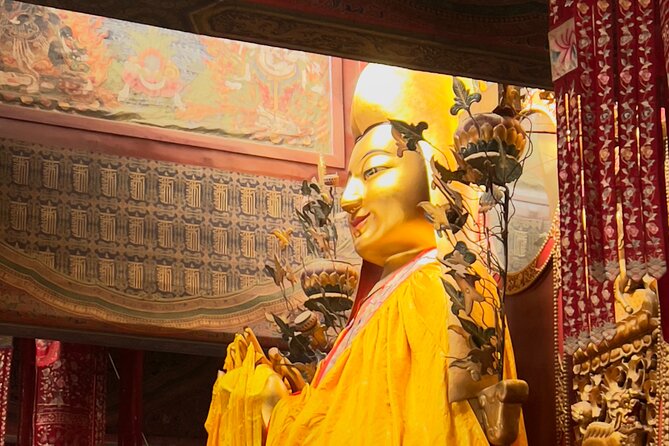
- Lama Temple worship rituals: Learn the full process of praying for blessings, burning incense, and taking part in traditional temple customs.
- Small-group format: The tour accepts no more than six people, a useful size for questions and personal guidance.
- Guide Wan: Wan is specifically praised for explanations of the temple, Buddhism, and Chinese traditions.
- Hutong culture: Walk through historic Beijing lanes and sample authentic local snacks along the way.
- Feng Shui and folk practice: Explore wish lots, fortune telling, consecrated accessories, and ideas about good fortune.
- Drum Tower or Ditan Park: Finish with a view over Beijing’s central axis or a visit to the Temple of Earth area, depending on the route that day.
Entering Yonghegong, Beijing’s Lama Temple
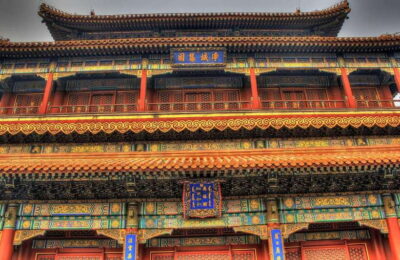
The tour begins at the Lama Temple ticket office at 28 Yong He Gong Da Jie in Dongcheng District. This is Yonghegong, often called the Lama Temple, a major Buddhist site in central Beijing and the central stop of the experience.
You will not simply walk through, take photographs, and leave. The focus is on understanding what people do inside the temple and why. Your guide explains the process of worshiping the Buddha and praying for blessings, giving the visit a clear structure rather than leaving you to guess what each ritual means.
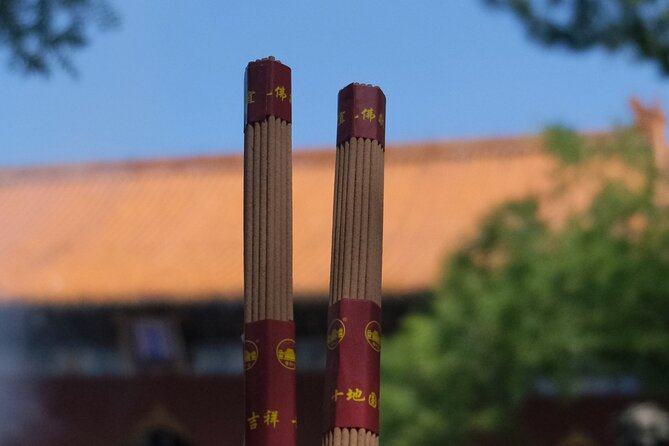
You can expect attention to incense burning, prayer, and traditional symbols. The experience also presents Feng Shui as a living part of Chinese culture. In this context, Feng Shui concerns the way location, layout, clothing, accessories, diet, and daily habits may affect a person’s energy and fortune.
That subject can be difficult to understand through a quick museum label. A guide gives you a chance to ask how religious practice, folk belief, and family tradition overlap. You do not have to accept every belief to find the customs interesting. The value comes from seeing how these ideas shape real actions at a major place of worship.
The temple visit is likely the most structured part of the tour. It is also the section where a good guide matters most. Guide Wan receives particular praise for explaining Buddhism and Chinese traditions in a clear and enjoyable way, so you should expect the temple to be more than a silent walk past halls and statues.
More Lama Temple and Confucius Temple visits in Beijing:
- Temple Heaven, Lama Temple, Summer Palace & Peking Duck Bus Tour
★ 5.0 · 377 reviews - Temple Heaven, Summer Palace, Lama Temple, Hutong Bus Tour
★ 4.7 · 319 reviews - Temple of Heaven, Summer Palace, Lama Temple, Hutong Tours
★ 5.0 · 311 reviews
Feng Shui customs beyond the temple gates
The tour presents Feng Shui through several hands-on or observational customs. You may burn incense, draw lots for wishes, receive fortune telling, and learn about consecrating accessories. These practices give the idea of good fortune a practical form.
Drawing lots for wishes is especially useful for understanding how people seek guidance or reassurance through traditional customs. Fortune telling adds another layer, connecting personal hopes with older systems of interpretation. The tour does not present Feng Shui only as interior design or the placement of furniture. It treats it as part of clothing, food, family life, and routine.
I would approach this section with curiosity rather than expecting a scientific lesson. The description centers on traditional Chinese beliefs and superstitions. You are there to understand the cultural meaning of these acts, not to receive a guarantee about your future.
This is also where the tour may suit some people more than others. If you enjoy religion, folklore, symbolism, and local customs, the material should give you plenty to think about. If you only want architecture or a standard sightseeing walk, the emphasis on fortune and ritual may feel less essential.
The mention of consecrated accessories is another unusual detail. It suggests that the tour explores how objects may be connected with blessing and protection. Specific items are not listed, so you should not book expecting a particular souvenir or ritual object. Think of this as an explanation of the practice rather than a shopping stop.
Walking Beijing’s hutongs after the temple
After the temple, the experience moves into Beijing’s hutong district. These lanes offer a different view of the city from the grand avenues and monumental buildings usually associated with Beijing.
A hutong walk is valuable because it shifts your attention from official sights to neighborhood scale. You can feel the shape of older Beijing through narrow lanes, traditional street life, and the way historic districts connect around major sites. The tour describes the area as a place to sense an oriental atmosphere, but the practical benefit is simpler: you get time on foot between the temple and the city’s everyday side.
The walk also includes authentic Beijing snacks. The exact foods are not specified, so you should treat this as a chance to taste local fare rather than a fixed food menu. If snacks are important to you, ask the guide what is available that day and what is included in the tour price.
The hutong section helps balance the temple visit. Inside Yonghegong, the focus is worship and Buddhism. Outside, the focus shifts to streets, food, custom, and the atmosphere of old Beijing. Together, the two parts give you a broader picture than either stop would provide alone.
You should still be ready to walk for much of the 3-hour-30-minute experience. A moderate level of physical fitness is recommended. Comfortable shoes are the sensible choice, especially since the route includes the temple grounds, hutongs, and possibly an additional viewpoint or park.
Drum Tower views or Ditan Park atmosphere
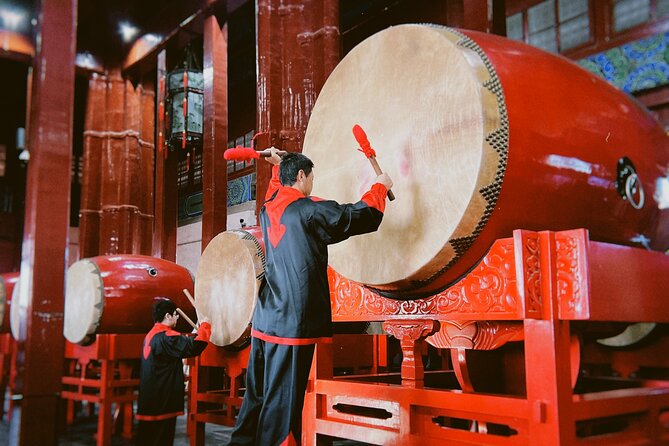
The final part of the experience may take you to the Drum Tower, where you can look over the scenery along Beijing’s central axis. This adds a visual finish to a tour that otherwise works mainly at street level.
The Drum Tower option is appealing if you want a broad sense of how Beijing is organized. After learning about local beliefs and walking through hutongs, a higher viewpoint lets you see the city’s central axis in a larger context. The attraction is not only the view. It is the chance to connect the small lanes you have just walked with the wider plan of the capital.
The alternative is Ditan Park, known as the Temple of Earth. The tour describes this as a place to gather good fortune and positive energy. If the route uses Ditan Park instead of the Drum Tower, the ending will feel more reflective and park-based rather than focused on an elevated city view.
Because the description gives both possibilities, you should confirm the planned ending when you book or meet your guide. The listing identifies Lama Temple as the formal itinerary stop, while the hutongs and the Drum Tower or Ditan Park appear as part of the wider experience. That means the exact balance may depend on timing, weather, and the guide’s route.
Weather matters here. The experience requires good conditions, and poor weather can lead to a different date or a full refund. That policy is practical for an outdoor walking tour, since rain or other bad conditions could make the hutong walk and viewpoint less pleasant.
More entry tickets in Beijing:
- Beijing: Forbidden City Tour(Group/Private)-Tickets Included
★ 4.8 · 7,974 reviews - 4-Hour Small Group Tour to Forbidden City with Entry Tickets
★ 5.0 · 1,863 reviews - Beijing: Tiananmen Square Registration Service(Ticket)
★ 4.5 · 1,704 reviews - Beijing: The Temple of Heaven or Summer Palace Entry Ticket
★ 4.6 · 1,286 reviews
What the $180 price really covers
At $180 per person, this is not a bargain temple transfer or a basic admission ticket. The price includes all fees and taxes, but private transportation is not included. You meet at the Lama Temple ticket office and finish back at the meeting point.
The strongest argument for the cost is the small-group instruction. With a maximum of six people, you are paying for a focused cultural walk rather than a large procession. A good guide can explain rituals as they happen, answer questions, and adjust the discussion to your interests.
Guide Wan’s role is particularly important. The experience is built around subjects that can be hard to interpret alone, including Buddhism, Feng Shui, fortune practices, and Chinese superstition. Wan is praised for making those subjects understandable while keeping the walk enjoyable.
The price is harder to justify if you mainly want entry to Lama Temple. The tour lasts about three and a half hours, and public transportation is nearby, so an independent visit would likely cost far less in admission and transit. You should choose this experience for the explanations, cultural links, and guided route rather than for transportation or luxury extras.
Group discounts are available, which may improve the value if you are booking with family or friends. Since the group limit is six, check the exact discount before paying if several people are joining.
Practical details for the walk
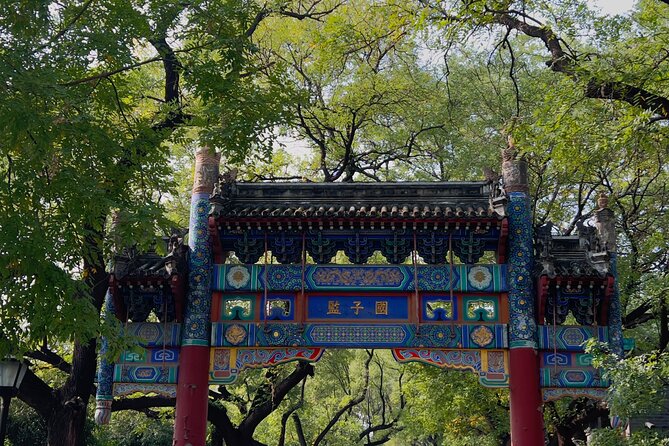
The meeting point is the Lama Temple ticket office at 28 Yong He Gong Da Jie, in the Guozijian area of Dongcheng District. The location is near public transportation, so you can make your own way there without private hotel pickup.
The tour ends back at the meeting point. That matters if you are planning a tight Beijing sightseeing schedule. You will not be left at the Drum Tower or Ditan Park with an unfamiliar route back, though you should still allow extra time after the official 3-hour-30-minute duration in case the walk runs slightly long.
Confirmation arrives when you book. You can cancel for a full refund up to 24 hours before the start time. Cancellations or changes made inside that 24-hour window are not refunded or accepted. The cut-off uses Beijing local time.
The tour requires moderate physical fitness. The information does not give a step count, exact distance, or details about stairs, so you should be comfortable walking through a temple complex, hutong streets, and possibly up the Drum Tower. If the Drum Tower option is important to you, ask about the stairs before starting.
Since the group is limited to six, the tour should feel more personal than a standard city excursion. It is also a good format for asking sensitive or detailed questions about religious customs without having to speak over a large crowd.
Who will get the most from this experience
I would recommend this tour to you if you want to understand the meaning behind Chinese rituals rather than simply photograph them. It is a strong match for first-time visitors who are curious about Buddhism, Feng Shui, local superstition, and older neighborhood life.
It should also suit you if you enjoy walking tours with several connected themes. The temple introduces formal worship. The hutongs bring the discussion into the city’s streets. Snacks add a taste of local life, and the Drum Tower or Ditan Park provides a final setting for thinking about fortune, geography, and Beijing’s central plan.
Families and small groups may find the six-person maximum useful, especially with group discounts. The format allows questions and keeps the pace more manageable than a large bus tour.
I would be more cautious if your priority is fast sightseeing, private transportation, or a long food itinerary. The price is substantial, the route is on foot, and the food portion does not list specific dishes or quantities. The Feng Shui material also requires an open mind. It is cultural education, not a promise that a ritual will change your luck.
Should you book the Lama Temple tour?
Book it if you want a guided explanation of one of Beijing’s most important Buddhist sites, combined with hutong walking and traditional customs that are easy to miss on your own. Guide Wan’s explanations, the small group, and the chance to see worship practices up close are the main reasons to choose it.
Skip it if you only need temple admission or if you prefer to set your own pace. At $180, the tour earns its value through interpretation and access to cultural context, not through transportation or an unusually long itinerary.
For the right person, this is a thoughtful half-day introduction to Beijing’s spiritual and neighborhood life. Confirm whether the route ends at the Drum Tower or Ditan Park, wear comfortable shoes, and arrive ready to ask questions. That is how you will get the most from the experience.
FAQ
How long does the Lama Temple tour last?
The tour lasts approximately 3 hours and 30 minutes.
Where does the tour begin?
It begins at the Lama Temple ticket office at 28 Yong He Gong Da Jie in Dongcheng District, Beijing.
Where does the tour end?
The activity ends back at the meeting point.
Is private transportation included?
No. Private transportation is not included, although the meeting point is near public transportation.
How many people can join the tour?
The tour has a maximum of six participants.
What is included in the price?
All fees and taxes are included. The price is $180 per person, and group discounts are available.
Can I cancel for a full refund?
Yes. You can cancel at least 24 hours before the experience start time for a full refund. Cancellations or changes made less than 24 hours before the start time are not accepted or refunded. If poor weather causes the tour to be canceled, you will be offered another date or a full refund.
Just added around Beijing
- Xian: Must see Eternal Love or Camel Bell Legend show Ticket★ 5.0 · 3 reviews
- 2-Day Beijing Must-See Tour:4 UNESCO Sites+Tian’anmen&Hutong★ 5.0 · 4 reviews
- Beijing: 2-Day private Tour with Great wall& Forbidden city★ 5.0 · 5 reviews
- Xian: Bus Tour of Terracotta Warriors With Guide & Lunch★ 4.2 · 5 reviews
- Private Transfer to Mutianyu Great Wall with professional driver★ 5.0 · 19 reviews
- Twilight Glow at Badaling Great Wall Evening Bus Tour+Ticket★ 4.9 · 11 reviews
- Yuxiandu Chinese Royal Cuisine Museum with Show and Royal Banquet★ 5.0 · 4 reviews
- ZANBUS: Trip to the Jinshanling Great Wall Departing at 7:30 AM★ 5.0 · 5 reviews
Lama Temple and Confucius Temple Tours, compared.
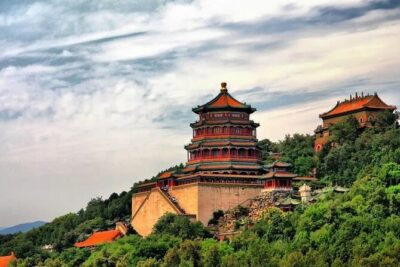
Temple Heaven, Lama Temple, Summer Palace & Peking Duck Bus Tour
Read our review →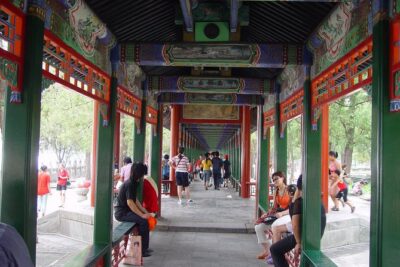
Temple of Heaven, Summer Palace, Lama Temple, Hutong Tours
Read our review →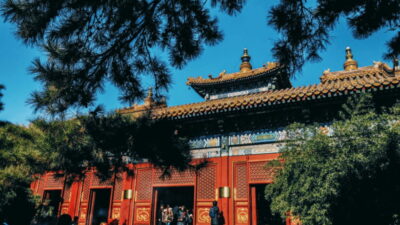
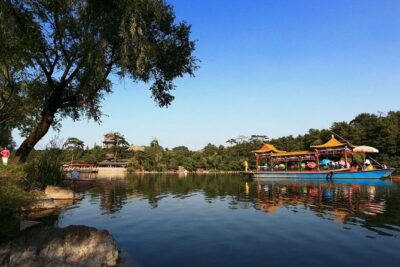
Beijing Historical Tour II including Summer Palace, Lama Temple & Panda Garden
Read our review →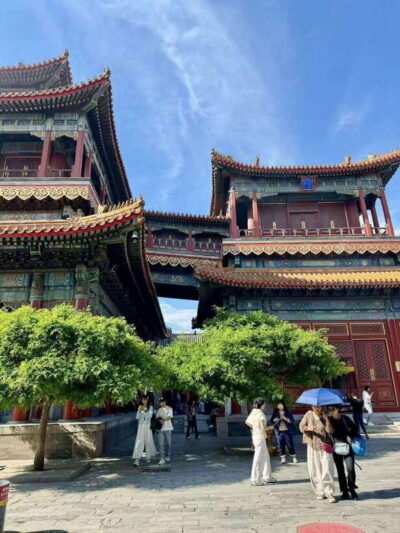
Beijing Lama temple ticket; #1 efficacious; limited Discount
Read our review →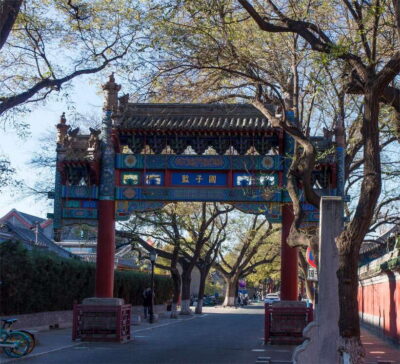
Confucius Temple and the Impercial College E-ticket
Read our review →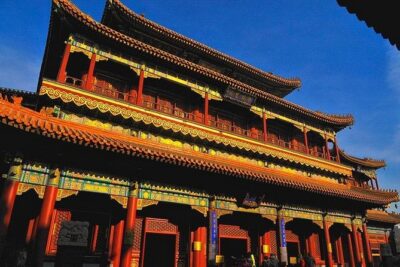
Panda House, Temple of Heaven, Lama Temple, Summer Palace & Lunch
Read our review →Browse the lists this tour appears in