
Reviewed · LAMA TEMPLE AND CONFUCIUS TEMPLE TOURS
Beijing: Lama Temple, Confucius Temple and Guozijian Museum
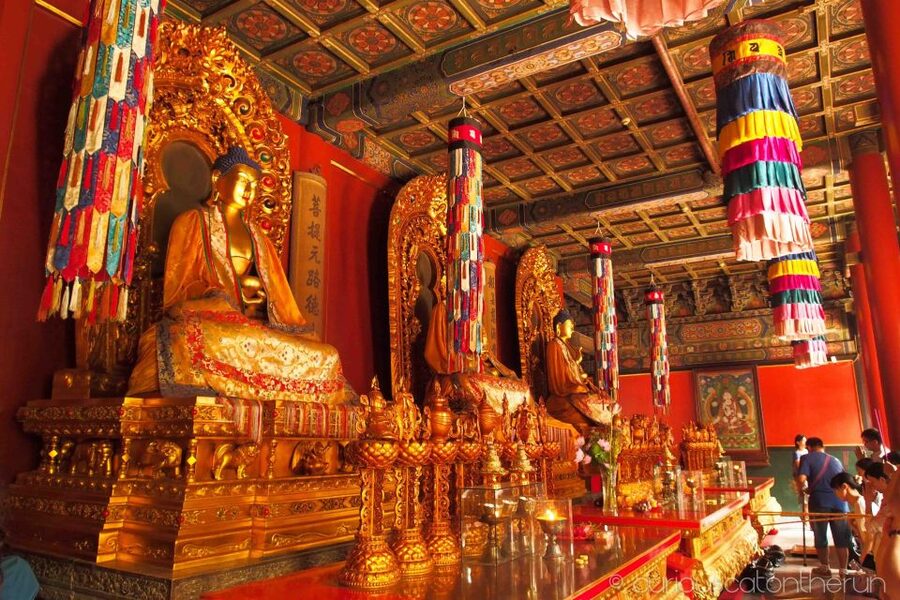
The most striking moment comes inside Lama Temple, where a 54-foot Maitreya Buddha was carved from one precious sandalwood log brought from Nepal. This four-hour private tour then shifts from Buddhist worship to Confucian learning, finishing in the narrow hutong lanes around Guozijian.
I like the contrast between the temples, and I like the chance to watch local worship rather than simply walk past statues. Guides such as Anne, Cassie, Mike, Ranee, and Aurora have been praised for clear English and lively explanations. The main drawback is pace: four hours gives you a useful introduction, but not endless time in each courtyard or lane.
Key points to know before booking
- The Lama Temple’s giant wooden Buddha is the visual high point, carved from a single sandalwood trunk.
- Confucius Temple and Guozijian show the education system that served China’s imperial dynasties.
- A private English-speaking guide gives you room to ask questions and adjust the pace.
- Hotel pickup is included, with taxi or subway travel, or a private car if you choose that option.
- The hutong walk adds everyday Beijing life after the formal temple courtyards.
- The tour ends near Wudaoying Hutong, where you can continue exploring or add a dim sum meal option.
Starting at Lama Temple with a private guide
Your guide meets you in your hotel lobby, holding a sign with your name. From there, you head to Lama Temple by taxi or subway, unless you select the private-car option. That choice matters in Beijing. The basic arrangement can save money, but a private car makes the transfer easier if you are carrying luggage, managing a tight schedule, or simply want less transport planning.
The tour is a private group, so you are not squeezed into a large crowd with a fixed script. You can ask why a certain statue matters, how worship works, or how Buddhist practice fits into Chinese life. The strong marks given to guides such as Anne and Cassie point to one of the tour’s real strengths: the quality of the explanation can shape the whole morning.
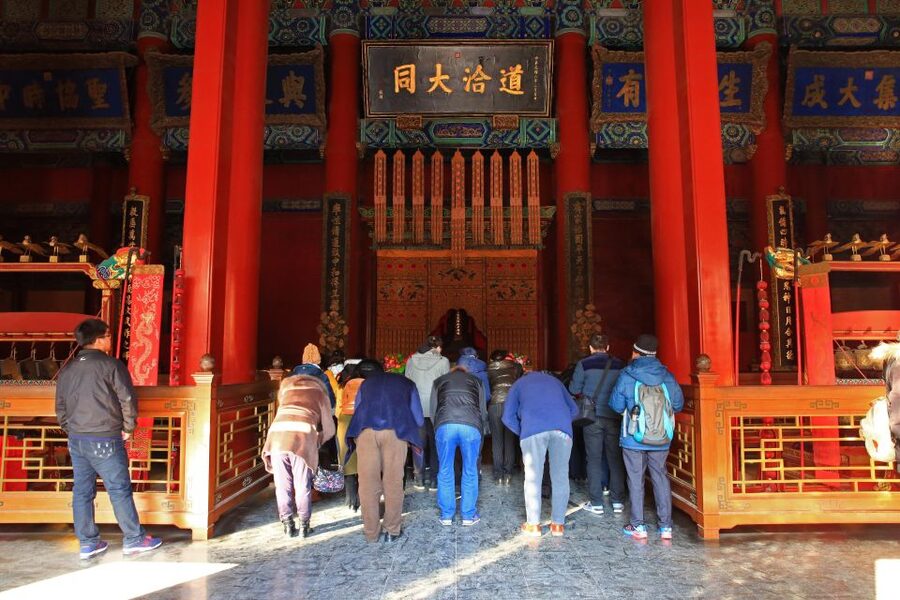
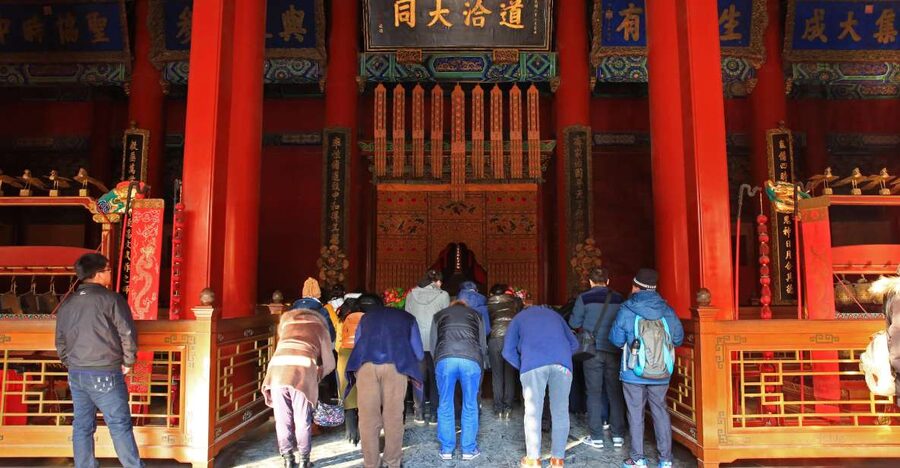
Lama Temple is not just a collection of handsome halls. It remains a working religious site. You may see people lighting incense, bowing, praying, or moving from one courtyard to the next with a clear purpose. Your guide helps you read these actions without treating them as a show put on for visitors.
That makes the stop more useful than a quick photo visit. You begin to see the difference between looking at a religious object and understanding how people use a temple. Be respectful, keep your voice low, and follow your guide’s advice about where to stand and when photography is suitable.
More Lama Temple and Confucius Temple visits in Beijing:
- Temple Heaven, Lama Temple, Summer Palace & Peking Duck Bus Tour
★ 5.0 · 377 reviews - Temple Heaven, Summer Palace, Lama Temple, Hutong Bus Tour
★ 4.7 · 319 reviews - Temple of Heaven, Summer Palace, Lama Temple, Hutong Tours
★ 5.0 · 311 reviews
The 54-foot sandalwood Buddha
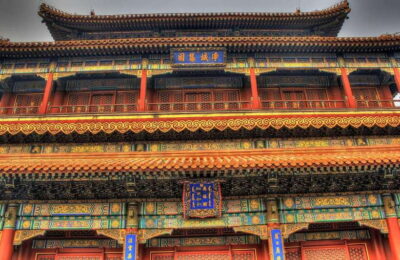
The temple’s main visual prize is the statue of Maitreya Buddha. At 54 feet high, it is described as the world’s largest wooden Buddha, carved from a single white sandalwood log from Nepal. The unusual construction gives your guide a strong story to tell, and the statue is large enough to make an immediate impression even if you have already visited other Buddhist sites in Beijing.
Look up carefully when you enter the hall. A statue this tall can be hard to take in at once, especially when the courtyard and hall are busy. The size is impressive, but the better part of the visit is learning what the statue represents and why this particular image matters within the temple.
Your guide leads you through several courtyards and halls, pointing out Buddhist statues and explaining their stories. The exact order and amount of time may depend on crowds and your questions. On a crowded day, an attentive guide can make a real difference. Anne was praised for keeping the visit moving smoothly while still explaining the culture and history clearly.
The temple can feel active rather than museum-like. That is a benefit if you want to see living religious practice, though it also means the atmosphere may be less quiet than you expect from photographs. If you want long periods for private contemplation or detailed photography, the four-hour schedule may feel brisk.
Walking through the lanes to Confucius Temple
After Lama Temple, you walk through a quiet hutong alley toward the Temple of Confucius and Guozijian. This short transition is part of the appeal. Instead of jumping from one major sight to another by vehicle, you get a glimpse of the older neighborhood pattern between them.
Hutong lanes are narrow streets associated with traditional Beijing neighborhoods. Here, the value is not grand architecture at every turn. It is the change in scale: temple roofs and imperial institutions give way to walls, doorways, small streets, and signs of ordinary local life.
Your guide explains how these lanes developed and what daily life in a hutong has meant over time. The information is particularly helpful because a casual walk can otherwise become a series of disconnected impressions. You learn to notice how the neighborhood fits around the historic sites.
The walk also gives the tour a more grounded rhythm. Lama Temple can feel ceremonial and monumental. The hutong section brings you back to street level. Wear comfortable shoes, since the route includes walking between sites and around the lanes. The tour lasts four hours, so this is an introduction rather than a long neighborhood study.
Seeing Confucius Temple and the former Imperial College
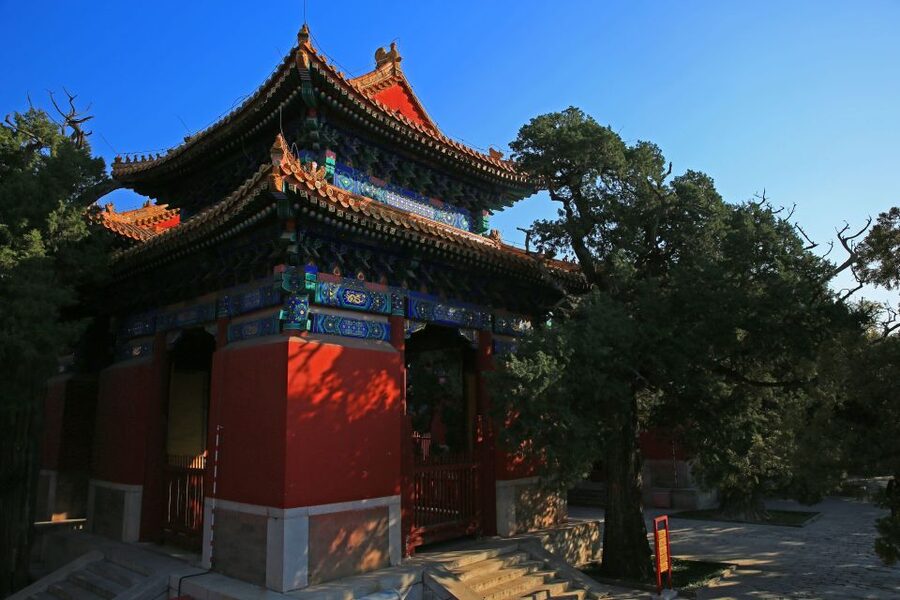
The next major stop is the Temple of Confucius and Guozijian Museum. The complex was built in 1306 by the grandson of Kublai Khan. Guozijian served as the highest academy during the Yuan, Ming, and Qing dynasties.
That detail gives the visit its focus. This was not simply a religious compound. It was tied to education, official learning, and the preparation of people for service in the imperial state. Confucius is closely linked with study, conduct, family responsibility, and social order, so the temple and academy work well together as one visit.
I like this part of the tour because it shows a different side of Chinese tradition from Lama Temple. At Lama Temple, your attention is on Buddhist images and active worship. At Guozijian, the subject shifts toward education, scholarship, and the values expected of people who hoped to rise through the imperial system.
The buildings and courtyards are easier to appreciate when you know what they were for. A guide can explain the relationship between the Temple of Confucius and the former academy, then connect those institutions to the Yuan, Ming, and Qing periods. Mike was praised for making cultural ideas understandable and entertaining, which is useful at a site where the meaning may not be obvious from the architecture alone.
Expect the museum portion to reward listening more than rushing. If you are mainly seeking grand imperial halls, the complex may feel more restrained than the Forbidden City. If you want context about education and Chinese thought, it adds real depth to the morning.
More museums in Beijing:
- Beijing: Tianmen Square, Forbidden City & Royal Museum Tours
★ 4.6 · 1,288 reviews - Beijing:Jingshan Park (Palace Museum Garden) Ticket
★ 4.5 · 185 reviews - Beijing Half Day: National Museum of China In-depth Tour with Subway Transfer
★ 5.0 · 70 reviews - Beijing’s Forbidden City with Special Viewing of Treasure Gallery and the Great Wall Ruins at Badaling
★ 4.5 · 24 reviews
Finishing among the hutongs near Wudaoying
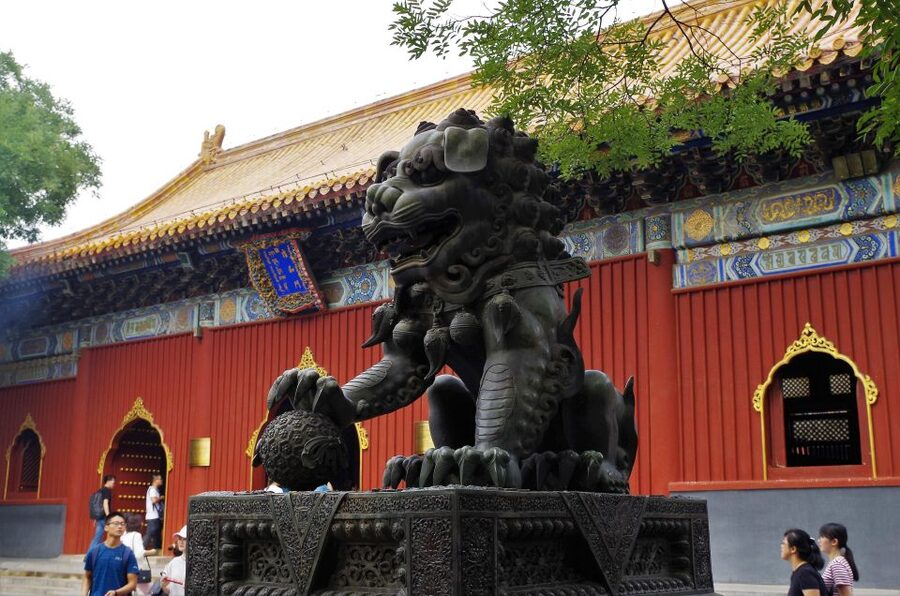
The final section takes you through more hutong lanes near the temples. Your guide explains the background of Beijing’s hutong streets and the way people have lived in these neighborhoods. This is a good place to ask practical questions about the city, since the discussion moves away from famous monuments and toward homes, streets, and community life.
The tour ends in the area, rather than returning you to your hotel. That gives you freedom. You can spend more time around Wudaoying Hutong, find a place to eat, or continue to another part of Beijing with directions from your guide.
This ending suits independent visitors who want to keep exploring. It is less convenient if you expect a ride back to your hotel. Hotel drop-off and transfer are not included in the option without a private car, so check the exact option you book before setting out.
You can also choose to combine the visit with a dim sum meal. The supplied details do not specify the restaurant, menu, or added cost, so treat that as an optional extension rather than a guaranteed part of the four-hour route.
What the $80 price includes
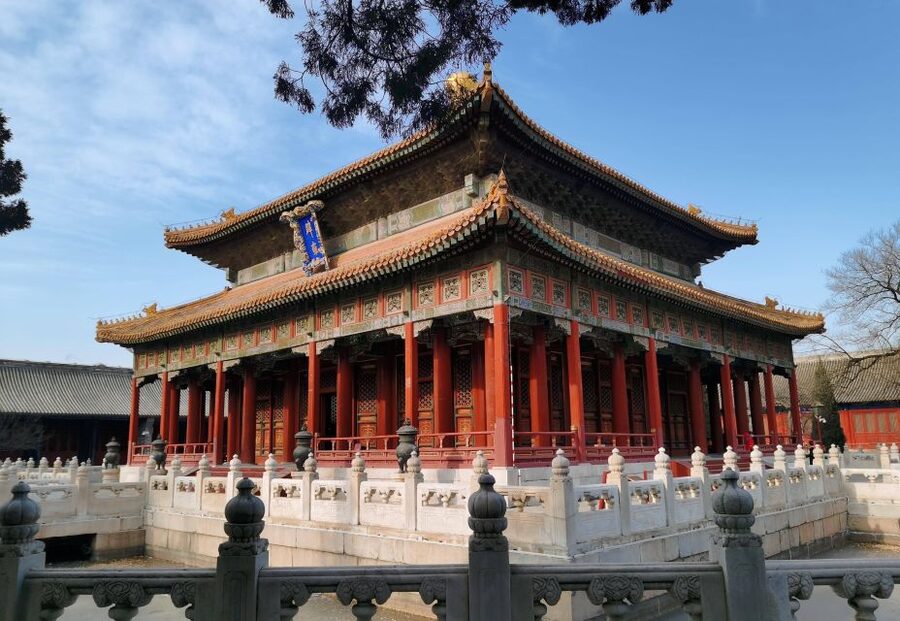
At $80 per person, this tour is priced around explanation and convenience, not just admission. The fee includes an English-speaking guide, hotel pickup, and entrance fees. You also get a private group rather than a public group with strangers.
That can be good value if you want cultural context. A self-guided visit may cost less, but you would need to arrange transport, buy or manage entry, and work out how the religious and educational sites connect. The guide also handles the route between Lama Temple, Guozijian, and the hutongs.
The private format is especially useful for couples, families, and small groups with different interests. You can spend longer at the sandalwood Buddha, ask more questions about worship, or move on when a courtyard has said all it needs to say for you.
The price does not include transfer and hotel drop-off if you choose the option without a private car. A dim sum meal is also an optional choice, not part of the standard inclusions. Read the selected transport option carefully so the final cost matches what you expect.
Guide quality and the value of good explanations
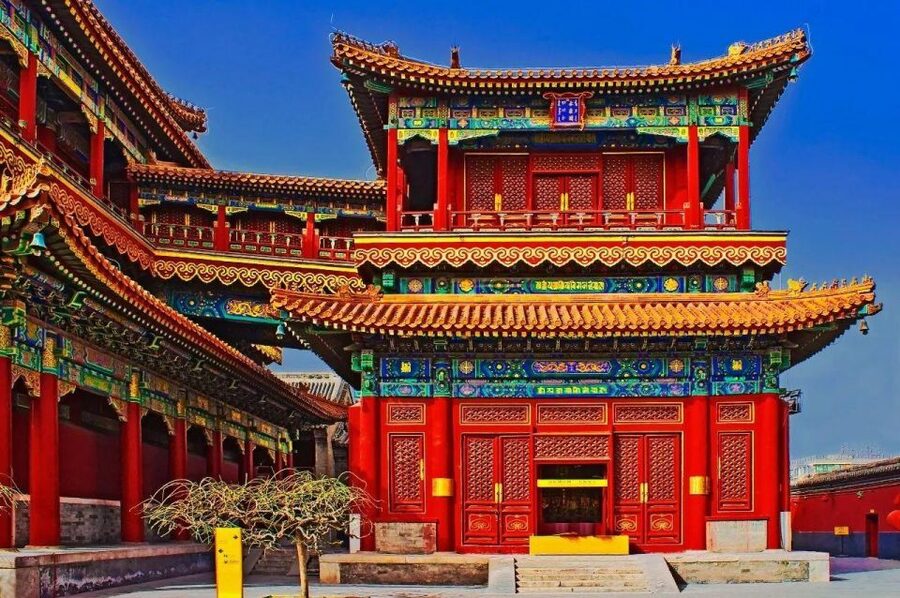
The strongest praise has focused on the guides. Ranee was described as making the visit pleasant and informative. Mike was praised for explaining Chinese culture and thought in an entertaining way. Cassie was noted for giving clear context and making the experience joyful.
Aurora was praised for explaining details in an easy-to-understand manner, while Anne received especially strong praise for excellent English, cultural knowledge, and keeping the route on track during a crowded day. These names show the kind of guiding you should hope for, though the guide assigned to your booking may be different.
A good guide is important here because the sites do not explain themselves in the same way a modern museum might. The tour works best when someone connects the statues, rituals, educational institutions, and hutong streets into one story.
English is the listed tour language. The overall rating is 5 out of 5 from 23 ratings, which supports the idea that guiding is a central strength. Still, I would keep expectations sensible: individual personalities and presentation styles can vary, and four hours cannot answer every question about Buddhism, Confucianism, imperial education, and Beijing neighborhoods.
Who should book this Beijing half-day tour?
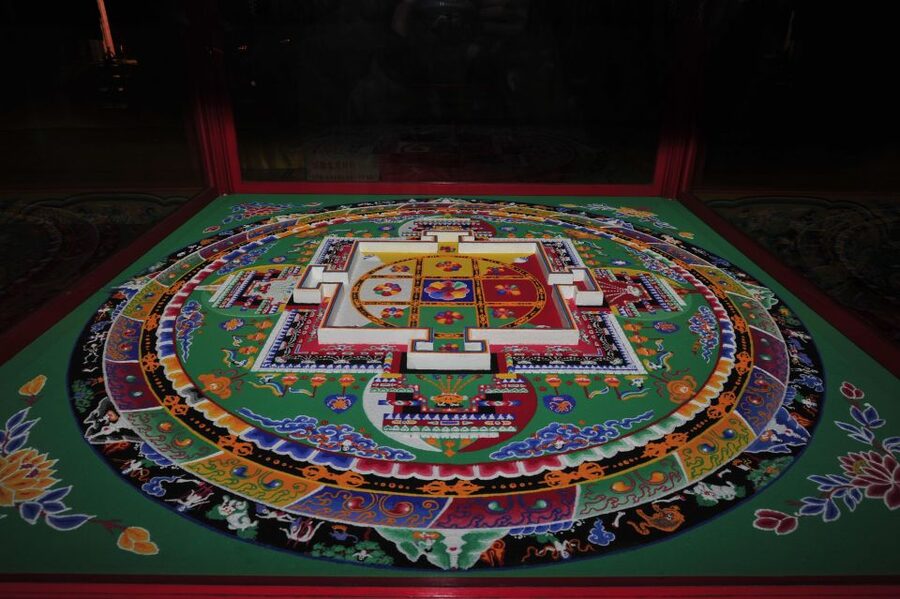
I would choose this tour if you want a compact introduction to several sides of Beijing. It combines religion, education, imperial-era culture, and ordinary neighborhood streets without requiring a full day.
It is a good match for first-time visitors who prefer explanation to independent wandering. Families may also appreciate the private format, especially if children need occasional changes of pace. The route offers large visual highlights, such as the giant Buddha, along with questions and stories that can keep a mixed-age group interested.
It also suits visitors with limited time. Four hours is long enough to see the main sites, but short enough to fit around another Beijing plan. The end near Wudaoying makes it easy to continue your day, although you must arrange your own onward transport unless you select the private-car option.
I would hesitate if your main goal is a slow, silent temple visit or a full architectural study. The tour covers several places, and walking, transfers, and explanations all take time. You will see the main ideas, not every corner.
Should you book it?
Book this tour if you want the largest wooden Buddha in the world, active religious scenes, the former imperial academy, and a hutong walk tied together by one English-speaking guide. The private format and hotel pickup make the $80 price easier to justify, especially for a small group.
Skip it if you already know these sites well or want to spend a full day at one temple. For most first-time visitors, though, this is a well-shaped four-hour route with a useful balance of major sights and local streets. Select the private-car option if convenience matters, and plan to continue around Wudaoying after the official finish.
FAQ
How long does the tour last?
The tour lasts four hours.
What sites are included?
The route includes Lama Temple, the Temple of Confucius, Guozijian Museum, and hutong lanes in the surrounding area.
Is the tour private?
Yes. The group type is listed as a private group.
Is an English-speaking guide included?
Yes. An English-speaking live guide is included, and English is the listed tour language.
Where does the tour begin?
Your guide meets you in the lobby of your hotel while holding a sign with your name.
How do you reach Lama Temple?
You can travel by taxi or subway. A private-car option is also available if you select the related option.
Is hotel pickup included?
Yes. Hotel pickup is included.
Is hotel drop-off included?
Hotel drop-off and transfer are not included if you choose the option without a private car.
Are entrance fees included?
Yes. Entrance fees are included.
Can the tour include a meal?
You can choose an option that combines the tour with a dim sum meal. The standard tour does not list a meal among its inclusions.
Can you cancel for a refund?
Yes. You can cancel up to 24 hours in advance for a full refund.
Do you have to pay when booking?
The reserve-now, pay-later option lets you hold your plans without paying at the time of booking.
Just added around Beijing
- Xian: Must see Eternal Love or Camel Bell Legend show Ticket★ 5.0 · 3 reviews
- Beijing: 2-Day private Tour with Great wall& Forbidden city★ 5.0 · 5 reviews
- Xian: Bus Tour of Terracotta Warriors With Guide & Lunch★ 4.2 · 5 reviews
- 2-Day Beijing Must-See Tour:4 UNESCO Sites+Tian’anmen&Hutong★ 5.0 · 4 reviews
- Private Transfer to Mutianyu Great Wall with professional driver★ 5.0 · 19 reviews
- Twilight Glow at Badaling Great Wall Evening Bus Tour+Ticket★ 4.9 · 11 reviews
- Yuxiandu Chinese Royal Cuisine Museum with Show and Royal Banquet★ 5.0 · 4 reviews
- ZANBUS: Trip to the Jinshanling Great Wall Departing at 7:30 AM★ 5.0 · 5 reviews
Lama Temple and Confucius Temple Tours, compared.
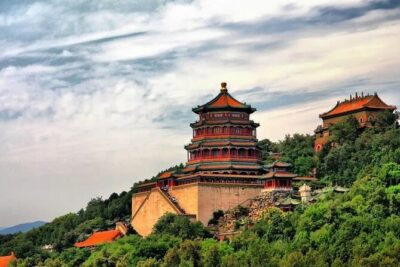
Temple Heaven, Lama Temple, Summer Palace & Peking Duck Bus Tour
Read our review →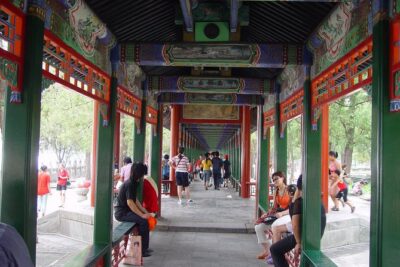
Temple of Heaven, Summer Palace, Lama Temple, Hutong Tours
Read our review →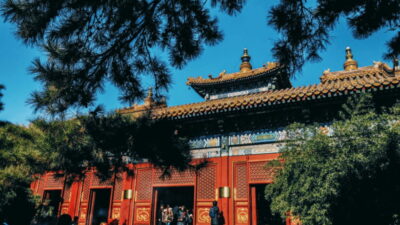
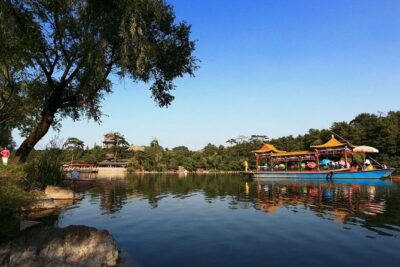
Beijing Historical Tour II including Summer Palace, Lama Temple & Panda Garden
Read our review →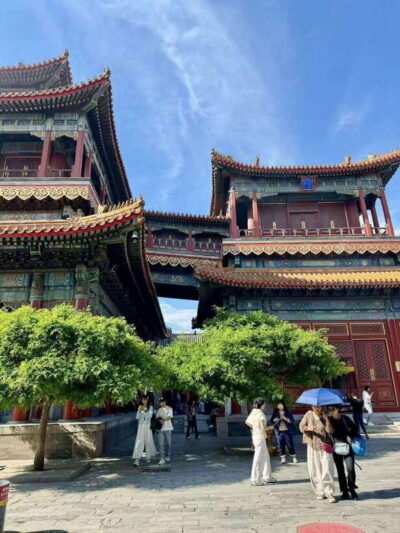
Beijing Lama temple ticket; #1 efficacious; limited Discount
Read our review →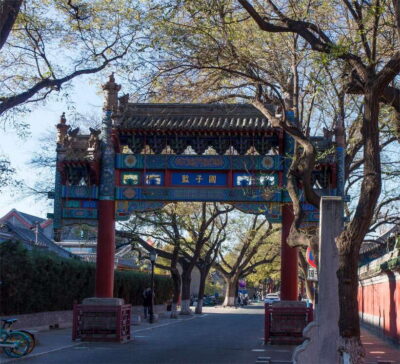
Confucius Temple and the Impercial College E-ticket
Read our review →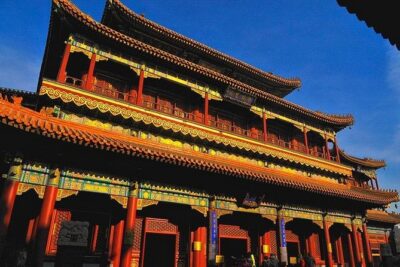
Panda House, Temple of Heaven, Lama Temple, Summer Palace & Lunch
Read our review →Browse the lists this tour appears in