
Reviewed · FORBIDDEN CITY TOURS
Beijing Wangfujing Calligraphy Class Nearby Forbidden City
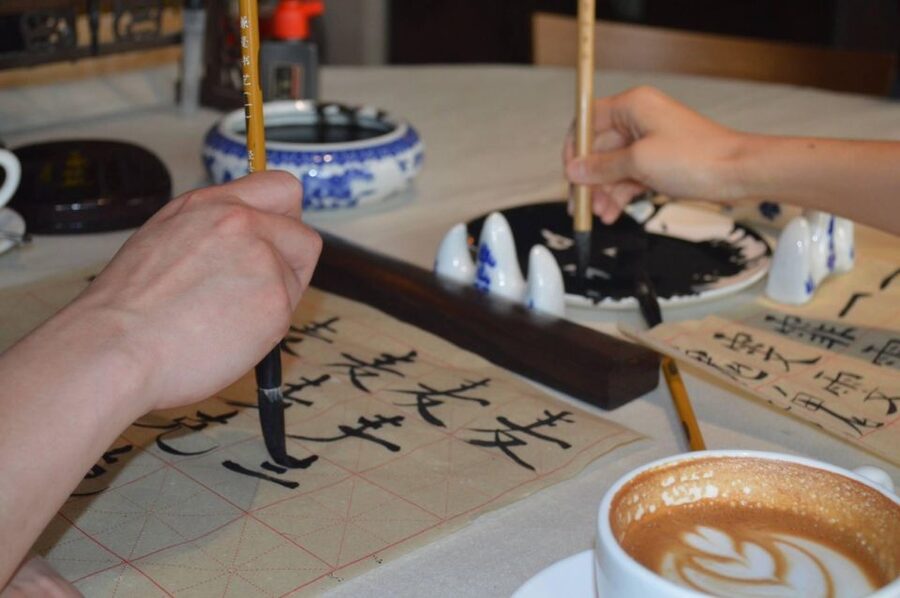
Chinese calligraphy is less about writing quickly than learning to slow your hand and steady your mind. At this Wangfujing class, an English-speaking teacher such as Richard, David, or another member of the teaching team guides you from basic brush strokes to a finished character on a red cardboard canvas.
I like the calm setting and the useful location near the Forbidden City. I also like that you leave with your own artwork instead of only a few photos. The main drawback is time: 45 minutes is enough for an introduction, but you’ll want 90 minutes or two hours if you hope to practice carefully and create something more ambitious.
Key points at a glance
- Practice before painting: You learn brush handling, posture, and basic strokes before working on the final artwork.
- Near Wangfujing and the Forbidden City: Meet at Sunworld Dynasty Hotel, a convenient base for a day of sightseeing.
- English instruction: Richard, David, Fiona, and other teaching staff have helped international visitors follow the lesson.
- Tea and a quiet pause: The class gives you a calm break from long walks, temple visits, and crowded streets.
- Several time choices: Book 45 minutes, one hour, 90 minutes, or two hours.
- Suitable for beginners and families: Children under two are not permitted, but the activity is designed for adults and older children at all skill levels.
A calm art lesson in the middle of Beijing
Beijing sightseeing can be hard work. The Forbidden City alone calls for several hours on your feet, and Wangfujing adds its own stream of shops, food stalls, and pedestrians. This calligraphy class gives you a different kind of cultural activity: you sit down, listen, practice, and let the brush do the talking.
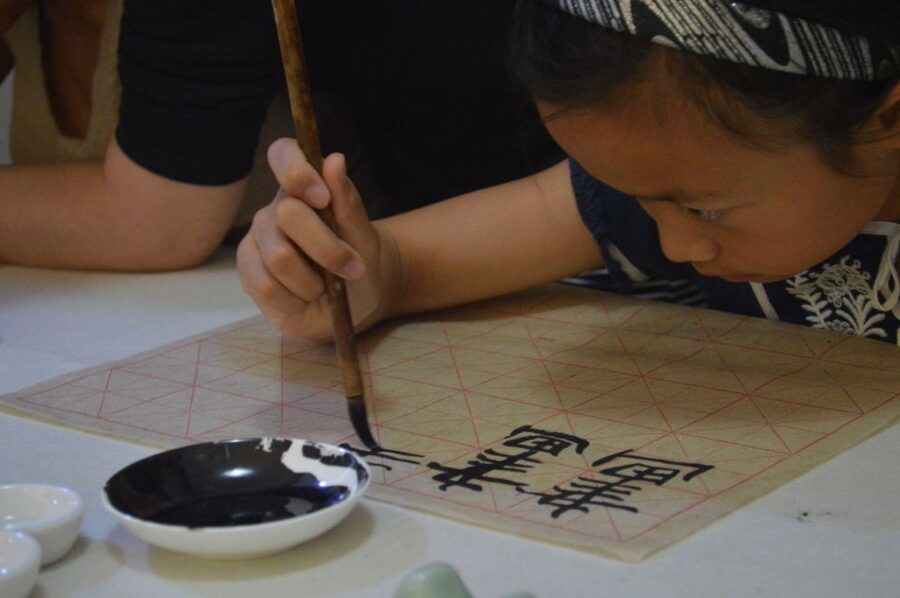
The lesson introduces Chinese calligraphy as both writing and visual art. Your teacher explains the basic strokes, how to hold the brush, how to sit or stand correctly, and how to control pressure. You are not expected to arrive with artistic talent. The class is built for first-timers, and the teacher demonstrates each stage before asking you to try.
That slow start matters. A Chinese character is not simply a collection of lines placed inside a square. Stroke order, balance, spacing, and pressure all affect its appearance. Even a short lesson can help you see why a character looks graceful, heavy, lively, or awkward.
The class is conducted in English. Richard is repeatedly praised for his patience and calm manner, while David is also described as attentive and encouraging. Fiona has assisted with translation when a more complex explanation needed extra help. The exact teacher may depend on the date of your booking, but the teaching approach is aimed at international beginners.
More Forbidden City tours in Beijing:
- Beijing: Forbidden City Tour(Group/Private)-Tickets Included
★ 4.8 · 7,974 reviews - Beijing: T-Square & Forbidden City Group or Private Tour
★ 4.8 · 4,446 reviews - All-Inclusive Tour: Tiananmen Square, Forbidden City, Great Wall
★ 5.0 · 2,873 reviews
Meeting at Sunworld Dynasty Hotel
Your meeting point is the lobby of the Sunworld Dynasty Hotel at No. 50 Wangfujing Avenue, Dong Cheng District. This is not a street-corner art stall, so give yourself enough time to find the hotel lobby and meet your teacher there.
From Dengshikou Station on Subway Line 5, use Exit A. Walk left for about 180 meters, turn left at the first traffic light, and continue west for roughly 480 meters. The total walk is about eight minutes. If you are staying in the Wangfujing area, walking to the hotel is likely the simplest option.
The listed meeting point and the actual studio are described separately, so follow the teacher from the lobby rather than heading off on your own in search of a workshop. Taxi and subway fares are not included. If you are coming directly from another part of Beijing, allow extra time for traffic and station exits.
The location works well in a sightseeing plan. You can schedule the class before visiting the Forbidden City, or use it as a quieter activity afterward. The studio is close to the Forbidden City’s east side, making it practical to combine with Wangfujing shopping and central Beijing sights.
What happens during the first 45 minutes
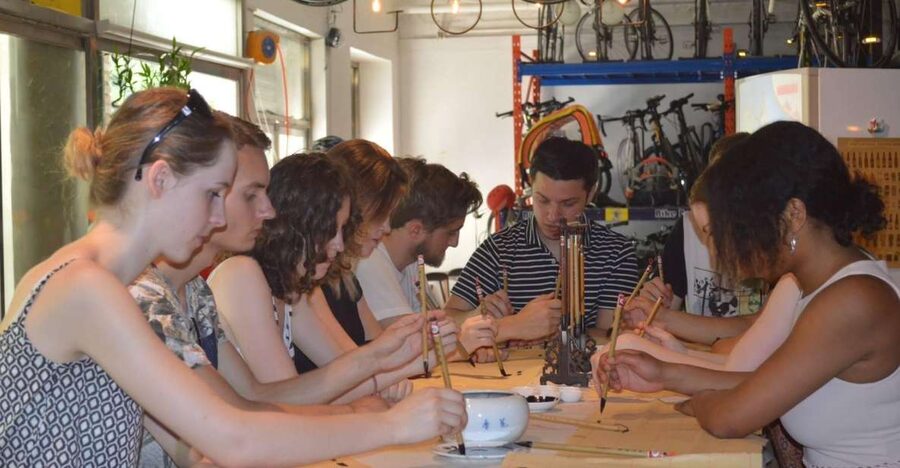
The shortest session is a useful introduction, not a full art course. You begin by meeting the teacher and getting familiar with the brush, ink, paper, and other supplies provided for use during the class.
The first stage focuses on the basics. Expect guidance on:
- Holding the brush correctly
- Keeping a steady posture
- Controlling the brush tip
- Creating simple vertical and horizontal strokes
- Understanding how pressure changes the line
- Building characters from separate marks
The teacher demonstrates, then you practice. That rhythm is important because calligraphy feels unfamiliar at first. The brush does not behave like a pencil, and pressing harder does not always make a better line.
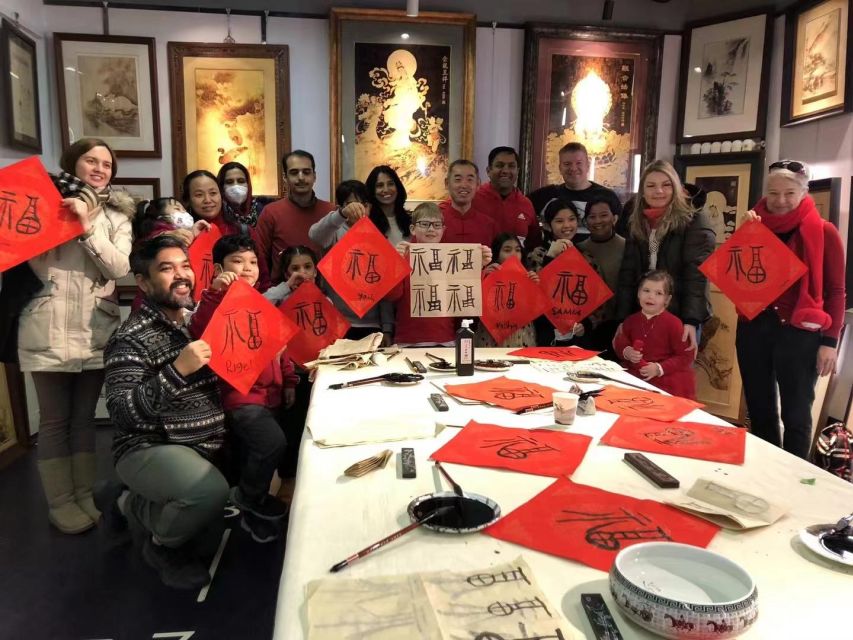
After practice, you work toward a final character or design on a red cardboard canvas. This is the part many people value most because it gives the session a clear finish and leaves you with something physical to pack home.
Forty-five minutes can be enough to understand the basic idea. It suits you if you want a short cultural activity between major sights, or if children in your group have limited patience for a longer lesson. It is less suitable if you want a polished piece, several characters, or time to ask many questions.
Choosing one hour, 90 minutes, or two hours
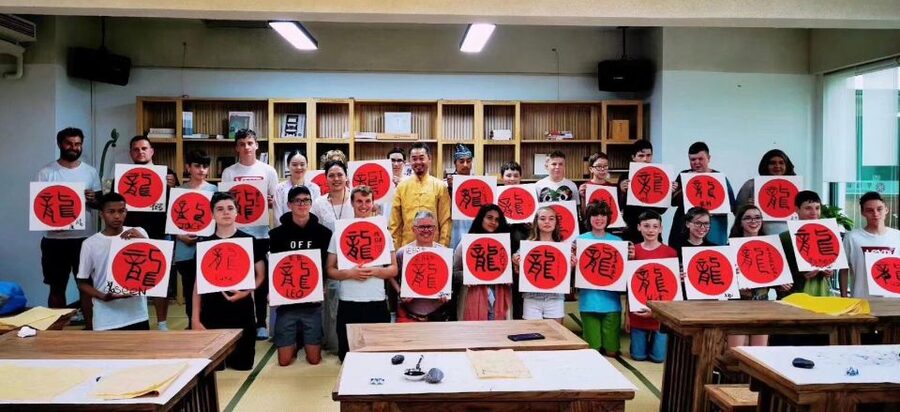
The one-hour option gives you more breathing room than the 45-minute class, but it can still feel short once introductions, demonstrations, practice, and the final artwork are included. One hour is a sensible middle choice for most first-time visitors with a busy Beijing schedule.
Several people have extended their booking after enjoying the first session. That tells you something useful about the pace: the class is not packed with constant instruction. You spend time repeating strokes, correcting your hand position, and trying again. If you find the process relaxing, extra time has real value.
The 90-minute class should suit you if you want a proper introduction without giving up half a day. You can practice longer and approach the final canvas with more confidence. The two-hour option is best for anyone who wants a slower lesson, more cultural discussion, or a better chance to produce a careful finished piece.
I would choose 90 minutes for most adults who have room in their itinerary. I would choose two hours for serious hobbyists, couples who want a quiet shared activity, or anyone who sees the class as more than a quick souvenir stop.
More tea ceremony and calligraphy workshops in Beijing:
- Beijing Calligraphy Class
★ 4.9 · 112 reviews - Chinese Calligraphy Class for Small Group
★ 5.0 · 104 reviews - Traditional Chinese Tea Ceremony Experience
★ 4.7 · 74 reviews - Beijing Historic City Guided Walking Tour + Calligraphy Creation
★ 5.0 · 59 reviews
The teacher makes the difference
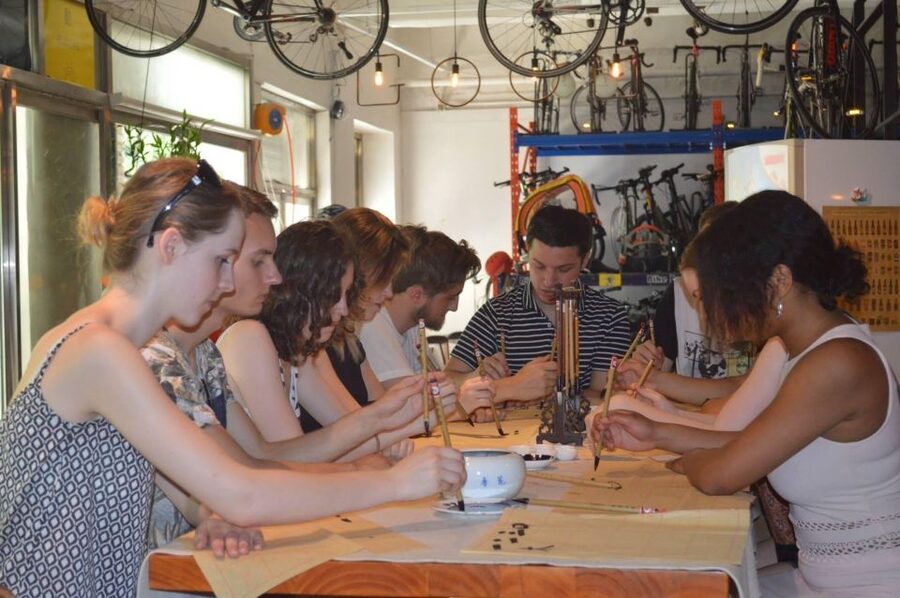
Calligraphy can be intimidating if the teacher treats every mistake like a failure. Here, patience is one of the strongest features of the experience. Richard is described as calm, friendly, funny, and willing to let students continue without rushing them at the scheduled end. David is also praised for being attentive and flexible when plans had to change.
That matters for beginners. You may produce an uneven stroke, hold the brush too tightly, or lose the balance of a character. A good teacher corrects the problem without turning the session into a test. The goal is to understand the process and enjoy the attempt.
The lessons can also reach beyond technique. One class included discussion of Buddhist philosophy, and another connected the activity with Taoist culture. The exact conversation will vary with the teacher and the questions you ask, but calligraphy offers a natural way to talk about Chinese ideas of balance, discipline, and quiet concentration.
English is the stated teaching language. If an explanation becomes difficult, teaching assistance and translation may be available, as Fiona has helped with more complicated points. Still, this is an art lesson rather than a formal lecture, so expect practical demonstrations to do much of the explaining.
Tea, quiet, and a welcome break from sightseeing
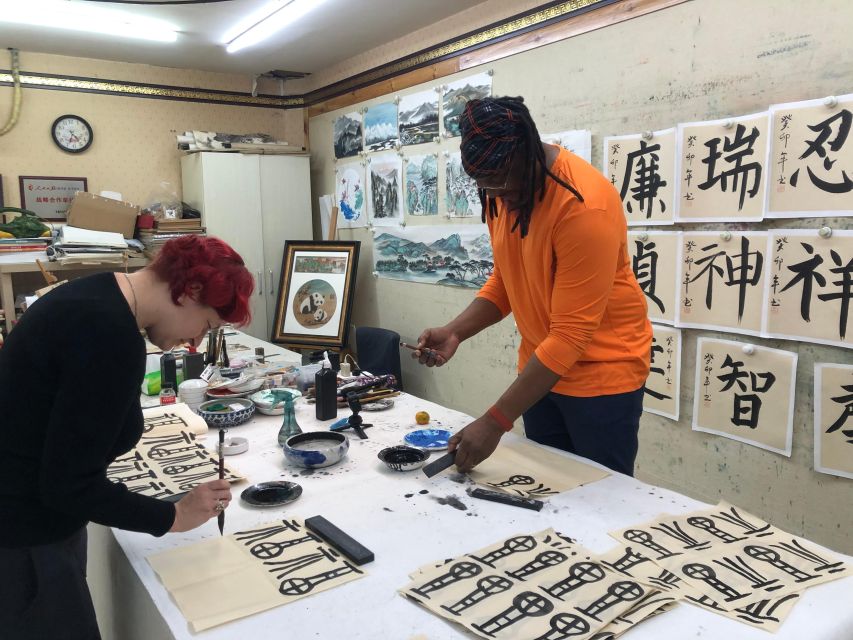
A cup of tea is part of the social welcome in several accounts of the class. That small detail helps set the mood. You are not rushing through a checklist of Beijing attractions; you are sitting down with the teacher before picking up the brush.
The setting has been described as calm and comfortable, with a coffee shop on the premises in at least one account. Do not book this solely for refreshments, since the central activity is calligraphy, but tea adds a pleasant cultural touch.
I especially like this option for the middle of a packed day. After walking through palace courtyards or waiting in long entry lines, a seated activity can reset your pace. It is also a good choice on a day when cold weather, heat, or fatigue makes another outdoor sight less appealing.
The class is not a loud entertainment show. Its value comes from concentration. If you want a fast-paced activity with constant movement, you may find it too gentle. If you want to sit, listen, and work with your hands, the quiet is part of the appeal.
Your artwork and the value of the souvenir
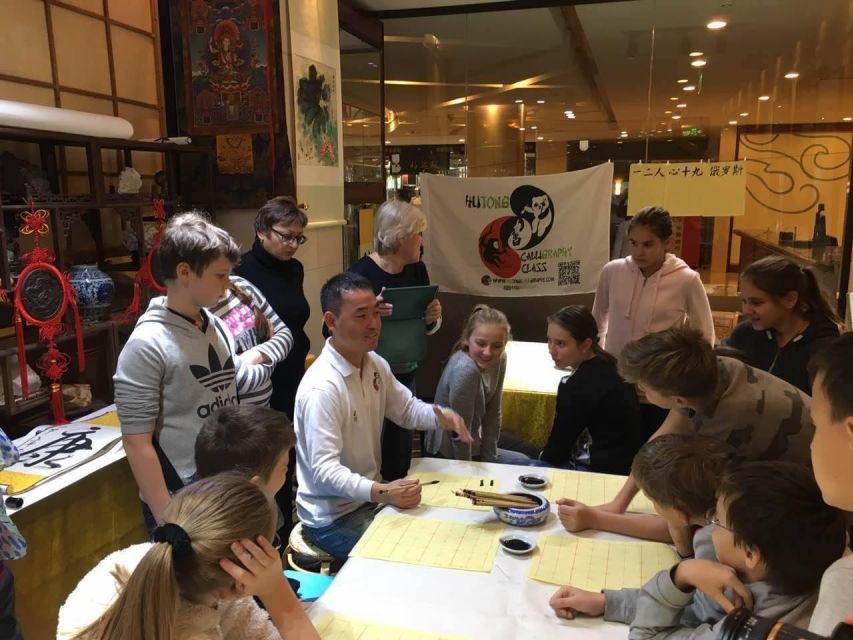
The final red cardboard canvas gives you a personal reminder of Beijing. It is not a mass-produced print selected from a shop shelf. You create it during the lesson, with the teacher’s help, so the uneven marks are part of the memory.
Some participants also received the brush they used as a gift. That appears to be a kind gesture from the teacher rather than an item clearly guaranteed in the included features, so treat it as a possible bonus, not something to book around.
The supplies needed for the lesson are included for use during the class. Personal shopping is not included, and the activity does not promise a full calligraphy kit to take home. If you want to continue practicing, ask the teacher about suitable supplies or shops, but any purchase would be your own expense.
At $35 per person, the value depends on your expectations. For 45 minutes, the price may feel high compared with ordinary activities in mainland China, especially if you judge it only by the amount of time. The value improves with the longer options because you receive more individual practice, more time with the teacher, and a more complete creative experience.
You are also paying for the central location, English instruction, equipment, and a guided cultural lesson rather than simply buying materials. I would consider 45 minutes fair if your schedule is tight and you mainly want a taste of calligraphy. For a stronger value, choose 90 minutes or two hours if the price difference fits your budget.
Is it good for children?
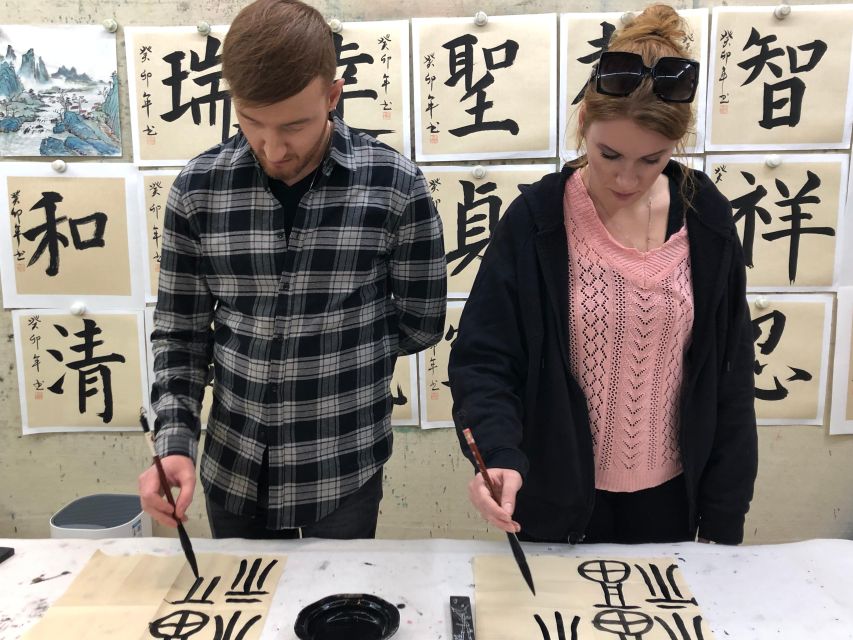
The activity is presented as suitable for adults and children, with children under two excluded. Older children can enjoy the clear, hands-on goal of making a character, especially if they like drawing or crafts.
Parents should choose the duration carefully. A 45-minute class may be the easiest starting point for a young child, while older children with an interest in art may appreciate 90 minutes or two hours. The quiet teaching style is a plus, but the lesson still requires sitting, listening, and repeating movements.
This is also a good family activity because skill levels do not need to match. A complete beginner and someone with previous brush experience can work in the same class, with the teacher adjusting the guidance.
Planning the class with the Forbidden City
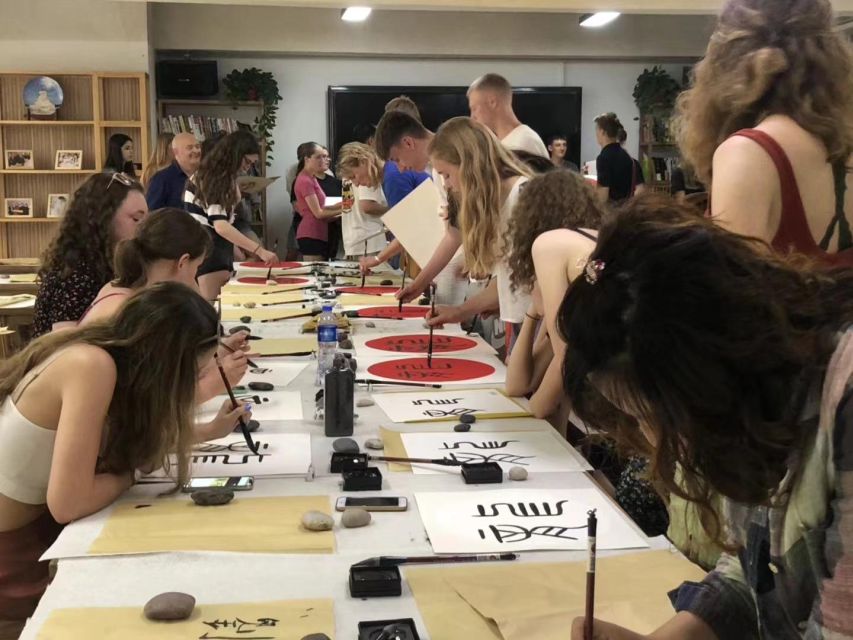
The studio’s position near Wangfujing and the Forbidden City makes planning simple. You can meet at the hotel, take the class, then walk toward the Forbidden City. Check the Forbidden City’s entry requirements and opening arrangements separately, since they are not part of this activity.
Do not assume the class itself includes transportation, palace admission, or a guided visit. Subway and taxi fares are extra, and the listed inclusions are limited to the teacher, the selected class time, and calligraphy supplies for use.
I would avoid scheduling the shortest class immediately before a timed Forbidden City entry unless you leave a generous buffer. The class may finish on time, but finding the meeting point, moving between locations, and passing through a large sightseeing area all take longer than a map suggests.
A better plan is to place the calligraphy lesson between major visits or after the Forbidden City, when you can enjoy the slower pace without checking the clock every few minutes.
Who should book this class?
Book it if you want a cultural activity that asks you to participate rather than simply watch. It suits first-time visitors, families with older children, couples, solo visitors, and anyone interested in Chinese art but unsure where to begin.
It is also a strong choice for people who have already seen several palaces, temples, and museums. The class shows a quieter part of cultural life and gives you time to focus on one traditional practice.
You may want to skip it if your Beijing schedule is already packed with timed sights and you dislike seated lessons. You should also think twice about the 45-minute option if your main goal is a polished piece or detailed instruction.
Should you book the Wangfujing calligraphy class?
I would book this class for its patient English-speaking instruction, central location, and calm pace. It offers a welcome change from Beijing’s big sights, and the finished artwork gives the experience a clear personal reward.
Choose 45 minutes for a quick introduction, one hour for a compact lesson, and 90 minutes or two hours if you want the activity to feel unhurried. At $35 per person, the short session is the weaker value, while a longer booking makes better use of the teacher’s guidance and the time needed to practice.
If you can spare the time, I would choose 90 minutes and schedule it near a visit to Wangfujing or the Forbidden City. That gives you a genuine cultural activity, a quiet pause, and a souvenir made by your own hand.
FAQ
Where does the calligraphy class meet?
The meeting point is the lobby of Sunworld Dynasty Hotel at No. 50 Wangfujing Avenue, Dong Cheng District, Beijing.
How do I reach the meeting point by subway?
Take Subway Line 5 to Dengshikou Station and use Exit A. Walk left for about 180 meters, turn left at the first traffic light, and continue west for about 480 meters. The walk takes around eight minutes.
How long does the class last?
You can choose a 45-minute, one-hour, 90-minute, or two-hour class, depending on availability and the option selected when booking.
Is the class taught in English?
Yes. English is the stated teaching language.
What will I learn?
You will learn basic brush handling, posture, strokes, and character forms. The teacher also explains aspects of calligraphy’s history and cultural meaning.
Are calligraphy supplies included?
Yes. Calligraphy supplies are provided for use during the class.
Do I take artwork home?
The lesson includes creating artwork on a red cardboard canvas to take home.
Is the activity suitable for children?
The class is designed for adults and children, but children under two years old are not suitable for the activity.
What is the cancellation policy?
You can cancel up to 24 hours in advance for a full refund. The reserve-now, pay-later option lets you book without paying immediately.
More hands-on classes in Beijing
- Beijing: Dumpling Making Workshop with Meal and Tea
★ 4.7 · 69 reviews - Online Cooking Class Beijing Dumplings and Cuisine by Sunflowerli Renowned Chef
★ 5.0 · 65 reviews - Chinese Kungfu class in old temple beside Forbidden Ci
★ 4.8 · 53 reviews - Noon Calligraphy Class
★ 5.0 · 47 reviews
More Beijing markets and shopping tours
- Beijing Wangfujing Calligraphy Class by Forbidden City
★ 5.0 · 58 reviews - Private Beijing Markets Tour with Tea Tasting at Hongqiao Pearl Market
★ 5.0 · 18 reviews - Beijing Exclusive Private Shopping Tour: Curated Just for You
★ 5.0 · 12 reviews - Beijing Private Night Walking Tour: Qianmen Street, Tian’ammen Square and Wangfujing Street
★ 4.0 · 9 reviews
Just added around Beijing
- Xian: Must see Eternal Love or Camel Bell Legend show Ticket★ 5.0 · 3 reviews
- 2-Day Beijing Must-See Tour:4 UNESCO Sites+Tian’anmen&Hutong★ 5.0 · 4 reviews
- Beijing: 2-Day private Tour with Great wall& Forbidden city★ 5.0 · 5 reviews
- Xian: Bus Tour of Terracotta Warriors With Guide & Lunch★ 4.2 · 5 reviews
- Private Transfer to Mutianyu Great Wall with professional driver★ 5.0 · 19 reviews
- Twilight Glow at Badaling Great Wall Evening Bus Tour+Ticket★ 4.9 · 11 reviews
- Yuxiandu Chinese Royal Cuisine Museum with Show and Royal Banquet★ 5.0 · 4 reviews
- ZANBUS: Trip to the Jinshanling Great Wall Departing at 7:30 AM★ 5.0 · 5 reviews
Forbidden City Tours, compared.

Forbidden City Tour(Group/Private)-Tickets Included
Read our review →
T-Square & Forbidden City Group or Private Tour
Read our review →
All-Inclusive Tour: Tiananmen Square, Forbidden City, Great Wall
Read our review →
4-Hour Small Group Tour to Forbidden City with Entry Tickets
Read our review →
Beijing Full Day Tours: Tiananmen Sq, Forbidden City, Great Wall
Read our review →
Tianmen Square, Forbidden City & Royal Museum Tours
Read our review →
Beijing Forbidden City Ticket Booking (Optional: guide service)
Read our review →
Forbidden City and Tian’anmen Square Waking Tour
Read our review →Browse the lists this tour appears in