
Reviewed · TEA CEREMONY AND CALLIGRAPHY WORKSHOPS
Noon Calligraphy Class
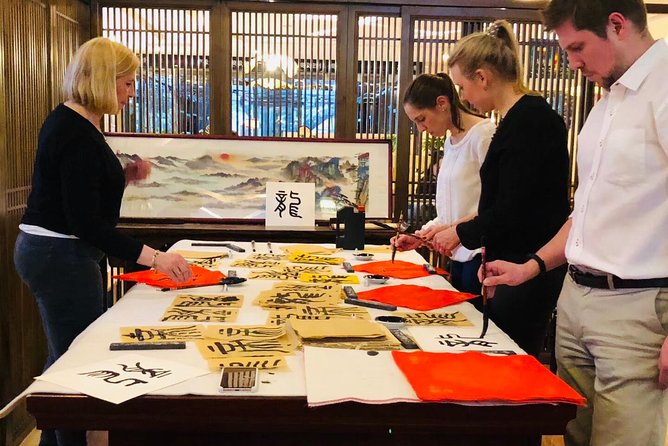
Chinese calligraphy turns a short Beijing activity into something much more hands-on. At this one-hour class, you do not simply watch an artist work. You practice brush strokes, learn how Chinese characters are formed, and leave with your own piece of writing on rice paper.
I like the calm rhythm of the lesson and the chance to handle traditional tools, including brushes, ink, rice paper, and ink stones. I also like the flexible format: you can choose a 30-minute, 1-hour, or 1.5-hour class, making it easy to fit around sightseeing.
The main consideration is that calligraphy is harder than it looks. If you want a polished masterpiece in one sitting, adjust your expectations. This is an introduction, not a full art course, and the central Beijing location may feel more convenient than atmospheric.
Key points to know before booking
- Central Wangfujing location: Meet at Hilton Beijing Wangfujing, at No. 8 Wangfujing Dongjie.
- Traditional materials included: Practice with brushes, ink, rice paper, ink stones, and related calligraphy tools.
- Several class lengths: Select 30 minutes, 1 hour, or 1.5 hours when booking.
- Teachers who explain the meaning: Richard and Li are identified as instructors who focus on both technique and Chinese culture.
- Small group setting: The class accepts a maximum of 15 participants, with group discounts available.
- A useful rainy-day plan: The indoor lesson gives you a quiet cultural activity when Beijing weather disrupts outdoor sightseeing.
Why Chinese calligraphy makes a good Beijing activity
Chinese calligraphy is not simply handwriting with a fancy brush. It is an art form in which the movement of the hand, the pressure of the brush, the amount of ink, and the shape of each stroke all matter.
That makes this class useful for visitors who want more than a quick photograph at a historic site. You get a direct way to engage with an important part of Chinese culture. Even a simple character can show how balance, rhythm, and control shape the final image.
I especially like the fact that the class begins at a basic level. You do not need previous art training, and the supplied information says most people can participate. Children are welcome too, but they must be accompanied by an adult.
The lesson also gives you a break from Beijing’s faster pace. Several parts of the process require patience, especially when you are learning how to move the brush across the paper without pressing too hard. That quiet concentration is part of the appeal.
More tea ceremony and calligraphy workshops in Beijing:
- Beijing Calligraphy Class
★ 4.9 · 112 reviews - Chinese Calligraphy Class for Small Group
★ 5.0 · 104 reviews - Traditional Chinese Tea Ceremony Experience
★ 4.7 · 74 reviews
Getting to the class at Hilton Beijing Wangfujing
The meeting point is Hilton Beijing Wangfujing, at No. 8 Wangfujing Dongjie in Dongcheng District. The address is also provided in Chinese as 北京东城区王府井东街8号.
This is a practical location in central Beijing, close to public transportation and easy to pair with other sights in the Wangfujing area. You return to the same meeting point at the end, so there is no complicated transfer or separate drop-off to arrange.
The class is listed under the name Hutong Calligraphy Class, but the meeting point is the Hilton. I would pay close attention to the exact address when you book, especially if you are already walking around Wangfujing. A large hotel address is helpful, but central Beijing streets can still be confusing when several nearby entrances compete for attention.
The class is offered at multiple times during the day. Despite the Noon Calligraphy Class name, you are not limited to a single midday departure. Pick the available time that fits your sightseeing plan.
What happens during the first few minutes
The instructor starts by introducing the basic materials and the role each one plays. You work with a brush, ink, rice paper, and an ink stone, rather than using a pen or pencil.
The brush is the part that takes most first-time students by surprise. It responds to pressure and angle, so the same hand movement can create a thin, thick, dark, or pale mark. Your first strokes may look uneven. That is normal, and the practice period is there for exactly that reason.
The teaching style is meant to be interactive. You can ask questions while you work, and the instructors explain what you are doing rather than leaving you to copy a finished example without context.
The available details identify Richard and Li as instructors. Richard is described as kind and informative, while Li is noted for clear, practiced instruction. You may not have both teachers in the same class, but the class is designed around direct guidance rather than a simple demonstration.
Learning brush strokes instead of copying blindly
The most valuable part of the session is the practice before the final piece. You work on controlling the brush and getting used to the movement of ink across rice paper.
This early practice matters because Chinese characters are built from individual strokes with an established order and direction. The result is not only about making a character recognizable. It is also about giving the character balance and energy.
The class presents calligraphy as language made visible. That idea helps explain why the activity feels different from a standard drawing lesson. You are not just creating an attractive pattern. You are working with written Chinese and learning how the form of a character carries meaning.
The lesson may also help you remember a few Chinese characters more clearly. One review of the experience describes it as a good way to stay engaged while learning Mandarin. That makes the class appealing if you are already studying Chinese, though the activity does not promise a full Mandarin lesson.
More hands-on classes in Beijing:
- Beijing: Dumpling Making Workshop with Meal and Tea
★ 4.7 · 69 reviews - Online Cooking Class Beijing Dumplings and Cuisine by Sunflowerli Renowned Chef
★ 5.0 · 65 reviews - Beijing Wangfujing Calligraphy Class by Forbidden City
★ 5.0 · 58 reviews - Beijing Wangfujing Calligraphy Class Nearby Forbidden City
★ 5.0 · 56 reviews
Seal carvings, ink stones, and the tools behind the art
The class includes an introduction to seal carvings, brushes, rice paper, and ink stones. These tools add useful cultural context to what might otherwise feel like a short craft workshop.
Rice paper reacts quickly to ink. A stroke can spread, fade, or darken depending on how much moisture the brush holds. That gives the final image a softer, more fluid quality than writing on ordinary paper.
The ink stone is part of the traditional setup used to prepare and manage ink. Seal carvings add another visual element to Chinese art, since seals can be used as a personal mark on a finished work.
You may not become an expert in any of these materials during a short session. Still, seeing how they work together gives you a clearer sense of why calligraphy has such a disciplined technique. The tools are simple in number, but each one affects the result.
The final piece you take home
After the practice strokes, you create a final piece to keep. This is a small but important part of the experience. You get a physical reminder of the class instead of leaving with nothing but a few photographs.
The finished work may not look like a professional scroll, and it should not. The value is in seeing the change between your first practice strokes and the final attempt. You also gain a better appreciation for how much control experienced calligraphers have.
The class can feel surprisingly calming by this point. The early excitement gives way to a quieter focus, with your attention narrowed to the brush, the paper, and the movement of your hand. One useful way to approach it is as a short creative pause rather than a test of artistic talent.
If you are attending with a partner, child, or friend, the take-home piece gives the activity a shared result. You can compare your work without turning the class into a competition.
How long should you choose?
You can select a 30-minute, 1-hour, or 1.5-hour format when booking. The standard description focuses on a class of about one hour, so that is the safest choice if you want enough time to learn the basics without making the activity a major part of your day.
The 30-minute option may suit you if you have a packed sightseeing schedule or simply want a quick introduction. It is likely to leave less time for repeated practice, questions, and a carefully finished piece, so I would choose it only when your schedule is tight.
The 1-hour class gives you a sensible middle ground. You have time to hear the cultural explanation, practice several strokes, and complete a piece without committing to a long workshop.
The 1.5-hour option is the better pick if you enjoy hands-on learning or want more time with the teacher. It may also work well for families, since children often need extra time to settle into the brush technique.
The exact format is selected during booking, so check that you have chosen the intended duration. The listed price is $20 per person, but the inclusions differ mainly by the amount of time you select.
Is $20 a fair price?
At $20 per person, this is reasonably priced for a guided cultural activity in central Beijing. The cost includes the teacher and calligraphy supplies, so you are not paying an entry fee and then buying materials separately.
The value comes from the instruction. You could find brushes and ink elsewhere, but without someone explaining pressure, strokes, character form, and cultural meaning, the activity would be much less useful.
The price also works well for a short gap in your itinerary. A one-hour class does not require a full day or a long trip outside central Beijing. You can combine it with Wangfujing sightseeing, shopping, or nearby meals.
The main limit is the class length. You are paying for an introduction, not advanced instruction or a private studio lesson. If you already practice Chinese calligraphy, you may want the 1.5-hour option, though the supplied details do not promise an advanced curriculum.
Group discounts are available, which may improve the value if you are booking for several people. The maximum group size is 15, so the class is not guaranteed to be private.
Who will enjoy this most?
I would recommend the class to first-time visitors who want a cultural activity with real participation. It suits adults, children with an accompanying adult, couples, and families looking for something different from another sightseeing stop.
It is also a strong choice for a rainy day. You stay indoors, work at a relaxed pace, and still learn something connected to China rather than simply filling time in a shopping center.
The class works particularly well for anyone interested in Chinese characters, Mandarin, drawing, or traditional art. You do not need to be good at drawing. In fact, the early practice helps you understand why the art is difficult.
If your priority is speed, this may not be your ideal activity. Calligraphy rewards slowing down. You need to accept some imperfect strokes and enjoy the process rather than demand a perfect result.
The maximum of 15 participants keeps the class from becoming a huge workshop, but it is still a group activity. If you want long one-on-one instruction, ask about the format when booking rather than assuming the teacher will work privately with you.
Practical details that matter
Confirmation is provided at the time of booking, and the class is near public transportation. The activity begins and ends at the Hilton Beijing Wangfujing meeting point.
Children must be accompanied by an adult. Most people can participate, according to the activity information, and no special fitness level is required.
The experience offers free cancellation if you cancel at least 24 hours before the start time. Cancellations made less than 24 hours before the class are not refunded, and changes inside that same period are not accepted. The cut-off uses Beijing local time.
The class is often booked about nine days ahead. That does not mean you must reserve exactly nine days early, but it is a useful sign that booking ahead is sensible if your Beijing schedule is fixed.
Bring a little patience. The supplies are included, but your first strokes may be messy, and that is part of the learning. Wear clothing you do not mind using around ink, even though no special dress requirement is listed.
My verdict on the Hutong Calligraphy Class
I like this experience because it gives you something to do with your hands and something to think about afterward. The central location, supplied materials, several class lengths, and $20 price make it easy to fit into a Beijing itinerary.
The strongest reason to book is the teacher-led practice. Richard and Li are associated with clear, friendly instruction, and the class explains the meaning behind the writing as well as the mechanics of the brush. That cultural context keeps the activity from feeling like a generic souvenir workshop.
Book it if you want a calm indoor experience, a manageable introduction to Chinese art, and a finished piece to take home. Choose the 1-hour or 1.5-hour option if you want enough time to practice. Skip it if you are looking for a major historic attraction or advanced calligraphy training. For most first-time visitors, this is a good-value cultural pause in the middle of central Beijing.
FAQ
Where does the calligraphy class meet?
The class meets at Hilton Beijing Wangfujing, No. 8 Wangfujing Dongjie, Dongcheng District, Beijing. The Chinese address is 北京东城区王府井东街8号.
How long is the class?
You can choose a 30-minute, 1-hour, or 1.5-hour class when booking. The main activity description lists the experience as approximately one hour.
What does the class include?
The class includes an art teacher and calligraphy supplies to use during the lesson. These include materials such as brushes, rice paper, ink, and ink stones.
Are children allowed to participate?
Yes. Children can participate, but they must be accompanied by an adult.
How many people can join the class?
The activity has a maximum group size of 15 participants. Group discounts are available.
Is the class close to public transportation?
Yes. The meeting point is near public transportation in central Beijing.
Can I cancel for a refund?
You can receive a full refund if you cancel at least 24 hours before the scheduled start time. Cancellations and changes made less than 24 hours before the experience are not accepted for a refund.
Just added around Beijing
- Xian: Must see Eternal Love or Camel Bell Legend show Ticket★ 5.0 · 3 reviews
- 2-Day Beijing Must-See Tour:4 UNESCO Sites+Tian’anmen&Hutong★ 5.0 · 4 reviews
- Beijing: 2-Day private Tour with Great wall& Forbidden city★ 5.0 · 5 reviews
- Xian: Bus Tour of Terracotta Warriors With Guide & Lunch★ 4.2 · 5 reviews
- Private Transfer to Mutianyu Great Wall with professional driver★ 5.0 · 19 reviews
- Twilight Glow at Badaling Great Wall Evening Bus Tour+Ticket★ 4.9 · 11 reviews
- Yuxiandu Chinese Royal Cuisine Museum with Show and Royal Banquet★ 5.0 · 4 reviews
- ZANBUS: Trip to the Jinshanling Great Wall Departing at 7:30 AM★ 5.0 · 5 reviews
Tea Ceremony and Calligraphy Workshops, compared.
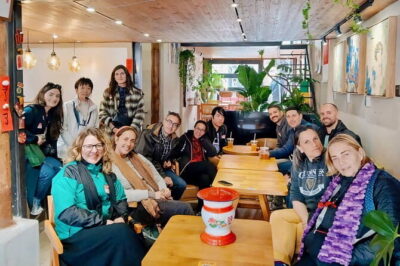
Beijing Historic City Guided Walking Tour + Calligraphy Creation
Read our review →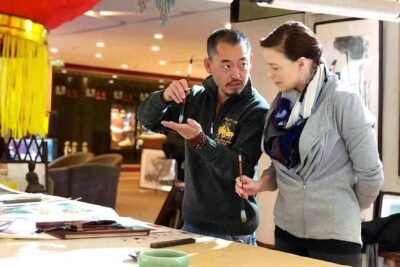
Beijing Wangfujing Calligraphy Class by Forbidden City
Read our review →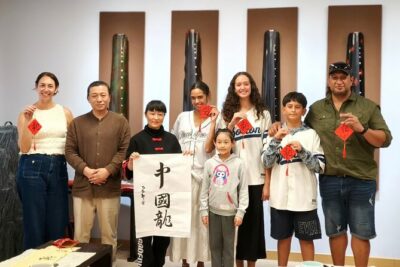
Beijing Culture: Tea Ceremony, Heritage Instrument & Calligraphy
Read our review →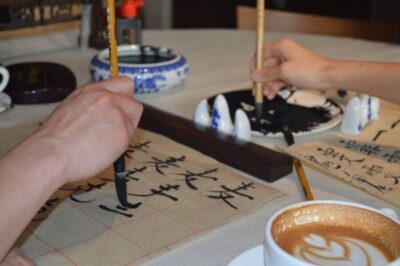
Beijing Wangfujing Calligraphy Class Nearby Forbidden City
Read our review →
Chinese Tea ceremony in Beijing Hutong courtyard
Read our review →Browse the lists this tour appears in